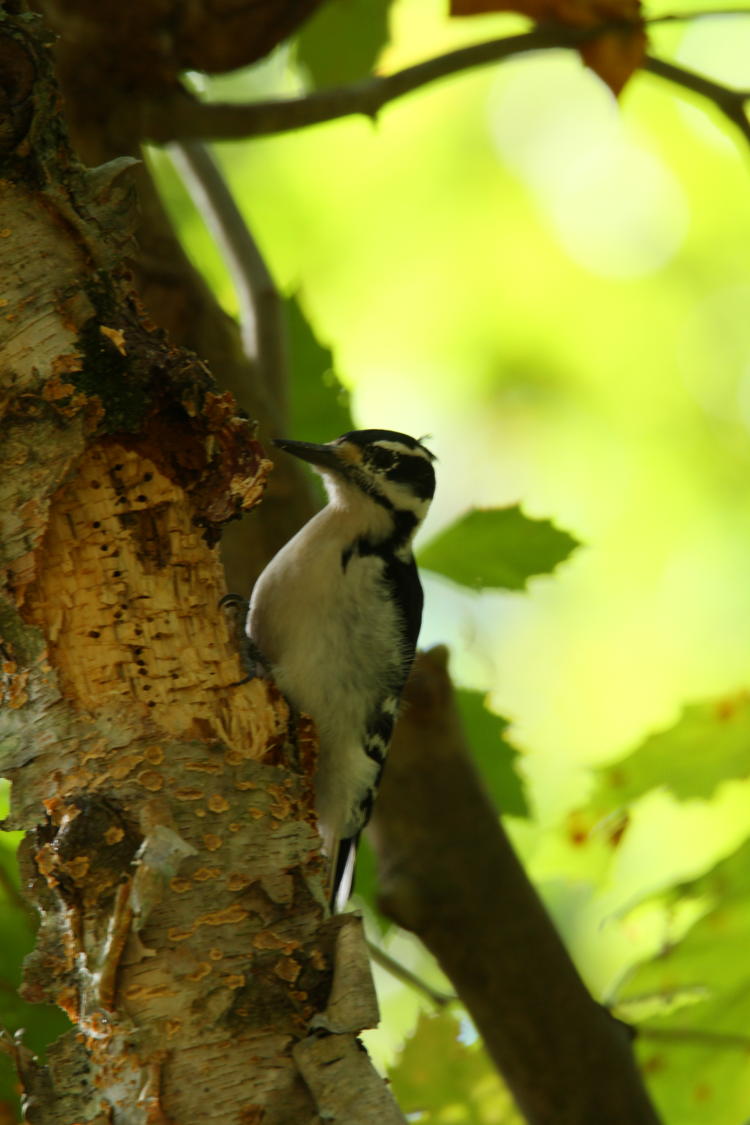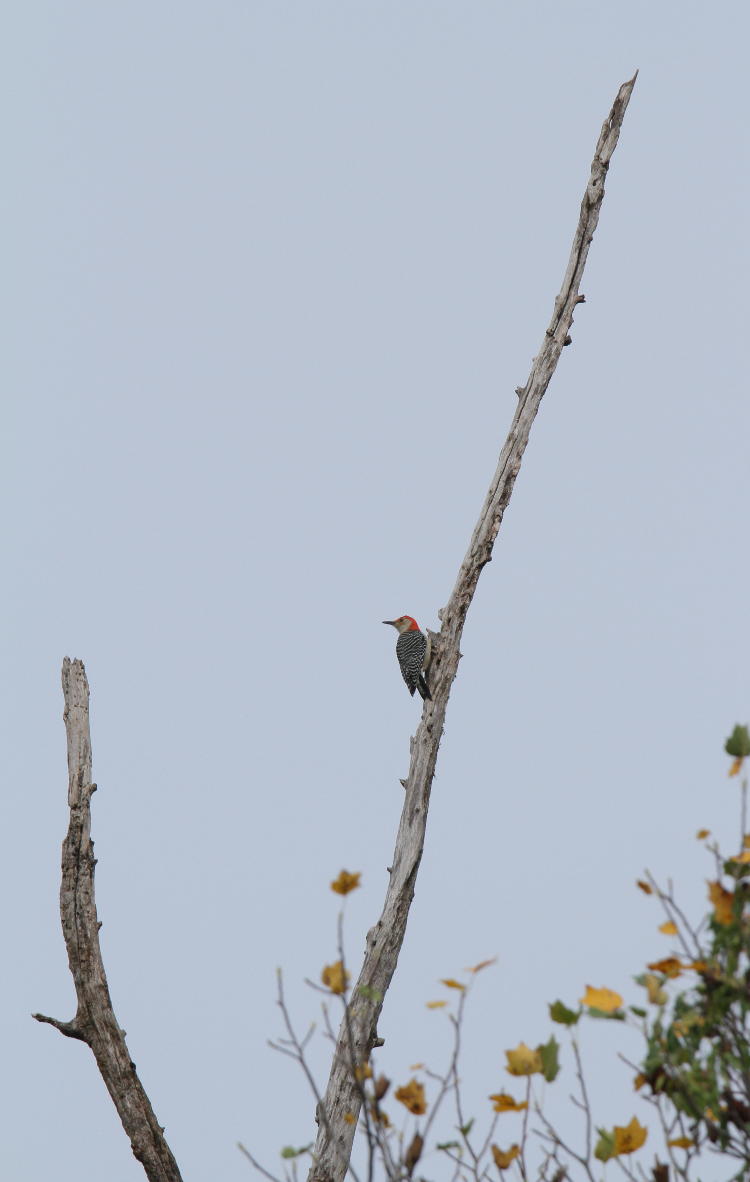
And yet, some activity

Chinese mantis Tenodera sinensis egg case ootheca on sapling at Mason Land Biological ReserveAs the previous post indicated, we get our warm spells, which mostly bring rain, but then again, there’s a chance of snow predicted for Thursday night. It will almost certainly be trivial and not worth photographing, but that’s what conditions are like right now.

Today (as I type this, though it will certainly post the following day,) I had the first serious free time in a week or so and got to a couple of impending projects, among them placing the egg cases (oothecas) of the Chinese mantids that I’d collected. They have come from here-and-there, a few different locations while out looking for photo subjects, the most challenging being in Mason Farm Biological Reserve. Mind you, there were a lot of egg cases to be found, but the vast majority of them had been placed on saplings as seen here, and I wasn’t going to damage a tree for the egg case, so I was watching for those that had been placed on tall weeds instead. They were few and far between, but I found a few (for both Mr Bugg and myself,) so these were added to the others that I’d collected, a total of seven, some of which may not be viable – we’ll see in a couple of months when hatching season arrives. And this is widely variable, depending on the weather, so it requires frequent checks, but with several, the odds of catching them right at emergence are much higher. My goal is to actually catch them springing (well, more like oozing) from the sac itself, preferably on video, something that I have not captured though I did manage some clips soon afterward, shit, three years ago. Two years back, none of my (purchased) oothecas hatched at all, and last year, while I had quite a few to monitor, my timing sucked on all of them and I got no hatching activity. You see? If more of you bought prints and such, or simply became one of them wealthy patrons that I’ve heard of, then I wouldn’t have to work some other job and could devote all my time to the content herein.

Chinese mantis Tenodera sinensis egg case ootheca mounted to branch in useful setting
I now have a tally of the locations of all of these, plus two other potential subjects to keep an eye on and begin daily checks when the season approaches: one is a Carolina mantis egg case on the roof edge of the shed, and another is a wheel bug (Arilus cristatus) egg cluster that I spotted on our fence (the far side of course) in the fall. While placing the mantis cases, I checked on them both just for the sake of it, and noticed that the wheel bug eggs were showing activity – only, not the expected kind. In fact, what I was seeing was so small that I brought out the photo rig to achieve the magnification necessary to show what just what it was. More or less.
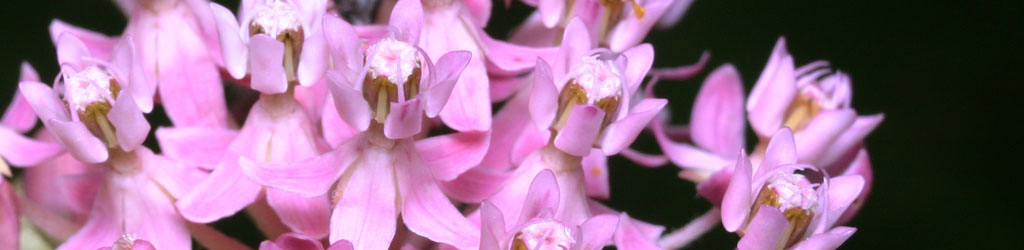
egg cluster of wheel bug with unidentified flies atop
First off, I knew these weren’t the eggs hatching because I’ve seen that before, the brightly-colored nymphs emerging from their clown-car eggs, far too large to have fit inside to begin with – I used to have one of these images in the gallery but since removed it because I need better, so I’m anxiously watching this cluster for that opportunity. Now, what exactly these little flies are, I cannot say because I have too few identifying characteristics to work with, but the size of the eyes puts me in mind of syrphid flies. Bear in mind, the entire cluster can be hidden under a dime, so they’re, shall we say, on the petite side.

Here’s a slightly better look, but still not sufficient for ID.

unidentified flies perhaps laying eggs among wheel bug egg cluster
The two fly specimens furthest to the right seem to have their abdomens dipped down into the small gaps between the wheel bug eggs, so it’s possible they’re laying eggs for their parasitic larvae to glom onto the wheel nymphs as they emerge – if they don’t actually burrow into the eggs themselves. And just there I had to pause and determine that this cluster was not, in fact, a cocoon/chrysalis (intermediate stage between larva and adult) instead of eggs, but no, it appears I was right in the first place – wheel bugs do not seem to have a wormlike larval stage.

(By the way, my first photos came about because The Jim Kramer had a patch in his yard many years back, and called me when he found them hatching, but he got much better pics than I did. That time around.)

Being the ultimately-prepared (ahem) nature photographer that I am, I was carrying a paper scale in my wallet, and drew it out to get the measured shot. I have a stack of these, by the way, because I print them alongside my business cards so I can carry a few, they don’t cost me anything, and I’m not worried about damaging or losing them.

wheel bug egg cluster with measuring scale
Wheel bugs, by the way, can get big – the disparity in size between hatching and adult is comparable to the Chinese mantids, an increase in mass perhaps a hundred times or better, which leaves me curious as to who might hatch first and begin to prey on the other. Perhaps we’ll have photos or video of a showdown coming up later this year (well, I can hope, anyway.)

While out in the yard with the macro rig in hand, I started watching for other subjects, and soon located one at least.

small hymenopteran 'sweat bee' captured in web with two unidentified cobweb spiders
it doesn’t matter how early the bees or flies might emerge, they’re probably behind the spiders, which seem to have a very functional antifreeze system. This little hymenopteran, what we always called ‘sweat bees,’ is truly trapped by a pair of unidentified cobweb spiders on the frame of the shed; I’m taking them for a mated pair, and this is perhaps their late Valentine’s Day celebration. Don’t fill up too much there, guys – it doesn’t help with later on, if you get my drift.

green lynx spider Peucetia viridans nymph on twigAnd on yesterday’s (well, Monday’s) outing, Mr Bugg and I sidetracked over to a park that was not flooded, one where we photographed a few green lynx spiders (Peucetia viridans) just shy of producing egg sacs. Knowing that the young would have hatched in the late fall but weren’t likely to have vacated the area yet (if at all,) I searched around for dried weed tops that showed a lot of web strands to indicate that they were likely occupied, but it was Buggato that spotted the first, to his credit. The spider nymphs are ridiculously tiny and very shy, and I was working with natural light and no bracing, so none of my shots came out worth shit, but here’s one just for illustration. As you might imagine, we’re looking at a few millimeters in total length.

(I’ve done better of course – how could you doubt me? A good scale shot is here, though I believe the specimen at right is slightly larger, while best detail shots are here.)

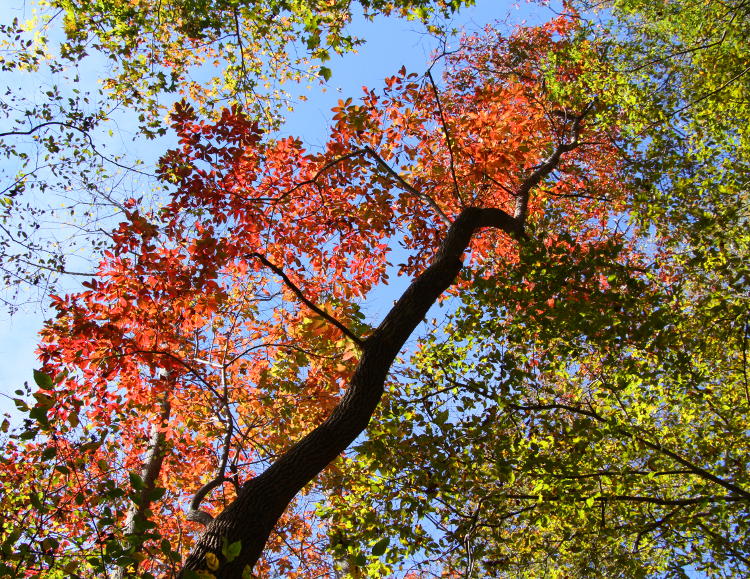
And I’ll close with a photo that is wholly unrepresentative of the season and conditions, because it was one of just two trees in the park that were blooming, while the rest all looked as dried and brown as the mantis egg cases up there. But the colors are nice, and I suspect very welcome right now, so appreciate them, you know, before they disappear under water.

unidentified tree in full bloom against deep blue sky

There have been better outings

picnic area at Jordan lake
This will be the first of two posts about recent photos – they were far enough apart thematically, and I’ve been slow in posting anyway, so I’m breaking them up even though they will likely post within hours of one another (and before the next ‘On This Date’ entry.)

Yesterday, Mr Bugg wanted to do an outing to Jordan Lake, and I was a little skeptical because of the recent heavy rains, but he’s paying the fees, he calls the shots. And it was far worse than I feared. The photo above illustrates one of the little picnic areas; the trees towards the back in the center mark the normal water’s edge, I think, but there might even have been a beach margin that put the waterline further out. Regardless, all of the trails, and indeed half of the publicly accessible areas, were well under water, so no hiking out there for a bit.

lone tree deep in floodwaters of Jordan Lake
We did what we could, but with virtually no access beyond the parking lot and no bird activity, there remained few photos to chase.

Well, little bird activity.

trio of double-crested cormorants Phalacrocorax auritus perched on swimming barrier
Here, the double-crested cormorant (Phalacrocorax auritus) in the center tries to smooth over an impending breakup. And this close to Valentine’s Day, too.

Okay, maybe not.

They’re perched, by the way, on the floating barrier that marked the swimming area, but I’m pretty sure one end had dislodged from shore, because it was damn far out and didn’t seem to be enclosing anything, yet it was still handy for the birds to perch on and dry out between fishing sessions.

The erosion around Jordan lake is extensive, largely because this kind of thing happens once a year, give or take (it’s raining right now as I type this, a day after these pics were taken.) Development in the area speeds runoff – parking lots and housing developments drain most of the water that would have been retained by woods and underbrush, and the lake is maintained by a dam to provide water for the area, but it only flows out so fast and in many cases is restricted at that, to prevent flooding downstream. But lake levels that change this drastically hammer the shit out of the vegetation at the edges, which die off or even fall away as the soil is washed out, so ‘stable’ is not the way to describe the lake margins. This was illustrated more when we went to another portion just to check it out.

Al Bugg standing knee-deep in floodwater at head of boat launch approach
It didn’t take much to talk Mr Bugg into posing in the water in February – he finds any excuse to go wading anyway. He’s at the head of the maneuvering circle that fronts the boat ramps, completely submerged behind him, while the trees to the left mark one of the points that we often explore. In fact, that post just visible over his left shoulder is well over two meters tall, if I remember correctly. We pass these things all the time, but don’t note just how tall they are.

Not done yet. We went along to the other boat ramps nearby – the first has now been purposed towards hand-launched craft like kayaks and (sigh) paddleboards, mostly because these fluctuating levels were silting in the ramp areas, but the second set has a higher approach and deeper clearance.

Mr Bugg shooting from low on boat ramp at Jordan Lake in December 2019
This is from December when we were chasing sunset pics, not very successfully, and he was trying for a creative angle. No, he’s not chimping, because I’ve told him repeatedly to break that habit so naturally he wouldn’t dare do this where I could see him, at least.

(If you are unaware of this term, ‘chimping’ refers to checking the LCD on the back of the camera immediately after taking a shot, something that burst forth with the switch to digital. It tells you nothing effective, of course, because the LCD is too small and too badly calibrated to indicate anything crucial, plus it looks very unprofessional to keep checking. So no, he’s clearly not doing this.)

And now, a comparison photo from yesterday, pretty much the same position.

Mr Bugg wading into water at head of flooded boat ramp on Jordan Lake, February 2020
Mind you, I hadn’t even suggested he get into the water this time, so stop tsking at me – that’s all him. But I want you to notice something else. The boat ramps float, anchored at a fixed point on shore, so they can stay with the fluctuating levels. In December, they were sloped down significantly, the drop hitting at least two meters, while yesterday they actually sloped up a little from the anchor.

floating ramps on Jordan Lake almost submerged at fixed end
And one more.

great blue heron Ardea herodias perched alongside snag in November 2019
This one dates from November, but I posted a variation of it in December, sans the boat ramp back there because it didn’t add anything to the composition – unless you’re trying to show the boat ramp. It’s the same ramp that I was standing on for the photos further up – well, not the exact same, but the one alongside it. This was taken from the other ramp area, the first pictured (not) in this post. I couldn’t do a comparison image from yesterday because I would have had to have been treading water to get the right angle as it was, plus there was nothing to see – the entire snag and everything around it was invisible, totally submerged. And when it does re-emerge, it’ll likely look different as the water shifted the driftwood and perhaps added some.

And before you ask, no, that’s not a cormorant surfacing at the feet of the heron, but just another stub of the driftwood. I had to go to the full-resolution version to confirm this, though.

So, yeah – not really the most productive outing when most of the shots are illustrating how bad the conditions were. But part two is soon to follow, unless you’re reading this after it already posted and it appears above this one in the page lineup, so you already know what that held.

On this date 7

gren iguana iguana iguana close up
Today, we have three entries that were all taken on this date. Well, not today, but the same month and day number in previous years – stop making me get pedantic. I’m including all three because of their curious connections.

The first, above, is from 2005, a green iguana (Iguana iguana, for true) on the desk in my office when I worked in an animal shelter, only a day or two past my efforts to get her out of her near-comatose state – the story is related in slightly more detail here. I love the mosaic textures of the skin of some reptiles, and so when I have the opportunity to capture them in detail with a complacent subject, I take advantage of it. This is the more dramatic of quite a few frames taken that day, capturing the eye detail as well. It was done with the old Canon Pro 90 IS, and not with any of my recent and more capable macro equipment, if you’re noticing any difference.

Eight years later in 2013, we have a similar entry.

American five-lined skink Plestiodon fasciatus in author's palm
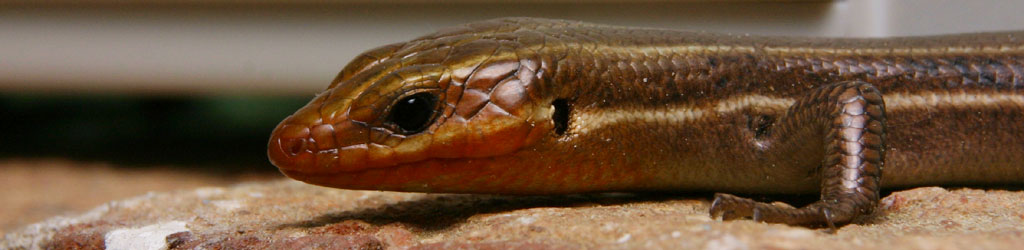
Discovered while prepping the planters along the front of the old house, this American five-lined skink (Plestiodon fasciatus) was a surprise find – remember: today, February, North Carolina, we still have winters here. It was a warm day despite this, which is what I was taking advantage of, but the skink was hiding out between layers of weed-control plastic and was certainly sluggish, allowing me to get detailed shots in my palm. in preparation of this weekly topic for this year, I consolidated the dates of all digital photos into one spreadsheet, linked back into the specific folders and filenames, and noticed that the Reptiles & Amphibians folder had entries for multiple years, when I wasn’t expecting to see any (again, February.) So I included this one for the mild coincidence and contrast of the two lizard species; the iguana at top easily masses several dozen times the skink here. The iguana ran an estimated 60cm in length and would have been more if her tail hadn’t been truncated, with a thickness comparable to my wrist. In comparison, the skink was no more than 10cm with a body thickness approximating my little finger, hinted at with the lines of my palm in the picture.
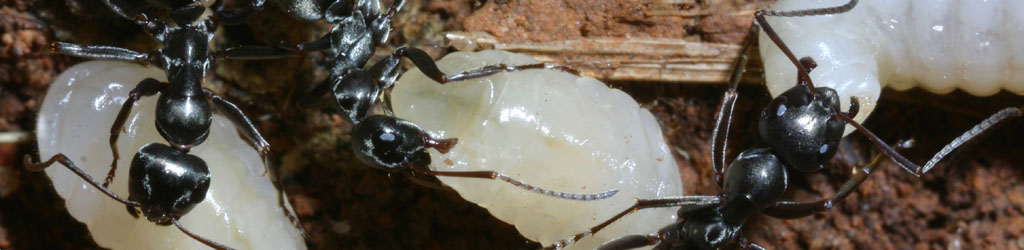
But the next year things were slightly different.

bizarrely-shaped snow crystals
In 2014, we were having a heavy snowstorm, and I was endeavoring to capture detailed photos of snowflakes. My efforts revealed not just the typical hexagonal flat flakes we all know, but also these wonderful spool-shaped crystals, capped on either end with something resembling a ‘traditional’ flake. Not a lizard to be found anywhere, despite this being within two meters of the shot from the previous year (the dark ‘finger’ in the photo is the tip of a rosemary leaf, the bush which sat immediately alongside the planters I’d been working on.)

Granted, it’s not unusual to have wildly variable February weather from year to year, but this was one that I had the ability to illustrate, which is the whole point of these posts anyway. And coming up next week: Who you eyeballin’?

Something after all

First daffoldil of 2020 in author's yard at leastFirst off, I must start with the obligatory daffodil, the first in our yard at least. It opened sometime yesterday but the rain didn’t stop until that evening, so it’s a nighttime flash shot.

But I spent the past couple of days trying to find something to do for Darwin Day, which is today: Charles Darwin was born on this date in 1809, and of course, as a nature photographer, science enthusiast, and evolution-affirmer I should be recognizing this at least. But nothing was coming to mind, and February is naturally a bad time to be trying to find some example that helps illustrate his work, as I’ve noted before. We should be celebrating this on July 1 instead, which is the anniversary of his first presentation on natural selection in 1858.

[And I’ll take a moment to note that, roughly simultaneously, Sir Alfred Russell Wallace also tumbled to the idea of evolution by natural selection and deserves almost as much credit as Darwin; Darwin was perhaps more thorough in his treatment, but should not be considered the only person who proposed the concept. In fact, several other scientists and naturalists throughout the time period were contributing ideas and concepts, so it really was only a matter of time anyway, but hey, we’re dealing with Charles right now.]

However, at a loss for decent subjects, I turned to the ponds, the one in the backyard and the larger one nearby, and sought some subjects within. There remained very little to see, and what I did find was hard to photograph, but I made the efforts anyway.

unidentified varied species of springtails
On the surface of the water at this time of year can always be found these tiny (1-3mm) arthropods that I tend to call doodlebugs just from appearances, though I believe this is more often applied to other species. Technically they’re springtails, Class Collembola, and I believe I have several different species in the one cluster here, but they weren’t my primary subject and I’m not going to fuss about particulars. Instead, we’ll briefly pursue the naiads.

damselfly naiad
“The what?” you say, and I confidently repeat, “Naiad,” knowing damn well I only discovered this term (well, for this context) a few minutes ago. I was calling them damselfly nymphs myself, but nymph is an incorrect term, because it’s an exopterygote. So there.

[Don’t ask. Or at least, don’t ask me – I just shoots them. If you want the camera tech specs, then you can ask.]

Anyway, damselflies spent their youth in the water; the appearance we’re all familiar with is their adult, reproducing form. But as juvies, they swim around in fresh water and chase other aquatic arthropods while breathing through those feathers attached to their ass, which are actually gills. What will become their wings presently looks like a rather-ill-fitting tailcoat, but we’re going back to those gills.

gill of damselfly naiad
Pretty snazzy, ain’t they? I know you’re jealous. The overall length of the naiad was probably in the realm of 20mm, and a single gill was no more than 4mm. I was having a devil of a time nailing sharp focus and good lighting through the aquarium glass, and eventually I stopped trying, not too enamored of my subjects to begin with. Well, except for one small aspect (which is still far from my best work.)

head detail of damselfly naiad showing nerves
One of the three specimens that I had to work with showed some kind of fuzz all over it, what I’m taking to be a fungus of sorts that I’ve seen frequently before, but it was the only one holding still in a good position so it was the one I got the best frames of. And in this frame, you can clearly see what I’m taking to be the optic nerve feeding into each ommatidia (eye) cluster. I am also presuming that the larger dark bands running down the back, which continued the length of the insect, are nerve cords as well; there is no spine or internal skeleton for them to be protected within. Arthropod brains themselves are of course rather small and simplistic, but it’s possible that portions of it are visible before the head chitin gets too opaque here.

That wasn’t really enough for a post, and I was returning my water samples to the ponds when I stepped out onto the back porch and was immediately greeted by my next subject, quite unexpectedly.

first green treefrog Hyla cinerea of 2020
Now, the past couple of days have been remarkably warm, but I also cleared ice and frost off of my car in the mornings not a week ago, so I wasn’t expecting to see any evidence of this species for another month or so. I shouldn’t have to tell you that this is a green treefrog (Hyla cinerea,) but it definitely marks the earliest that I’ve ever spotted one. According to my own criteria, this means that it’s spring now, and any snow or frosts are completely disallowed from this point on. Much better than groundhogs, for sure.

green treefrog Hyla cinerea action pose
And an action pose, after I had returned my aquatic subjects to the pond and noted the splashes of two other frogs as they leapt back into the water – those were likely green frogs, not green treefrogs (I don’t name ’em,) which always overwinter in the mud at the bottom of the pond. I was inclined to consider the treefrog here as a fluke, because they definitely don’t like even cooler weather, and suspected from its location that it had holed up under the cover of the grill on the deck that they seem to be fond of. But wait!

very small green treefrog Hyla cinerea on railing
Only a few meters away, another green treefrog was hanging out on a decorative railing. This one was 1/3 the size of the previous and much more bronze in color – which I’ve been seeing a lot lately, making me wonder if some conditions of the yard are contributing to this (there – I kinda half-assedly tied it back in to Darwin.) Regardless, either a coincidence or an indication that the green treefrogs, at least, consider the warm spell a good sign.

Emboldened by my finds, I went out poking around with the headlamp in pursuit of more subjects, but found very little. My little technique of shining a flashlight up from the undersides of the gardenia leaves did produce a hit, though.

first magnolia green jumping spider of 2020
Magnolia green jumping spiders (Lyssomanes viridis) are fairly common in this region, though small and secretive, but they have the coolest eye effect visible. They’re very fond of the undersides of leaves, where they can remain unseen but have a good shot at all those insects that take shelter thereon. You can see that the leaf is criss-crossed with web strands, and I don’t know if this is just safety draglines, something that all spiders maintain as they wander along, or if it’s an alert system for prey; jumping spiders are active stalkers and ambushers, so they don’t capture or hold prey with webs at all, but perhaps they still use webbing for ‘tripwires?’ I’ll have to do some more research.

first phlox blossom of 2020However, that was a nice little package of current photos to mark the day and indicate that the blog has not gone completely fallow; I’ll include this first blossom among the phlox plants from a couple days back as well, a tiny splash of color among all the browns. Here’s hoping that we really do have an early spring and I can have something more to photograph soon – I’m not holding my breath, but hey, one can dream.

On this date 6

unidentified yellow wildflowers
I actually had a lot of images to choose from with this date, except… all of them were from last year only. It would appear that February 5th had not previously been a time when I’ve been out shooting. So we have one of many varied images taken on the same outing related here, after Jordan Lake had proved too unproductive and Mr Bugg and I had switched over to the NC Botanical Garden. Therein, some variety of local wildflower was already blossoming, so I did a few frames – most of the other choices were represented in last year’s post.

I did try to identify these, by the way, but the resource that I’ve used in the past showed no clear matches – I suspect it’s a member of the primrose family, mostly from the four petals, but that’s more guess than, you know, brilliant botanical knowledge…

Regardless, here’s some yellow if you need it. Next week’s entry, however, will show that February is a wild-card month. Betcha can’t wait.

Branching out

bare branches against sunset sky over Jordan lake
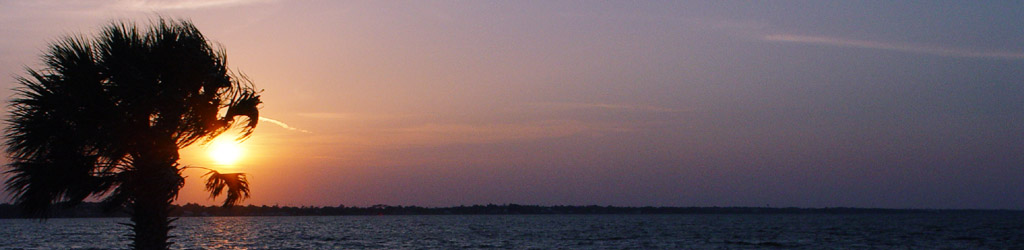
Not gonna say a lot about these, because it’s a little hard to type right at the moment, but here are a couple of pics from Monday’s sunset and Tuesday’s successive sunrise – not too often that this happens for me, except at the beach sometimes. These are both local, however. The sunset above was from Jordan Lake, looking in much the same direction that the little sliver of moon was seen a few posts back, and sunrise below was from the pond nearby. The branches just seemed to work for both of them, so here we are. But I also liked the little added touch of the ‘smoke’ wafting from the ‘fingertips’ above; really just a jet contrail, which is why I prefer sunrises because the jets usually aren’t active then, but it kinda worked here, unintentionally.

bare branch against sunrise sky the next morning

Moon Face Monday

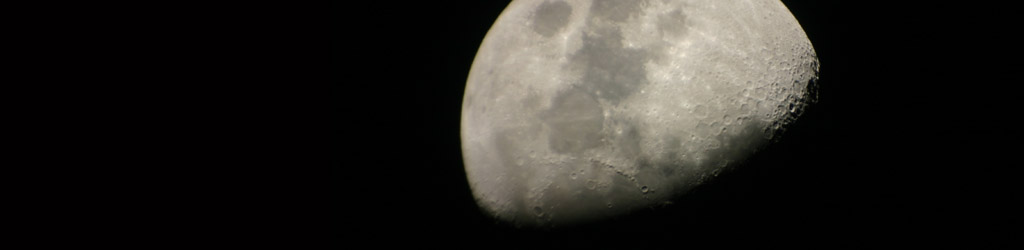
slightly gibbous first quarter moon
Hey hey it’s Old Man Al D here with a new topic, “Moon Face Monday!” Today we have a first quarter moon giving way to gibbous phase, taken just hours ago! “Gibbous” comes from the Latin word gibbus, meaning ‘humpbacked,’ which I suppose could be said to apply to such a phase, if you ignore the obvious aspect of bierbeibei, which is the Latin word for ‘potbellied.’ Wahoo!

Be sure to check back next week to see what else I have for Moon Face Monday!

*     *     *

Okay, no, not really. I’m just messing with Buggato.

January ran so far away

distant huge flock of seagulls
I said that this pic would be coming in a few days, because it’s an obvious choice for the end of the month abstract. Well, that and the fact that I’ve shot almost nothing in January, so it’s this or some weird images through the microscope.

While out on Jordan Lake, a huge flock of birds was visible well out over the water, and the long lens (and a knowledge of flight behavior) revealed that they were likely seagulls. But what exactly they were doing at dusk wheeling around far out on the lake, I couldn’t tell you, probably because of the threatening electrodes attached to my genitals. No, seriously though, I don’t know. I don’t know! It wasn’t fishing, because nobody was diving or clustered on the water as they tend to do, and to the best of my knowledge there was no garbage scow out there.

Just a few minutes before I found the moon, however, I glanced out there again and saw that not only had the flock moved further off, it had grown remarkably, stretching across perhaps a kilometer of sky. I juggled a bit to frame the excerpt below to retain enough detail while still conveying the mood from the sky color and clouds, because now, they look a lot more like a colony of bats, which is much cooler.

a flock of seagulls, not bats, but I shouldn't have told you that
In fact, if you want to see a little more detail, you can click on the image itself to see a larger version. If you’re viewing this site on your phone, you likely won’t see much from either version, but that’s your tough shit – stop playing with toys and use a real computer.

On this date 5

snow in fronds of pampas grass
This one goes back only six years (next week’s will be worse) to 2014, one of the January storms that are fairly common for North Carolina; if we’re going to have only one decent storm, it’s generally in January. So far this winter we have had none at all, not even a smidgen – I think a couple of flakes blew around one day for a few minutes, but that was it. We’ll just have to see what happens – previous predictions, including The Girlfriend’s that it always/usually/often/occasionally snows ten days or so after a winter thunderstorm (some Farmers’ Almanac thing I believe,) have all petered out.

With a decent enough snowfall, things can get a lot more picturesque, but there are a few factors that can prevent me from taking advantage of this: no good light following, no good landscapes or compelling subjects in close proximity, and of course, a distinct reluctance to chance the conditions of any particular road solely for a ‘good photo’ – I guess I won’t ever make it big on Instagram. North Carolina does not rank among the best states in adequately clearing the roads during and after a storm, and few of the vehicles that I ever have access to are good winter choices – because we rarely have serious winter here in the first place. So if there’s a chance of bad driving, I just stay home. My first car, after all, was wrecked during a blizzard in New York.

Thus the pic from our own yard. Compelling, timeless, expressive, captivating? No. Interesting? A tad fartistic? Maybe – that’s up to you to decide. But taken on January 29th, so it fits the bill today.

A quick question

So, if I comment that some internet topic is receiving far too much attention – you know, one of those that it seems every damn person feels obligated to add their own take on – does this stand any chance at all of raising awareness of the rampant “me too-ness” that is so prevalent nowadays, or is it simply contributing to the same problem? I really need to know.

But thank fucking dog I dumped Facebook years ago.

1 153 154 155 156 157 327