After determining that the woodpecker nest was reoccupied, I never got back down there to check on progress. Part of this was due to already doing extensive (and successful) video of the fledglings leaving the first nest (well, one of them, anyway,) and part of this was due to free time and the heat, which I’ve already had quite enough of. But the Insubordinate Mr Bugg wanted to do a session down there, and I get paid for those, so off we went yesterday morning. Granted, we had to wait for the morning showers to subside, yet the sky was clearing as we arrived.
I had guesstimated, on examining the photos from a week previous, that the fledglings had roughly a week before they’d want to bail the nest; I’d judged this on the fact that they weren’t poking out of the nest much when the parents came to feed, but the heads were at least a little visible when zooming in on those frames. As it was, my guesstimate was bang-on (though bastard honesty impels me to admit this was probably just luck.) It was only a short wait while staking out the nest cavity before continued occupancy was confirmed.
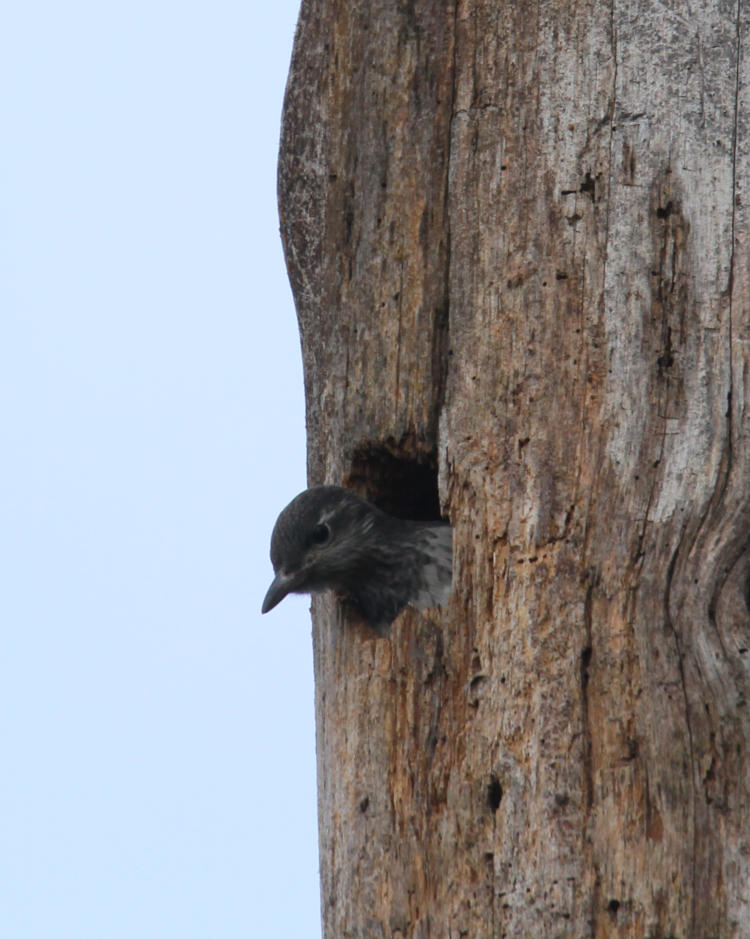
Once again, this is a red-headed woodpecker (Melanerpes erythrocephalus,) though a juvenile so bearing almost none of the distinctive coloration of the adults (which we will see in a second.) Leaning out of the nest like this with no adult around, and the regular cheeping and chittering/chuckling that they do when anxious, is a strong indication that bailing the nest was imminent, though ‘imminent’ last time meant a solid five hours of close observation, so I wasn’t going to place any bets on time frames for this one.
An adult soon came by to provide food, and I snagged a lovely portrait, though not too evocative of familial bliss:
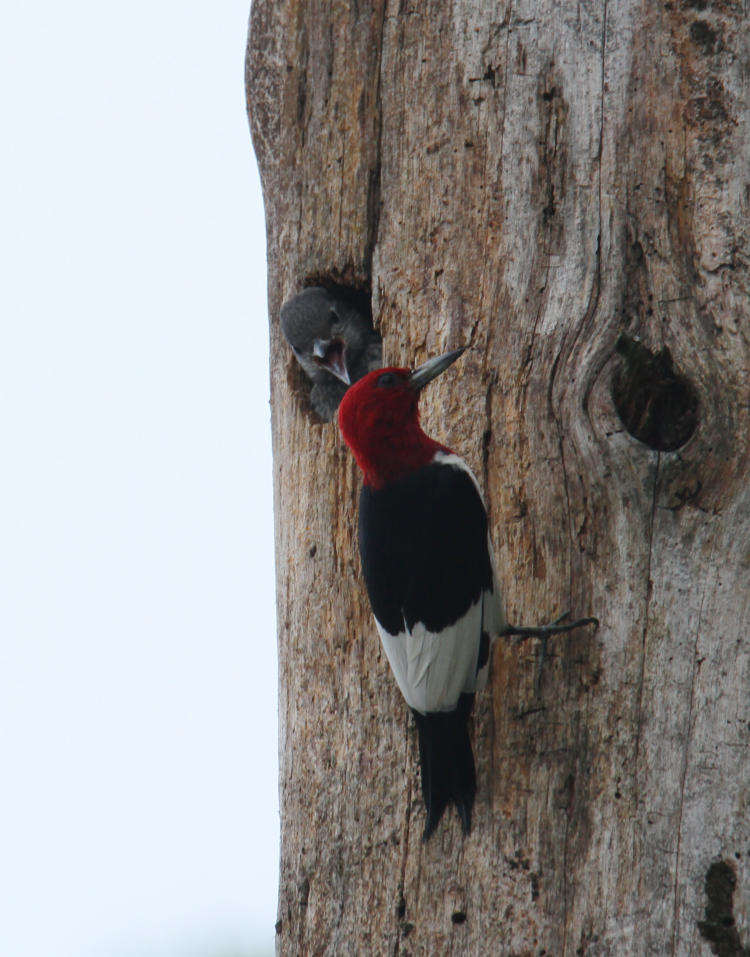
In editing the photos for this post, I was able to examine the adults in reasonable detail, and I’m fairly certain these are not the ones from the previous session. In this climate, some bird species will have two broods a year, though I can’t vouch for how close together they can be, but I also observed a separate male working on nest cavities last time. I’m guessing this is prime real estate to woodpeckers, though I suspect, from the condition of the tree, that it won’t be lasting too much longer. There are still plenty of other candidates nearby.
Hearing another set of chuckling sounds coming from the woods, I was almost certain one of the fledglings had bailed before we got there, and after a short observation of the one peeking from the nest, I went looking for the other while Mr Bugg remaining monitoring the nest. I was no longer hearing the calls, but a flash of white on the wings of a bird passing nearby caught my attention and I tracked it to a distant tree.

This is the full-frame at 600mm, so you know it wasn’t terribly close, but we can have a tighter crop through the magic of digitality:

That’s not good, but enough to tell me that it was definitely one of the fledged red-heads. Unfortunately, I didn’t track this one but returned to observe the one still waiting to leave the nest, figuring fate would have that occur as I was unsuccessfully trying to photograph this one. I never did see this one again, despite doing a longer search later on.
Somewhere in there, one of the many black vultures (Coragyps atratus) that were frequenting the area decided to land on the very top of the same dead tree that held the nest.
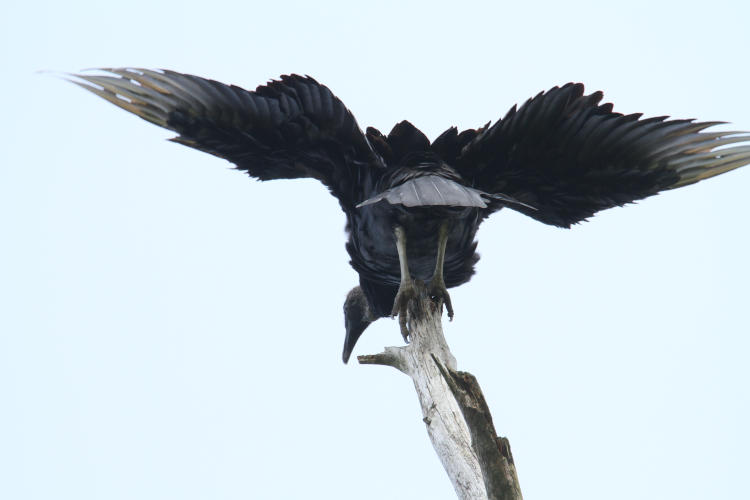
That’s not just a lovely perspective (yes I’m being sarcastic,) it also put us directly downrange of any evacuations that might take place, but we really couldn’t move much and still have a decent view of the nest. The fledgling knew a little something about safety, though, and remained hidden within as long as the vulture was up there, which thankfully wasn’t too long (and remained defecation-free.) While the vulture likely wouldn’t have made any moves towards the diminutive woodpecker, it was certainly setting up enough vibrations and scrabbling noises to carry through the trunk, which the fledgling interpreted as potential danger. Neither of the woodpecker parents ventured near either.
Eventually, the vulture moved on, and a returning adult chose the same spot to alight with a meal for its offspring.
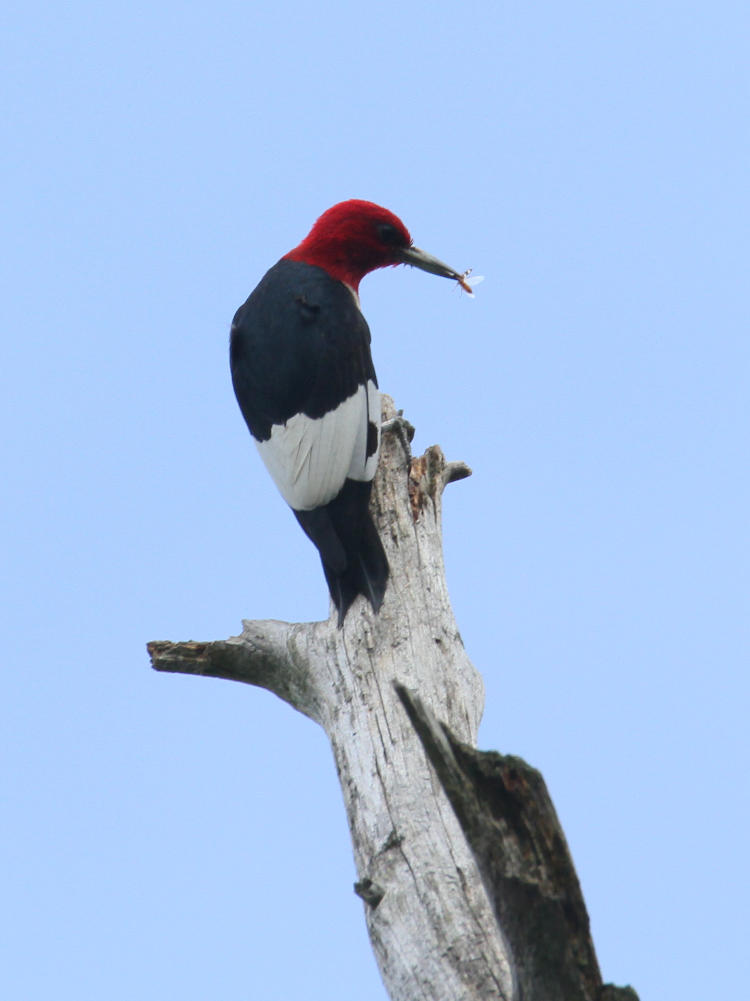
Yes, the sky was changing that much within minutes, courtesy of scattered clouds blowing through – not enough blue patches for my liking, but whatcha gonna do?
The feeding visits were now few and far between, much less frequent than a week ago, and of course one of them was this ridiculous little meal – enough to get the fledgling excited, but not anywhere near enough to sate its prodigious appetite at this age, even for a few moments. This was almost certainly intentional on the adult’s part; You want more, then get your ass out and find some.
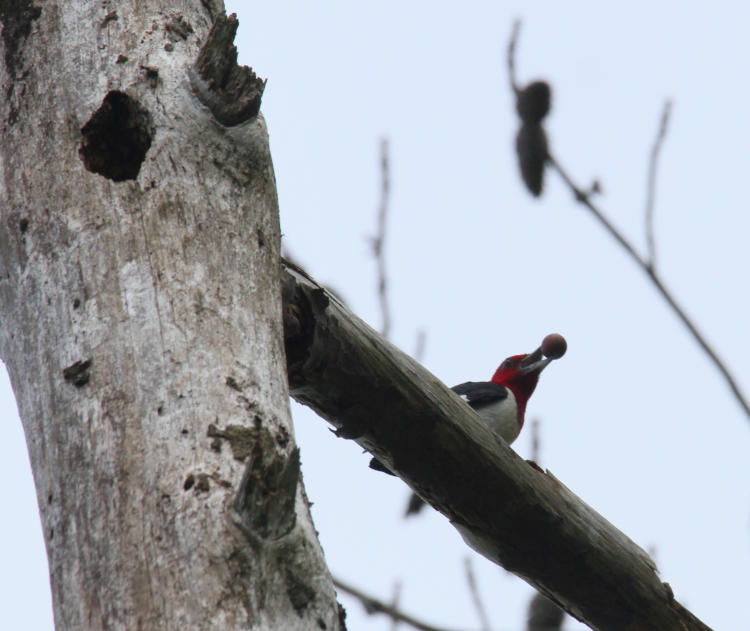
Not all of the meals were quite so lean; I initially took this for an acorn, but on close examination (and finding an empty skin floating in the water nearby,) I pegged this as a grape instead, which the adult prepped for a minute or so before dropping down to pass at least some of it off to the young.
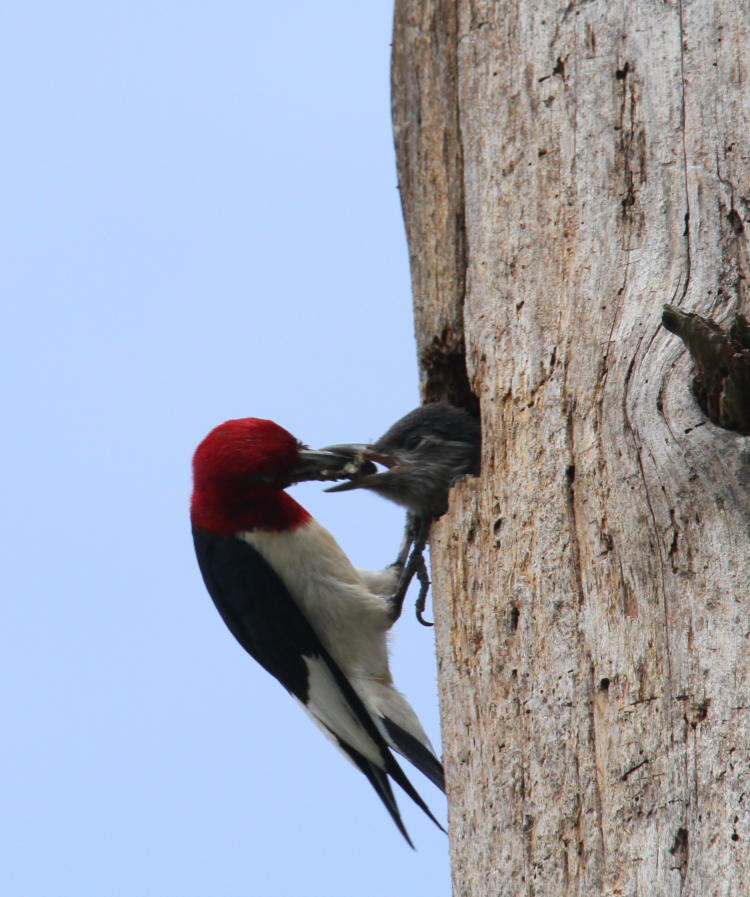
This was still later on, and a little blurred but not a bad perspective – often enough the adult would sit to the right of the opening and partially block our view of the feeding, and I’m not sure this wasn’t intentional. We were a good ten meters below and off to the side a bit, but distinctly obvious standing out knee-deep in the lake. Had the nest been lower this might have given the adults some pause, but the distance was enough and we were mostly motionless and quiet.
As it was, we spent an hour and twenty minutes out there shooting a ridiculous number of frames on the possibility that the fledgling was gonna leave the nest right now. Neither one of us brought along the tripods – I typically don’t plan an elaborate shooting session with students because that’s their time, and I may guide in certain directions but I don’t dictate what we’re supposed to be doing. So we were simply handholding the long lenses aimed up at 45° or better, which gets fatiguing in a hurry. Meanwhile, this one was showing all signs of being as neurotic as the second one had back in June.
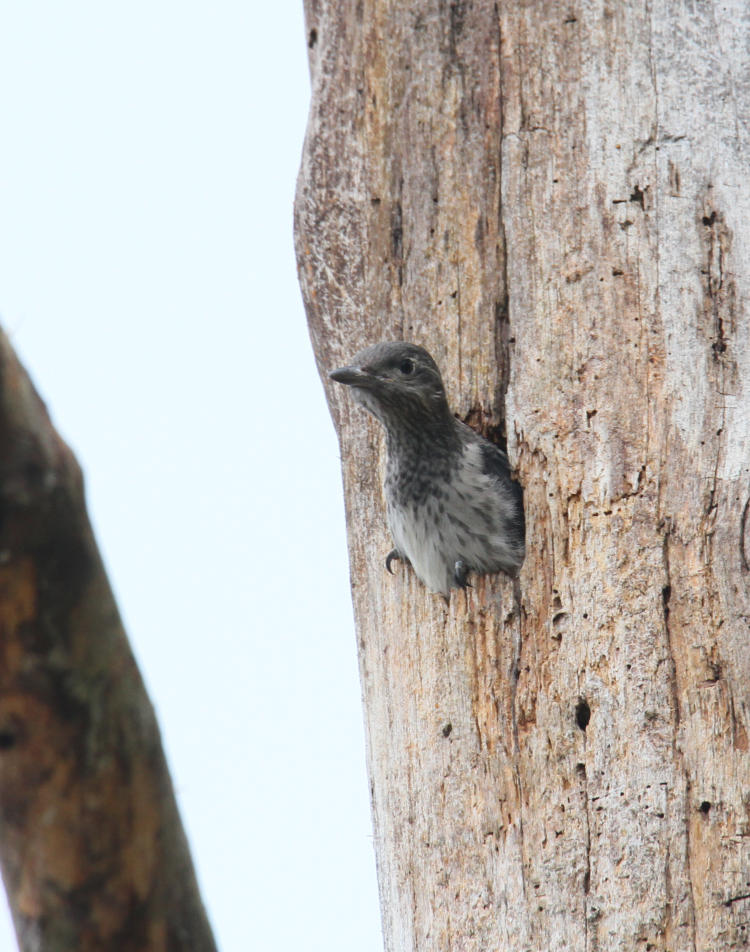
This is one of the better views of it trying to get up enough nerve to vacate the nest – note the toes hanging out. It chattered, it leaned out, it craned its head all around, and then, just when we figured it was within seconds of committing, it dropped back down out of sight again – repeat indefinitely. Mr Bugg was beginning to get exasperated, and I merely scoffed pompously from past experience and reminded him, “Five hours.”
[Seriously, I’m not even sure what made me stay that long last time, but it worked at least, so positive reinforcement and all that.]
This time, however, we reached a limit, plus we had other subjects to try and pursue, so we abandoned the neurotic little spud to its vacillations, but not before getting another nice portrait with a parent.

If you noticed how much the protruding fledgling looks like the broken branch nearby, you understand why the red head doesn’t develop until later. And of course there’s the sibling up there that had already left, near-indistinguishable from the grey wood and quite difficult to spot. I would like to get some pics as they transition to adult coloration, which would of course mean a lot more trips, but, well…
Meanwhile, a few other species could be found, though it was far from a busy day down at the lake.
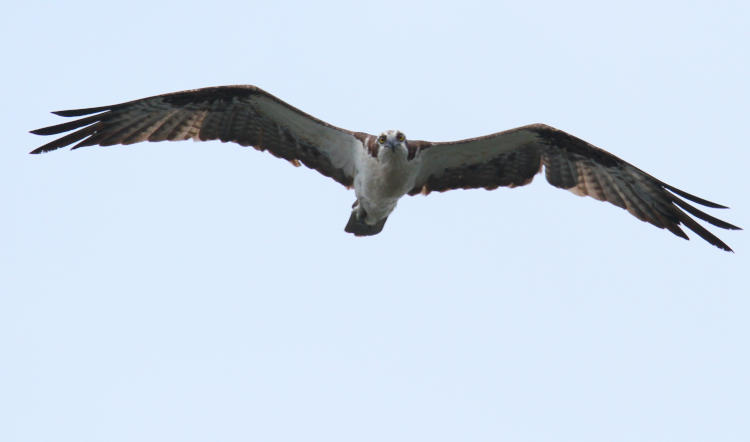
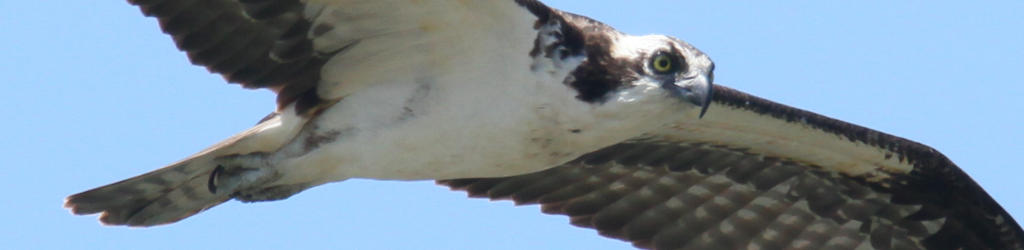
A lone osprey (Pandion haliaetus) came within decent range, including staring us down as it wheeled close by, but it was disinclined to dive for any prey and soon moved off.

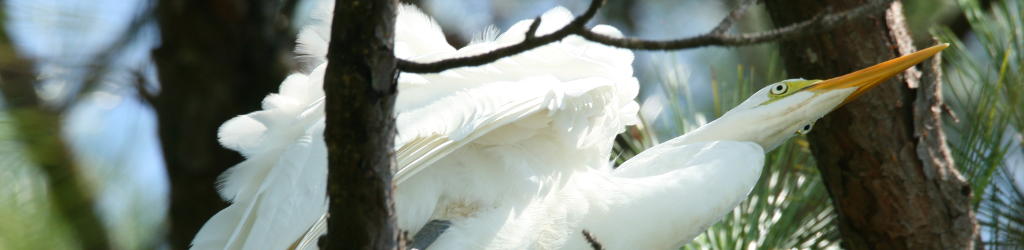
I’d seen a single great egret (Ardea alba) across the lake on an earlier visit, and this may have been the same one – as you imagine, they’re not hard to spot even from a distance.
Now this next one had me going.
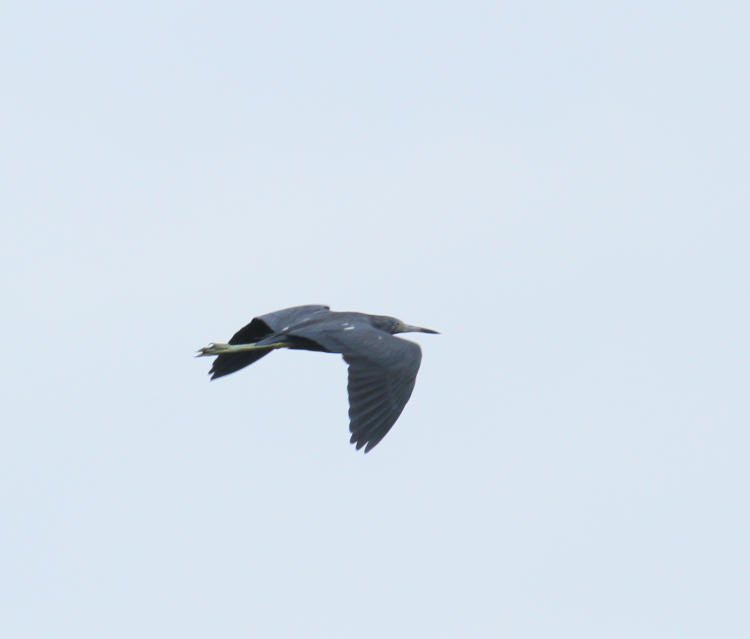
It looked a bit smaller than the egret in passing, but that can be deceptive when against open sky – depth perception is not what we often believe it is. The uniform dark color had me suspecting a juvenile great blue heron at first, but they’re not really all that dark. Later on in examining the photos, I started to think it was a tricolored heron, but still juvenile because it lacked the, well, the three colors that they have. Though we don’t see tricolored herons this far inland/north.
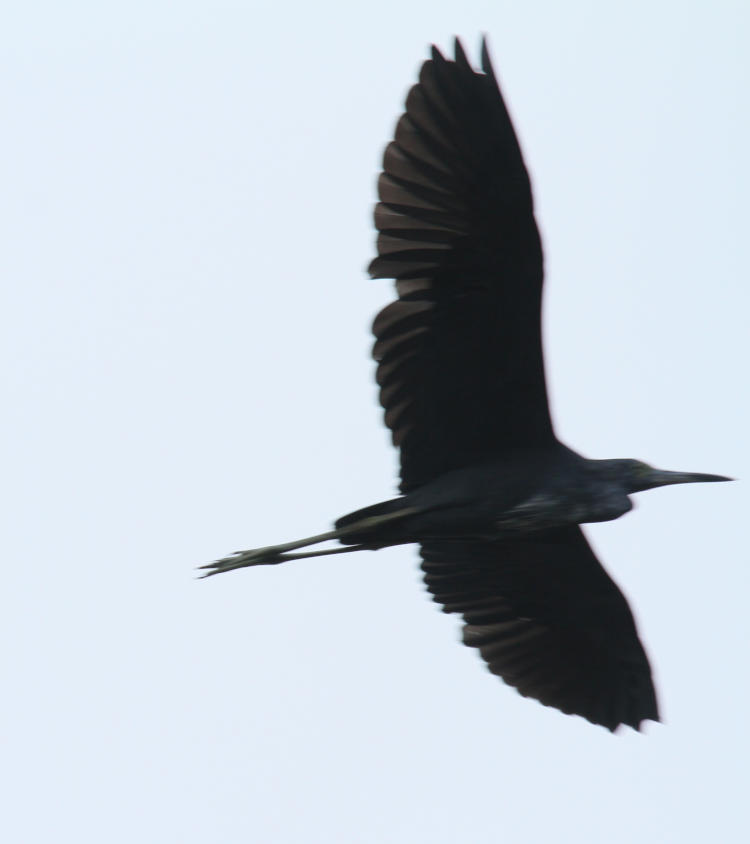
My Sibley Guide disavowed me of that notion, because the juveniles of that species are brighter, not darker, plus they always have some white on their belly. This crappy image, snagged when autofocus was being stubborn again, was enough to clarify some small details at least, and now I believe this was a little blue heron (Egretta caerulea) – I thought I’d featured one here at some point in the past, but it appears not. Little blue herons are quite small, probably about the same weight as the green herons but lankier, and my impression was something larger and more distant, but the coloration is closest to that than anything else. Normally there’s a noticeable bit of reddish brown along the neck, but it’s possible this one was just getting into its adult coloration. It’s not too young, though, because the juveniles are piebald, mostly white with blue patches as if they spilled the fingerpaint. Little blue herons aren’t found around here either, so this remains a curiosity.
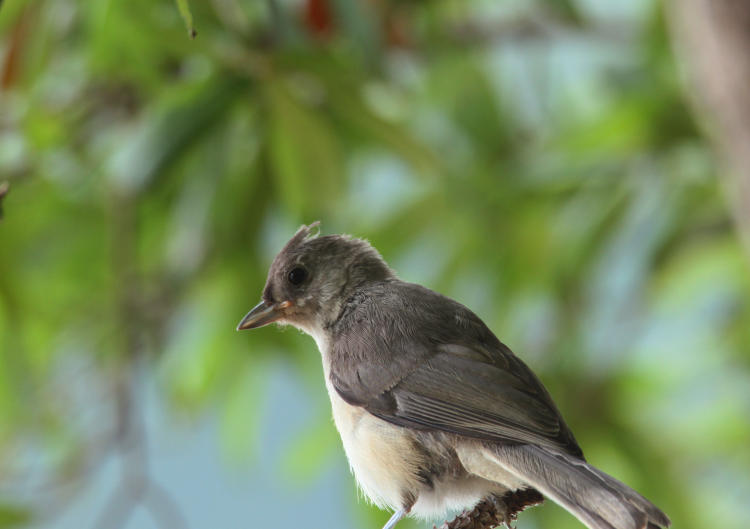
It was a day for juveniles, though. Within a thicker wooded patch some distance from the woodpeckers, I snagged a few frames of this guy, which I’m almost certain is a juvenile tufted titmouse – the behavior and calls were right, though typically the face is paler. This one might also have not been long out of the nest. I mean, seriously, you call that a tuft? My hair stands up more than that, and I don’t even have hair up there…
And finally, another portrait, though technically this was the first that I captured on this outing – let me have my trivial drama.

This is a juvenile black vulture, still sporting the baby down on its head (and a little on the shoulders) despite being out with the flock like a real grownup. This was the first I’d seen, and the towhead was dashing – the species should endeavor to retain that. Almost looks like a fur-lined hood.
But hey, that’s not too bad for two-and-a-half hours. Now all I have to do is discard a lot of near-identical frames of a woodpecker fledgling leaning in and out of the nest…



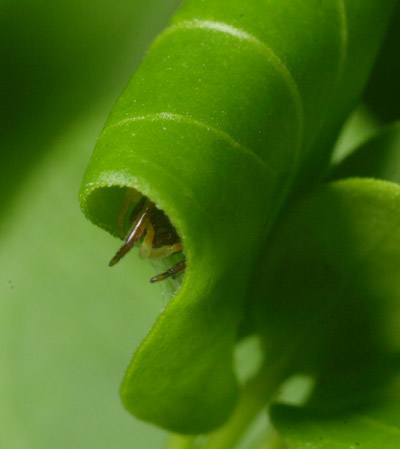 As it ambled along, I saw a rolled leaf in the middle distance (for a small spider, at least) ahead of it, and suspected that this was its destination. Unwilling to disappoint me, the spider quickly made its way up the stem in question and disappeared into the rolled leaf, appearing briefly at the other side long enough for me to fire off a shot. Some spiders make breeding nests out of rolled leaves,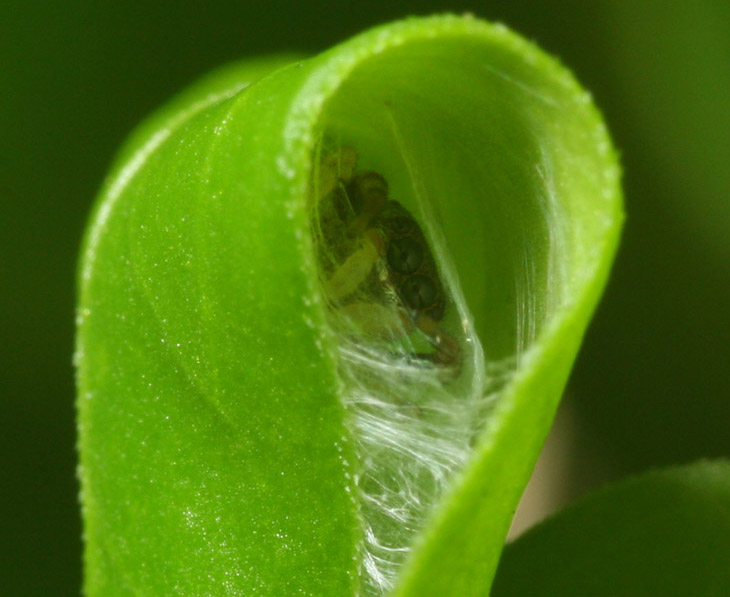
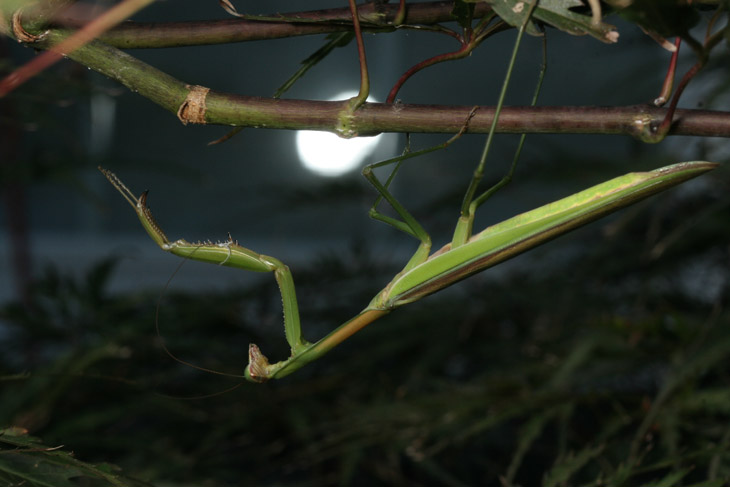
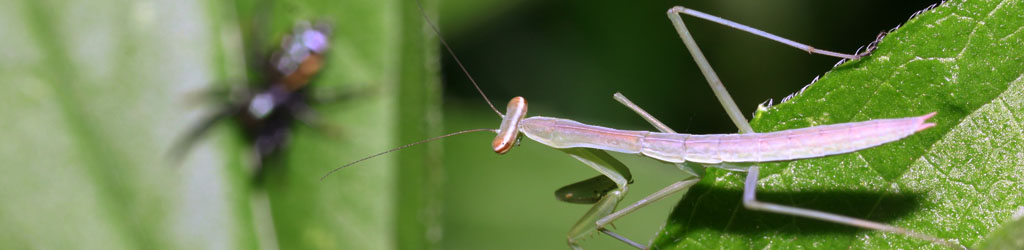
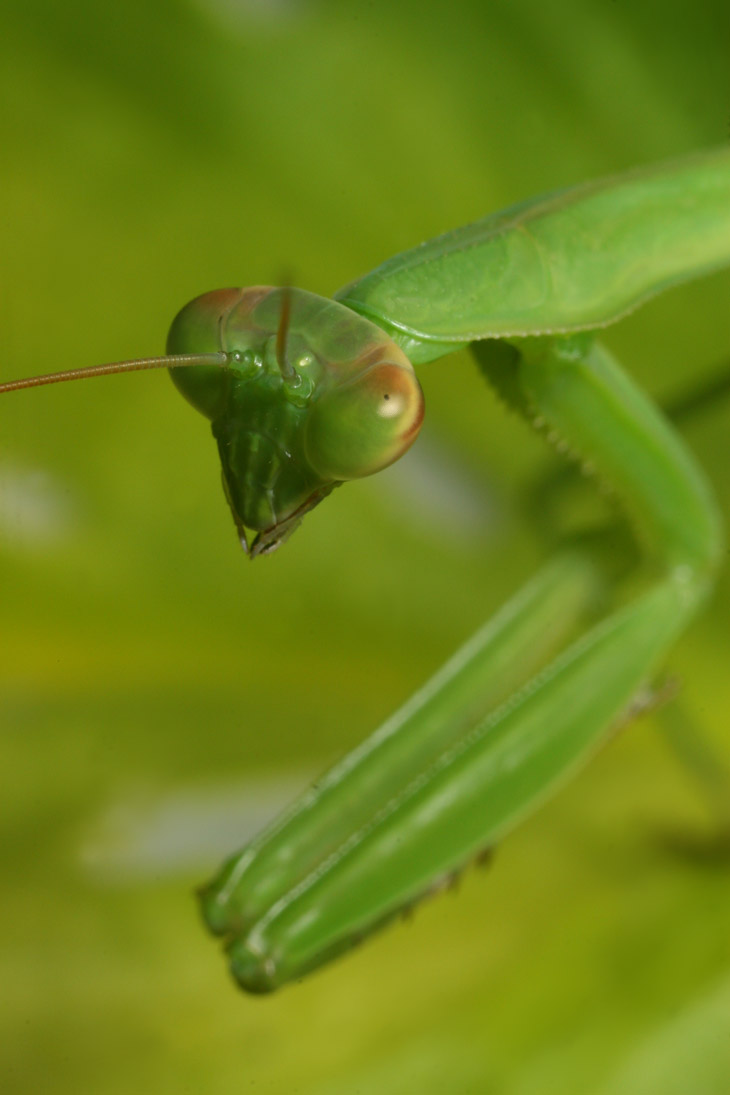
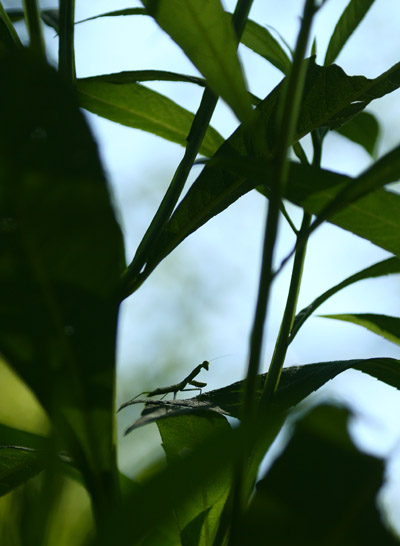
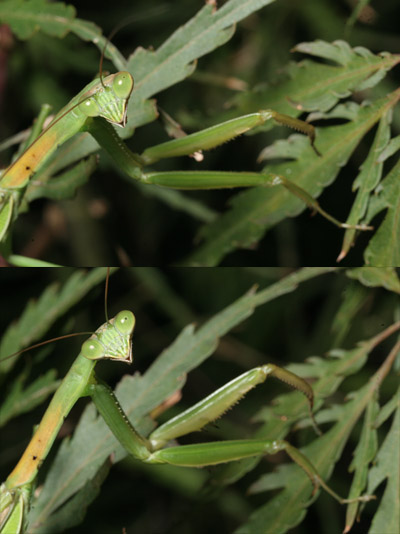 I’ll also take this opportunity to illustrate a simple but important, and often forgotten, facet of macro photography. As I did some portraits of the other mantis since it was slightly more cooperative, I was able to do some comparison shots. Both of these were taken only moments apart without the mantis moving more than a fraction; the difference comes from my position. I saw the antenna falling in front of one compound eye, as well as the leaf in the immediate background lining up right behind the mantis’ head, and shifted position slightly, framing the head against darkness instead and dropping below the antenna – the change also allowed the flash to illuminate the forelegs better. Such a trivial amount of effort to significantly improve the photo, and all it takes is an awareness of the background (including knowing that it will become sharper as the aperture closes down.) Increasing contrast at the point of focus always helps draw the viewer’s eye, done in this case by framing the bright green head against the blackness instead of the green leaves, and the complementary lines of leaves and mantis body are a nice bonus. Don’t get me wrong – I don’t consider this high art, but it’s a nice comparison illustration, and the more of this you can accomplish the stronger your images will be.
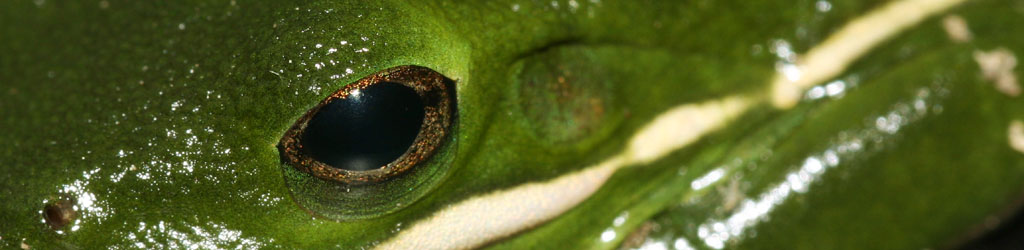
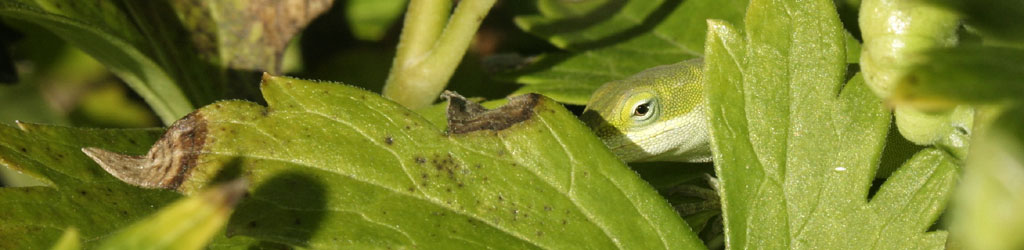
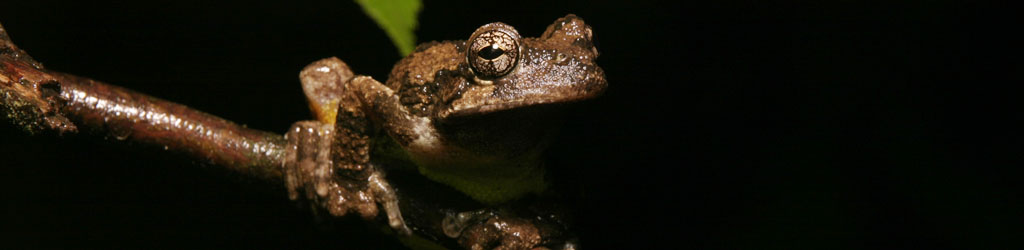
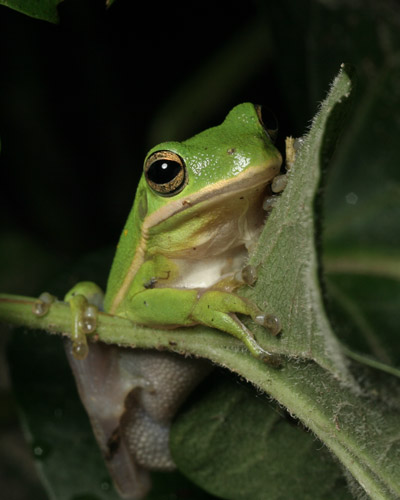 By this time I had the camera ready, and did a quick photo session with the transplant, who may or may not decide to remain in the area; either way, it has much better access to food, shelter, and potential mates than the interior of Home Depot. Treefrogs do not spend much time at all in the water, but they do need to remain moist, and will deposit their eggs in or near the water so the hatching tadpoles are in the right environment. I’m fairly certain we had a grey treefrog hatching last year, and at present there are five juvenile green frogs (Lithobates clamitans, the more aquatic and non-tree-climbing cousins) living within the pond, though the tadpoles seem to have vanished quickly for unknown reasons. We’ll just have to see what happens.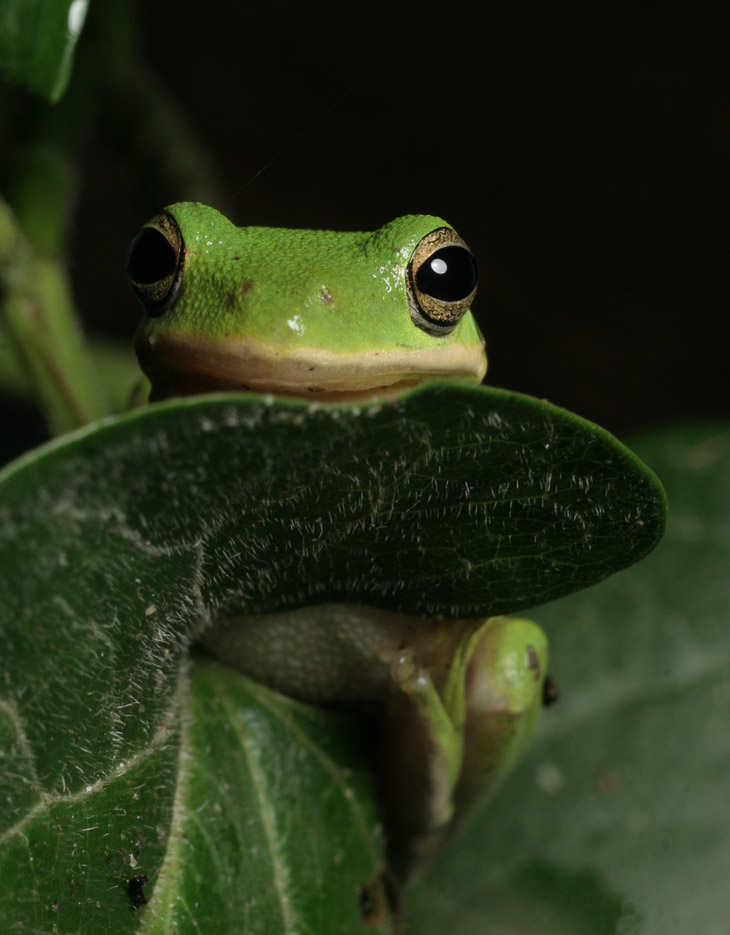
 In the past week, I shot about 600 images in four sessions or so, which partially explains the lack of posts. So we’ll play catch-up over a couple of days, and in the process see the difference in approach used, depending on the subject and circumstances.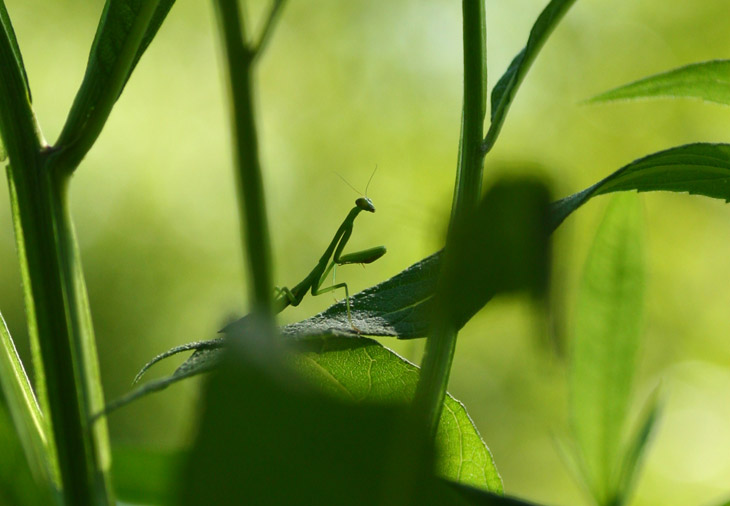
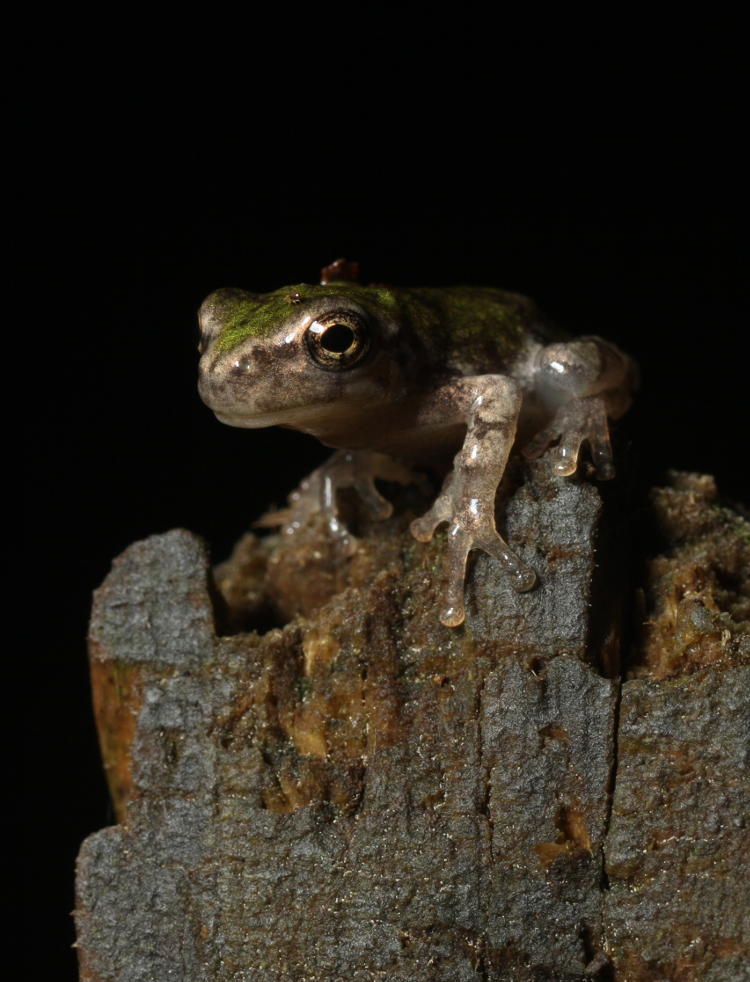
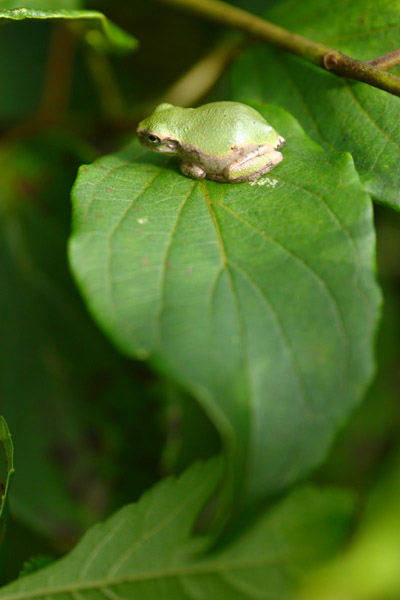 I have a few images of this eentsy treefrog that show the face better, but this one gives a dramatic impression of scale with the entire leaf visible. This is likely a squirrel treefrog (Hyla squirella,) and probably the same species captured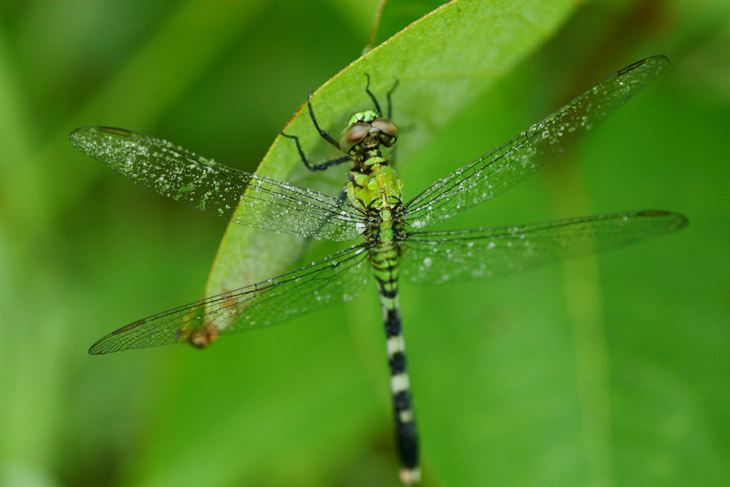
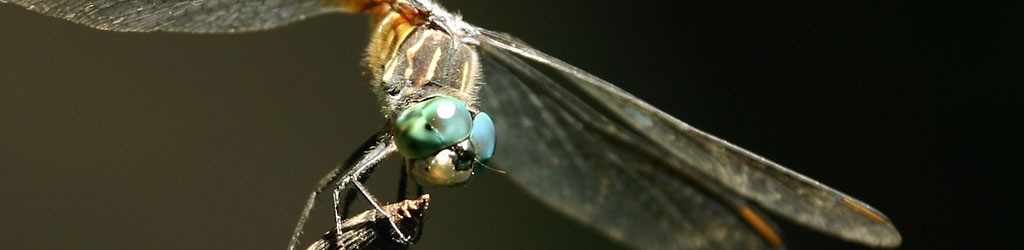
 This dragonfly, an eastern pondhawk (Erythemis simplicicollis,) was the first species captured that day, before the sun had risen enough to break through most of the trees and evaporate off the dew – while I admit to plying a misting bottle in situations where it can add to the image, the moisture here is natural, and fairly common with dragonflies in the right conditions. And since dragonflies need a good level of warmth in their wing muscles along the thorax to fly (the reason why they’re always found perching on reeds in bright sunlight,) any this covered in dew are unlikely to fly away at a close approach. However, with a very slow approach, you can actually get them to perch on a fingertip at any time, because they view speed as a threat and glacial movements simply don’t register in this way. Go straight in towards the head, and gently push up against the face or forelegs when you make contact – no, they don’t bite.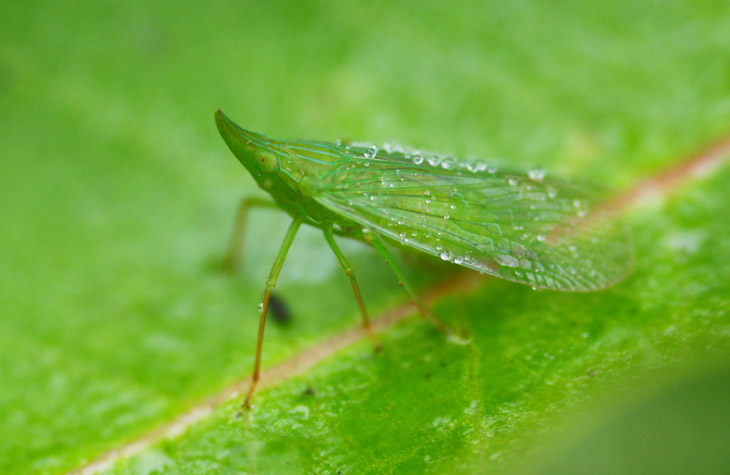
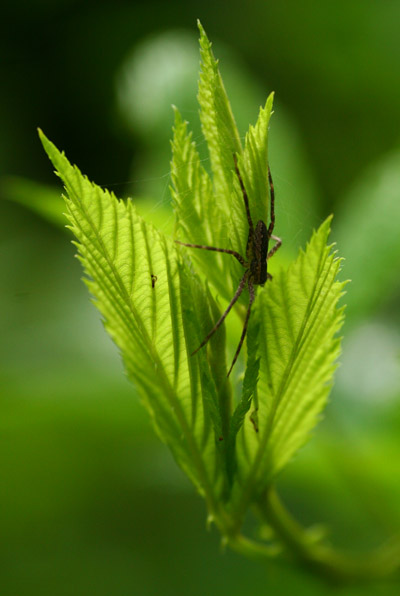 The dew had already boiled off by the time we found several nursery web spiders (Pisaurina mira,) all perched in similar positions atop their own stalks of raspberry plants. To me, there’s something evocative of the early morning sunlight shining through yet the spider appears to be shunning it. While this is likely true, because it will help them avoid birds, I cannot say this definitively, especially since we only had the one angle to work from, so couldn’t test the theory by finding any others on the sunny side of the plants.
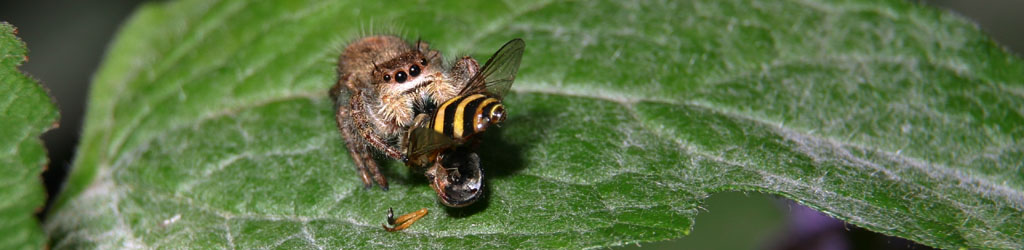
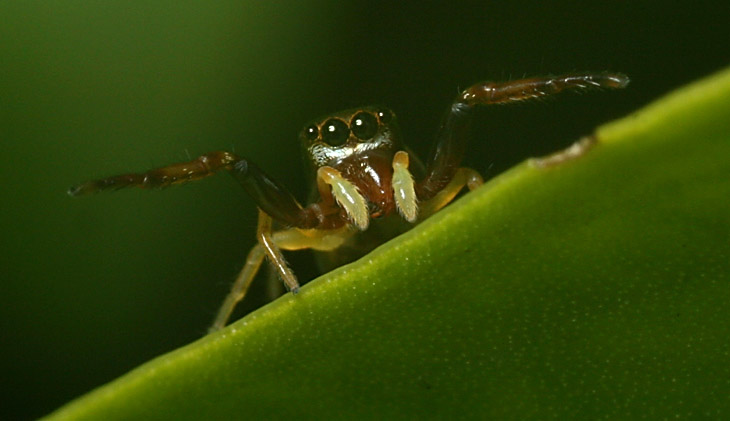
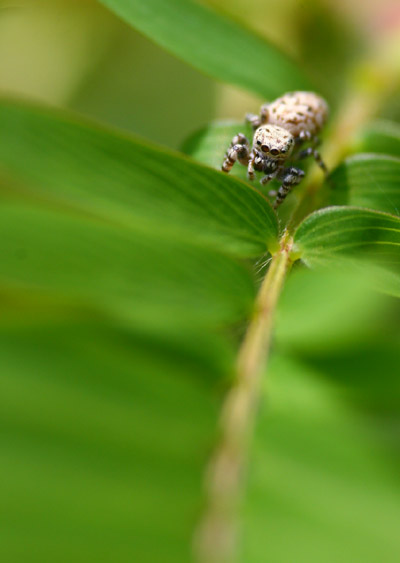 We close with another spider, this one a jumping spider, likely