I have a text file that sits in my blogging folder, of ideas that came to me at one point that I felt I should sit down and put some effort into, and the first portion of this post was one of those topics. Recently, another forum produced some further thoughts, and I finally decided to sit down and throw out some perspective.
Language, as useful as it can be, can also be inordinately troublesome as well, and it may play a part in this first aspect, which I’ll introduce with a commonly-heard saying: “It’s my child and I will raise her how I please!” Now, I think we all know that such phrases are the defensive battle-cry of the shitass parent, but is there a subtle aspect that influences our thought processes in there? When we say, “It’s my child,” we’re indicating that we are a parent, the one who contributed genes to this particular human, but how often is there a sense of possessiveness as well, exactly the same as if we said, “It’s my car and I’ll put on headlight eyelashes if I please!” Children are not possessions; slavery is illegal, and even when it wasn’t, it still wasn’t safe to say we could own a living and free-willed being. The best that could be said was that the violence, abuse, and deprivation used for coercion wasn’t going to be punished in any legal manner.
But this idea of possession, even in extremely subtle forms, is a ridiculous and damaging attitude to have. Children are, of course, developing adults, and are only our responsibility – a responsibility to guide them towards sound decisions and behavior, to bring them through their formative and vulnerable years to the best of our ability. This does not make them customizeable, for instance indoctrinated into our preferred mindset regarding politics or religion et al, or guinea pigs, beholden to our astounding ideas about what constitutes proper medical treatment (it’s truly amazing how we know that physicians require years of college and constant refreshers to practice medicine, but think reading a fringe magazine article is enough to pass judgment on their entire education, if not the entirety of internal medicine itself.) All too often, it seems the goal is to produce a little clone of us, when it really should be to foster someone even better than us. I mean, who can argue against this? But to do it, our self-absorbed ego must take a backseat to the simple idea that there are aspects of ourselves that can actually be improved. We need to stay away from the (even internal) assertion that we know what’s best, and ask ourselves if we can actually support this view. A bit of self-doubt is an extremely useful thing, because it makes us seek solid answers. In contrast, believing that we’re right, to the point where we avoid even considering the possibility of being wrong, is far beyond pointlessness, very often producing damaging results. Humility is a good thing.
While I haven’t tackled the topic too often here, if ever, when it comes to the topic of abortion I’m distinctly pro-choice, mostly for a very simple reason. Quite frankly, if someone doubts their ability, financial situation, emotional makeup, dedication, or anything else required to raise a child, then by all means they shouldn’t be raising a child, and requiring someone to do so is hardly a tactic that’s going to instill these necessary traits, is it? And while I wish I could say that any of the various arguments against abortion were compelling or made valid points, that’s unfortunately not the case; the best rely on unsupportable premises, while some of them become downright insipid.
It goes without saying that the various religious arguments hold no water for me, and to be blunt, the kind of people who feel that the garden of eden and planet-wide flood stories are anything less than totally absurd are not the kind of people I’d be inclined to take advice from. While the phrase, “life begins at conception” is a popular one, it has no basis in science – even an unfertilized egg and lonely sperm are alive – but more to the point, why should we find that the key factor in all of this is “life”? I’ve seen too many abusive and unloving households, and I’m sure you don’t need my stories to make the point, because you’ve seen your own – but you know, those abused children, even if they’re chained in a corner of the cellar, are “alive,” so chalk one up for religion, right? I wish I could say that religious folk actually had higher standards than that bare minimum, but take a look around you and see where all of the effort is going, and what the key points of the arguments are. Hell, just count how often you hear, “quality of life” – you won’t need more than two blank lines on your notepad.
Yet to me, that’s a key factor: a household, a family, should be dedicated and devoted to raising a child. Again, we are talking about a human being here, regardless of whether or not it is magically imbued with either ‘life’ or ‘soul,’ and children can easily be influenced in their development by households with poor attention or affection, inadequate economics, inferior healthcare, instability, and on and on and on; the negative effects ranging from social deprivation to outright misery can last for years and even impact the entire adulthood of this precious life. You know, we often put our pets to sleep with an overdose of anesthetic when we find them suffering too badly, but to hear far too many churches tell it, humans deserve much less. You’re alive – be happy, you little ingrate.
I also love the argument that, “you should have thought of that before you had sex,” and all of the various abstinence-only approaches, actually and measurably demonstrated to work far worse than quality sex education and stigma-free birth control (don’t confuse religious folk with numbers and especially facts – you know how offensive that word is.) I’ve mentioned before the irony of the religious thinking they’re somehow better informed than everyone else, but think about this one for a moment: their argument usually is, you made a mistake (goaded by the strongest emotions that mankind possesses, and who might we blame for that?) so, as penance for your idiocy, you now have to be responsible for a child until they’re of legal age. Making the tough choice to keep a child or not, despite the reasoning that might be applied in this decision, is not allowable; instead, you just better get ready, by magic I suppose.
Now, not only is this a pretty brainless approach to humanity overall, it makes the child the instrument of punishment for bad decisions. Again, I thought we were talking about human beings here, but I guess not enough to be worried about their actual welfare. Much, much better to have someone grow up in any manner of untold bad situations than disappear as a zygote with no nervous system at all, exactly the same as the estimated 50% of fertilized eggs that never implant in the walls of the uterus, perfectly naturally.
I’d ask how anyone could actually think this is a viable approach, but I know better: thinking is not involved in the slightest. It’s all kneejerk reactions to senseless platitudes and sound bites, shamelessly manipulated by religious organizations (which have more than enough money to actually fund a better quality of life among their communities) that resort to arbitrary claims and misleading images and outright fraud to make their case. Lying is a sin of course, unless it’s really handy.
It’s a blog, which is a fancy electronic version of a soapbox, so yeah, I get to rant every once in a while. You can start complaining when I print up a few thousand pamphlets and start a day camp to influence young minds with utter bullshit before they’re smart enough to know better.
But here’s the second part, the one sparked by the forum a few days back. The topic had come around to infidelity, specifically a case when a guy felt his kid didn’t resemble him at all and was wondering if he should try to obtain a blood test. Now, there are countless different bits of advice that would be forwarded in such a situation, and of course the dynamics of any particular marriage are not something that are going to be comprehended from a forum comment. But there are two primary questions that occur to me right off the bat, and they are, “Is that your only evidence?” and, “How much does this really matter?”
I’m not one to be cavalier about marital infidelity, and I think honesty and communication are pretty important, yet there are a lot of situations that can occur. One instance of extra-marital sex is a pretty minimal thing to break up a marriage over, considering the huge number of mistakes that can befall us all even without the assistance of alcohol. Let’s face it: our partners/spouses probably had sexual partners long before we came along, so it’s not like there’s this exclusivity thing that we should expect, unrealistic scriptural references notwithstanding, so does it come down to something occurring during a particular period of time that we should expect to be the sole sexual partner? That almost sounds like a technicality, when it’s put that way. And if it’s ongoing, there are probably a lot of things to address in such a domestic situation.
Our egos have a huge role in such situations, and it’s almost entirely undeserved. From an evolutionary standpoint, we have a vested interest in propagating our own genes – that’s really the kind of behavior that’s going to win the selection lottery, when it comes right down to it. Male lions, when they take over a new pride from another male, often kill all of that male’s offspring, just to ensure that their own genes are the ones that will survive; it’s not a reasoned course of action, but evolved behavior, and Homo sapiens hasn’t escaped the same kind of traits, despite our tendency to believe that everything we do is reasoned and intentional.
Yet, genetics is only a tiny part of what we are as people, with all of the rest being how we’re raised and the values and reactions and decision-making we come to possess, products of our environments more than genes, and an awful lot of that is what parenting is actually intended to accomplish. Let’s face it, we have adoptions, and fostering, and surrogate parenthood, and all sorts of jazz like that going on; parents are the ones who raise a child, regardless of what genes have to say. How is it that we could happily raise an adopted child but somehow resent or abandon one from an undisclosed parent? Isn’t that just semantics, a difference that exists only in our own heads? If we were perfectly fine with the situation before we received some crucial bit of info, then what exactly changed?
We come back to the influence of words, the ones always resorted to in such situations, such as, “lying,” and, “cheating,” and “cuckold” (always a good one,) and many more besides, the ones that fill us with righteous indignation – or so we believe. Are we simply conditioned by our culture to have certain reactions? Some people have open marriages, engaging with multiple sexual partners, soooo… the difference is knowledge, or permission? Some people have really crappy marriages, despite no infidelity or outside shenanigans at all. There are lots of different situations, but it’s up to us to define how acceptable they are or not. And this should probably be based on something more functional than our egos, than feeling put-upon or misled or anything else.
… most especially when a child is involved; then, it’s beyond the personal affront or expectations, beyond the idea of a partner being ‘with’ us or not, but a family, a different circumstance altogether. A lot of what that child becomes will be owed to who is doing the parenting, and how. And when we think about our heritage, it’s not really as a collection of genes that we’re passing along, but what our children accomplish and how they behave. Genetic benefits take a ridiculously long time to provide marginal improvements, while directed and willed benefits – for instance, our human advances in healthcare and energy efficiency and communication and so on – take affect thousands of times faster, and are responsible for damn near everything that we’re proud of as a species. It’s why a teacher can be proud of their class even though none of the students provide any kind of genetic heritage to the teacher.
Among the various stories that popped up on the forum was one where a guy found out that the child wasn’t “his,” instead a product of his wife’s affair, and ended up divorcing her. He lamented that it tore him apart, and that he was really fond of the child. And while I was silent on the forum, internally I was asking, “And what did you accomplish with that?” So, he’s miserable, the wife is a single parent, the child has now had one parent abandon her, annnnddd… is there an up side to this story? Is he especially pleased that he fixed the situation? Does the child understand and approve, or will she eventually? Did the ex-wife take it to heart and strive to become an exemplary single parent? I sincerely hope that there was some way in which this situation worked out as an improvement for at least somebody, and was not just a kneejerk reaction spurred by wounded ego. But you and I both know what people are like, and how often exactly that kind of scenario played out somewhere.
Any kind of major decision stands to benefit from careful consideration, but this applies to family life exponentially more. We need to be able to ask ourselves, what are we trying to achieve? What are the consequences of any given action, and who is affected by it? Are we correcting something, improving our future selves in some way, or simply reacting? We cannot change past events, but we can decide how to move forward from them.
Most especially, we sometimes need to remind ourselves that it’s not about us. While we may not be happy about something, that need affect no one else, and it’s just a state of mind anyway; there will always be plenty of things that we’re unhappy with, and the only function of this emotion is to improve matters, not try to enact revenge or make someone else unhappy – that’s just petty. When there’s a child involved, well, are they even going to comprehend what’s going on before they reach late adolescence themselves? If not, then should we do anything that impacts them negatively, or even stands the chance? Can we ensure ourselves that our actions are going to be more beneficial than, for instance, just letting it go, or dealing with it in a manner with distinctly minimal impact?
We consider people who put themselves at risk for the sake of others to be heroes. And while swallowing our pride isn’t exactly risky, it’s also easier to do, and stands a much better chance of fostering something to really be proud of a little further down the road.
Potentially Related Posts:














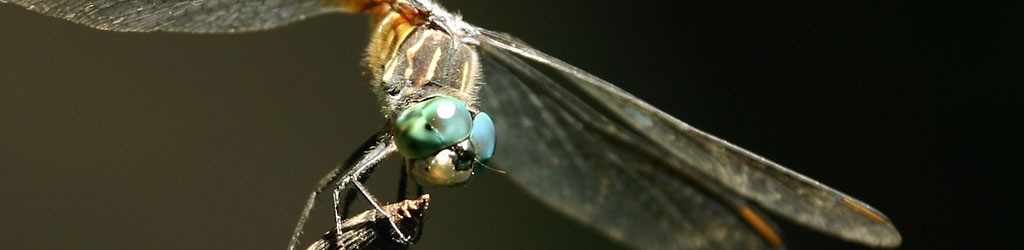









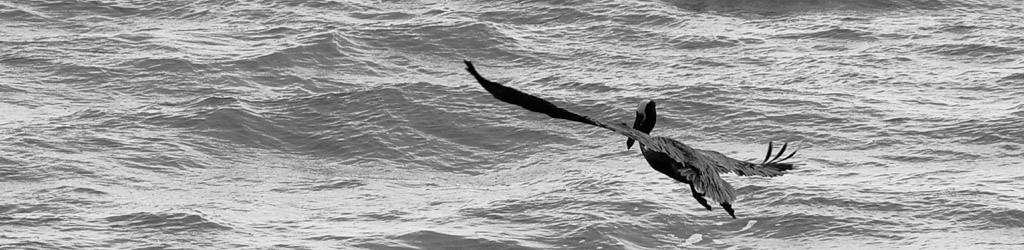



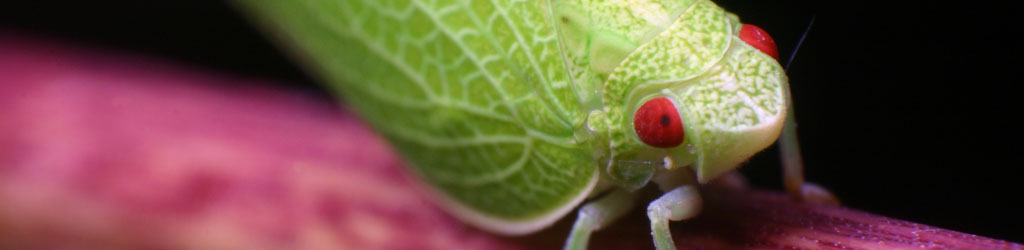

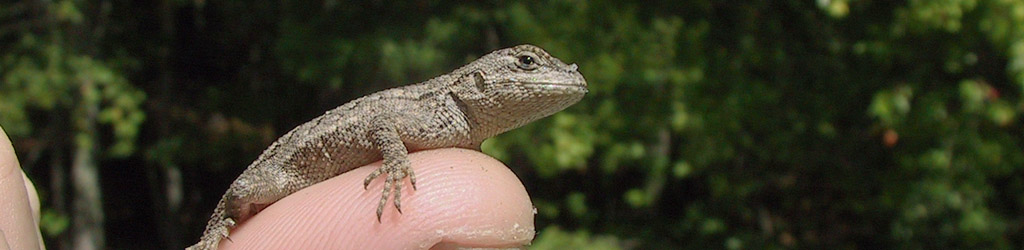





















 So, yeah, it’s winter, the slow season, and there isn’t a lot to photograph, which means it’s time for our







 Moving on to real content rather than excuses, we did not escape the winter weather that hit the east coast, actually getting a pretty decent snow – not as much as threatened or feared, but in the immediate area it was a couple of inches (pardon me for not using metric, but it just sounds better this way.) Alas, I still had commitments, and had to drive in it for each of the worst days, just not very far. But that meant that I didn’t have much opportunity to shoot photos of it – the first day I spent a lot of time clearing off the cars and the driveway, plus it was overcast and not quite finished snowing, and I didn’t bother even trying to go out. So I did a quick look around on the second day when the sun was out, and by then, the neighborhood had been out with their dogs everywhere and the pristine white blanket was all torn up, greatly limiting my options. Above, I took advantage of the sky reflecting from the textured and incomplete ice cover on the pond and started doing the fartsy thing; seen to the right, the just-barely-frozen surface in another section of the same pond yielded some unusual patterns.
 Initially, I thought I knew what made these, but now I’m not exactly sure. The mark from the prominent “thumb” toe (hallux) indicated, to me, a woodpecker of some sort, supported by the size of the tracks, about 35-40mm overall; the woodpeckers have larger-than-average halluces for bracing against trees as they drill for food. But two things made me pause a little. The first is the left-right alternating steps, which doesn’t seem correct to me, but I admit I’ve only seen them scaling trees and not foraging on the ground. Most of the birds in this area hop, keeping both feet together, and the only one I can recall seeing walk left-and-right are crows, but these tracks were too small for them. The second detail is the drag marks between. Again, I thought this was from the hallux, but as I looked at the photos I realized it was from the third phalange, the middle toe, skimming the snow. So at present, I’m not going to positively identify the creator of these tracks.
 Soon after spotting the tracks, I also caught a red-bellied woodpecker (Melanerpes carolinus) zooming from down low up to a safer tree branch, seeming to confirm my identification. And it still might, but there remains a couple of points to note, such as not being the only bird visible in the area by far, and the snow having gone through an overnight refreeze by the time I was out shooting, turning the surface into a hard crust that was far too tough for a medium-sized bird to leave distinctive tracks; this trail was from the previous day. However, in an area of our yard where The Girlfriend had tossed out some beef and bacon grease, I found an extensive cluster of the same tracks, and woodpeckers are very fond of grease, so make of that what you will.