I was working on another post that dealt with clarifying some details about atheism, and the initial premise of this was one of those points. As I started to address it, I realized that it wasn’t going to be covered in a paragraph or two, and so it has become the latest installment in the But How? lineup, to wit: But how does atheism or secularity defend against evil?
What I was originally correcting was the idea that atheism equates with satanism, a belief that, though asinine, is held by a surprising number of people. The short answer is, if atheists don’t believe in god, they sure as hell (a ha ha) don’t believe in another character from the same stories, especially one that the nonexistent god was supposed to have created – this is kind of a “no shit” point that it would seem unnecessary to make, but many people don’t apply logic even this far. And in fact, if it helps, atheism shouldn’t be considered a disbelief in god, but all of them, every one ever proposed, and indeed all supernatural things whatsoever. So no angels, demons, wraiths, blah blah blah. I won’t assert that this applies to every atheist out there, but it’s pretty safe to treat it as an overriding rule.
Yet there’s another argument that comes into play, and that’s the frequent idea that, if you do not “accept god into your heart” or any variation of a faithful defense, this automatically allows one to be controlled by satan or overtaken by evil tendencies or whatever – the variations are numerous, but largely similar in concept. This assumes the preconception – a priori if you want to sound like a pompous ass – that evil is a distinctive, coherent force or property at least (if not personified in whatever archvillain one prefers,) and not just a label we apply to actions or concepts that we really disagree with. The former has never been demonstrated in any objective manner whatsoever, while the latter is how the concept is used constantly, even by the devout. We’ll come back to this shortly.
Further, as the meddling kids pull off the rubber mask, we find underneath (in chorus now) “M’sieur Blaise Pascal!” – the argument is just a variation of Pascal’s Wager, and suffers the same flaws. Briefly, if there is no god but you believe in one, no biggie, but if there is a god and you don’t believe, you’re hell-fodder. Pascal liked math, which might be the reasoning behind reducing this whole concept to a binary state (or that might just be pop psychology,) but it ignores the myriad problems such as which god is correct, or whether faith through fear is true, or the utter pointlessness of requiring faith without evidence (making it some sort of petty game,) and all that rot.
Let’s take a closer look at this game. We are to believe, it seems, that without divine acceptance, we are either prone to or automatically within the thrall of evil itself. Since this is a deliberate state of affairs, one must ask what purpose this serves, and most especially, why is it weighted towards the bad side? Challenges of a similar nature that we place before ourselves are for developing skills that will be useful later in life (you know, improvement and survival,) but in this case, the ‘payoff’ happens after death and is, by most accounts, quite final. This explicitly implies that the status of our souls is some kind of currency, and not for our own use. The only religions where a retained status after death makes even passing sense are those with a reincarnation cycle that allows progression, and even then, we must ask why.
It’s easy to assume that this ‘automatic evil’ pretty much necessitates that atheists alone would participate in more evil actions overall than any other demographic, but what it should actually demonstrate is which religion is the One True Faith™, because every other religion would be susceptible to the very same thing. Can evidence of this be found? Yeah, good luck with those statistics. It would also necessitate that it should be quite hard to tell when we ourselves – and by this I mean everyone – are under the influence of this evil; otherwise we would consciously steer away from it. What we’re inexorably approaching is the definition of ‘evil’ itself, to even quantify the actions. This is where it gets interesting.
Any religion you name will have adherents that answer it this simply: “Evil is anything against my religion.” Not exactly an objective measure, especially when religions routinely clash over this definition, often in extremely bloody ways, still – yes, check a week’s worth of world news, this is not a thing of the past. Teaching evolution? Evil. Allowing women to show their faces in public? Evil. Eating cows or pigs? Evil. Starting fires on Saturday? Evil. It’s pretty safe to say that everyone is able to be considered evil by at least someone else, even if it’s for playing music too loud too late at night. I’m going to call this a pretty shitass way of determining the benefits of one’s actions. Which is why so much of law is dedicated not towards promoting some arbitrary religious definition of acceptable behavior, but towards restricting those actions which are openly detrimental to others in a demonstrable and inarguable way. Benefit and detriment are not difficult concepts for the vast majority of human interactions, and wonder of wonders, we have brains capable of fathoming them.
Keeping with the theme that divine grace must be obtained, this means that we must choose the correct faith among all of those available. Again, most religious folk treat this in a pretty binary way: there is one religion (the one they grew up with, by a vast margin,) and a bunch of obvious delusions; this pretty much assumes that getting it right is mostly a matter of birth or happenstance. If we exercise reason all the way up to considering that any other religions might be legitimate, then the game becomes, how are we to choose the correct one? I mean, let’s be real: they all promise to be the word of god and/or the One True Way, so assurances aren’t a solution. Thus, if we end up using our judgment, we’re going to have to understand what good and evil really are – which, again, isn’t really that hard. The alternative is to believe (as many do) that revelation, or our instincts, are supposed to guide the way. Instincts obviously haven’t done much to whittle down the plethora of choices – indeed, there are more now than ever before in history – while revelation pretty much means that god is doing the choosing, doesn’t it? So now we aren’t supposed to make a choice? This process isn’t resolving itself too quickly, is it?
[It is worth bringing something else up here: if we consider any behaviors that religious folk have gotten up to over the centuries as being wrong – holy wars, witch hunts, misogyny, bigotry, slavery, anti-semitism, beating children – then we are assuming that we can and should use our own judgment of what’s right or wrong. Which is fine – I’ve always argued in favor of this remarkably simple action. But religious folk, all too often, resort to their scripture as being the final word, abdicating thought in favor of blind fealty. Curiously, they only seem to do it for things that a) are currently socially acceptable, and b) align with what they want to do in the first place.]
Another commonly claimed aspect of the inevitable descent into evil without faith is, “doing the devil’s work” – the primary point of becoming evil, so we are told, is that one recruits more followers, satan’s own missionaries. So of course, this should be pretty obvious as well. Since we’re here on an openly atheist blog, this is rather solid evidence of this recruitment, isn’t it? No argument from me, believe it or not. Of course, it also applies, and often much more so, to most other religions as well – the line up there about “missionaries” was not accidental. Religious folk are notoriously bad about seeing things from a narrow perspective, and this usually includes the idea that they themselves couldn’t possibly be evil, but if we’re going to treat this as a serious aspect of theology, then we have to dispense with the special rules that automatically favor any given party. Again, which religion is the correct one? I mean, we’re talking about the polar extremes of good and evil, so this should, by all rights and definitions, be pretty damn obvious. But it isn’t, is it?
Let’s step back and consider what the recruitment of evil might actually look like. No one, of course, wants to be evil, so nothing overt can take place; it would have to be subtle and misleading, easy for people to mistake as good while not actually accomplishing anything good. Quite a few different techniques might fit with this, such as an environment where questioning authority figures is bad, and the delineation of rules that don’t really accomplish anything but cannot be broken, and most especially, the creation of separate groups of people that reinforce certain standards within and discourage questioning and critical examination; this might even go so far as to establish ‘pat answers’ that don’t really answer anything and dismiss difficult topics completely. You know, like, “It’s all part of a master plan.” Yes, I just described the vast majority of churches to a T.
Contrast this against both atheism and secularity, which don’t have churches and rarely even promote group gatherings, encourage critical examination and the consideration of alternatives, and concentrate on guidance that can objectively be considered good by everyone, or at least as many people as humanly possible. Oh, and the complete eradication of arbitrary privilege and ersatz authority.
I’m not trying to be funny, and I’m not making the point that churches or religion overall are tools of the devil – I consider the whole concept to be horseshit, remember? But the fact remains that, if you want to guide someone away from their inherent tendencies, there are a lot of ways to do this, and churches have employed them all at one time or another. Up to and including the very idea that not following their guidance was evil, regardless of where it actually led – you know, like witch hunts and holy wars and misogyny and slavery and so on and so on – you cannot kill an infidel unless you’ve first established the very concept of ‘infidel.’
All of this has been working from the standpoint that the churches promote, that evil is a coherent thing. However, it’s actually very easy to see how flawed this idea is, and secular humanism (and pretty much any ideology and philosophy not tied to a religion, as well as psychology and sociology) dismiss this as nonsense. Anyone – me, you, your folks – can do evil, or to be more objective, things that are openly detrimental to others without any outweighing benefits. I make it a point throughout this blog to clarify that it’s not what people are, but what they do; trying to apply a label to someone is a shortcut in thinking, and purposefully dismisses everything that they might do that wouldn’t charitably fit within the label. When we examine the figures from history that are most often tagged as evil, the first thing we note is that there is no religion, nor lack thereof, that they can claim as common. Second comes the bare fact that none of them acted alone; they all had followers, thousands to millions of them in most cases, and these followers had even less commonality. Moreover, the vast majority believed they were doing good. The problems arise when one’s definition of good and evil are more self-serving and insular, to say nothing of political and expansionist goals hidden behind pre-existing religious motivations. Believing that there are absolutes in life makes decisions much easier – not better, just easier; see the bit above about ‘infidels.’
Or, we could view it all from a sociological and biological perspective, where good and evil are not useful concepts because they’re far too vague and subjective, and absolutes simply don’t exist. Instead, we see things from the standpoint of motivations, and become aware of how humans justify actions under the combined influences of survival behavior, status, protection, and yes, even tribalism. We become aware that everyone, given the right motivations, can be induced to do things highly detrimental to others, and often these motivations are easy to manipulate – moreover, these have been demonstrated countless times in tests. We start seeing how even rationality is not the distinctive trait that we often believe, but instead colored by impulses and reactions and ‘fitting in.’ For instance, does it make any sense at all to care about what any sports team is doing? What is this accomplishing, how is it improving anything at all for us? But still, it’s a huge interest among humans. Figure out why, and you start to understand how small a part rational thought actually plays – and that ‘rational’ is too subjective a term in itself.
So, since rationality is weak, that means that spiritual or scriptural guidance is a good thing to use in its place, right? Isn’t that the whole message? But again, this argument doesn’t carry very far – to the church doors and no farther, really. Every religion makes the same claims, but obviously, not every religion is providing the same guidance, and while it would be nice to assume that the faith we were raised within is, by the most remarkable of coincidences, the perfectly correct one, good luck convincing anyone else of that. Meanwhile, rationality and decision-making, despite the fact that there are no absolutes within, still perform astoundingly well, so well that we use them constantly and, surprise surprise, they are the very foundation of learning. If the creators’ message was that we shouldn’t rely on them, the message has certainly been quite mixed, since they’re more dependable than anything else that we’ve ever embraced. Worse, most religious folk even stuff rationality into their faith, as they decide what parts of scripture are just too batshit to follow or willingly dismiss the bloodthirstiness as metaphorical or ‘contextual.’ [Actually, a very large percentage of religious folk don’t even bother with the scripture, but simply follow what everyone else around them is doing…]
So we come back to the original question: How does atheism or secularity defend against evil? And the short answer to that is, by knowing what it is. And while it’s easy to believe that secularism handles the issue of evil by dismissing it as nonsense, it’s a lot deeper than that. Since we can all perform bad acts, there is no magic membership that exempts us from worrying about it; no holy emblem or weekly ritual will fend off the looming specter. We protect ourselves from evil, or more specifically from doing highly detrimental things to others, by maintaining an awareness of what we do and why we do it, by realizing it should not be defined by arbitrary standards or ‘what everyone else believes.’ We can figure out good and bad without difficulty in the vast majority of cases, and do not need ancient texts to fill in for our feeble reasoning powers.
And I feel this is necessary to add, even though the hint was dropped more than a few times above: the very idea of a ‘wolf at the door’ has been a manipulation technique for a long time now… and so has the automatic bestowal of ‘privilege.’ Like the late night infomercials that promise to solve a problem we never knew we had, religions have always been at the forefront of telling us of the looming threat, as well as actually defining it for us – with, naturally, the promise of making it all go away, send $29.95 to the address on your screen. And look, here’s a friend of ours who is a happy customer. But don’t worry – abusing those people over there isn’t evil, because they’re evil, so we’re actually doing good, be careful not to slip in the blood…
Though people have a really hard time believing this about their own churches and faith, they readily accept it, and even consider it necessary, when regarding all of those other faiths, especially the ones that, you know, hate outsiders and have all those nonsense rules. You know the ones. But there’s a logical point that is usually missed when making these considerations: just because all of the others are wrong, doesn’t mean that at least one has to be right.
Of course, all of this is coming from one of them atheists, so paying any attention at all is evil – close your eyes and run away, and certainly don’t think for yourself.
* * * *
There are two other arguments that I have used several times in the past that are relevant to the considerations in this post, both intended as thinking exercises. The poet Baudelaire once wrote, “The devil’s finest trick is to persuade you that he does not exist” (this was paraphrased in the film The Usual Suspects, where it helped the plot along.) And the nonexistence of both the devil and evil itself is what I’m saying above, so ol’ Baudy’s got the drop on me, eh? But, there’s an even greater trick, and that would be the devil convincing the world that he was god. Yes, that’s right, it would mean that every bit of scripture was a lie. But good luck finding any indication of this, like anachronisms, and events completely without evidence, and unbelievable stories, and followers provoked into vicious actions, and petty behavior from the gods…
The other argument that I’ve posited, strictly for giggles, was if there really is a creator, but religion itself is a test to see if humans will accept it blindly through crass attempts to appease our overlord, or if we will trust in our senses and everyday experiences and move beyond that, showing that we are truly an advanced species that can utilize the brainpower that we have. And then we go to the next level.
I still consider them both nonsense myself, since they both rely on supernatural stuff that just doesn’t work (which means that the second one defeats itself, really,) but they remain a set of alternate considerations intended to spark a bit more thinking than usual.
And a further note. They’re both “What if?” scenarios, which are admittedly pretty lame; anyone can make up anything at all and ask what would happen if it was true, which is really only useful to keep stoned college students occupied, at least until the Doritos run out. Yet, such scenarios are used all the time in religious discussions, and in fact, religion itself is largely the proposition that scripture and/or any interpretations thereof might be true, because we can’t actually support this at all (not to mention how often the bits that are demonstrably untrue are openly dodged.) This can’t lead anywhere except towards a favored conclusion. But critical thinking, and for that matter most of the sciences, instead focuses on support for any proposition, the weight of evidence and probability, and becomes both more trustworthy and less subjectively indulgent.
Potentially Related Posts:
























 So, right outside the same porch mentioned in the previous post has been a pair of large orb webs occupied by barn spiders (Araneus cavaticus), both females – it was only one for a few days, then another moved in. And curiously, their webs were almost stacked; while the centers of the orbs were not aligned, the webs themselves overlapped only about 10cm or so apart, while the spiders sat in their alert positions about 30cm offset from each other. Barn spiders tend to rebuild their webs frequently, usually using the same anchor strands, so their positions changed over a period of about a week. I kept thinking I should do a shot that included them both, but couldn’t work out an angle that would work.
 What I found was a vintage barn or railroad lantern, and it arrived in “as found” condition, complete with old spider egg sacs (barely visible to the lower right of the chimney.) It took a while to clean up, and the kerosene had stained the enamel around the base, but I figured that just added to the rustic charm. Despite the grime, it was in good enough condition that I could have filled it and lighted it immediately, and I debated about cleaning it up and reselling it, but I liked the look of it too much. Once cleaned, I removed the wick assembly and drilled a large hole in the bottom of the kerosene tank, then fed the lights up through the bottom and clustered them within the glass chimney. From discussion to result was less than two weeks, and from arrival to display less than two hours.
 It looks quite nice in place, and my only regret is that it is not self-contained and running from batteries, with that fill-spout serving as the power switch. Even during the day, it produces a nice effect, but at night it really comes into its own. I know there are some people that think multi-colored lights are garish or old-fashioned; good for them. We’re pleased with the ensemble, and that’s the only criteria we need.
 Looking at how the day is shaping up out there, it seems like this is a pink kind of day, so this image has been specially chosen to fit in with the conditions.
 Yes, it’s still been a slow couple of weeks, and I’ve been working on some other projects, so the photography is leaner. Hopefully this is not yet the start of the downward trend that autumn brings.

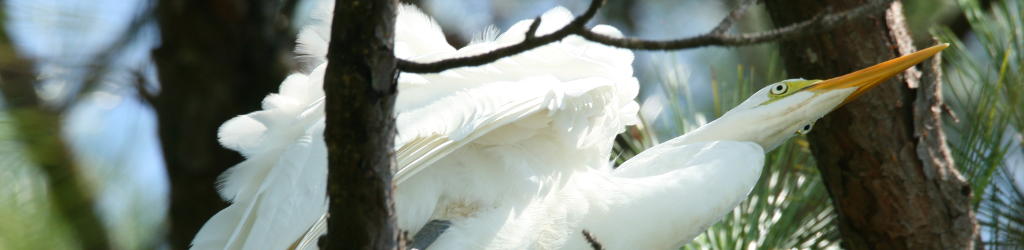
 The storm may also have been responsible for the presence of a great egret (Ardea alba) at the pond these past few days, having been driven out of its normal range by the winds. I was used to seeing them in Florida all over, and along the NC coast, but haven’t seen one in this area in a long time. I’m not sure what the resident great blue heron thinks about this newcomer – it’s been the sole big wader for the entire pond, though I have spotted smaller ones for only a day or so – but the pond is big enough to support them both, and the green herons and others. We’ll just have to see if this one decides to stick around. It seems less wary than the great blue – this image was acquired with some very basic stalking – so if it remains for a bit, I might be able to do a more rounded gallery of images.
 I can’t say if the storms had the slightest to do with these, all I can say is that abruptly, several individuals of this unidentified grasshopper could be found with little effort, when I have been seeing virtually nothing of the sort in the area before. These are big enough to be called ‘locusts,’ better than 5cm in overall body length, and while capable of doing a lot of plant damage, I suspect they won’t last long against the large number of birds and the nearby black-and-yellow argiopes (which have been chowing down on dragonflies and cicadas, and would probably relish the change of diet.)
 I close with another crab spider, even smaller than the previous, remaining inconspicuous on the underside of a delicate white flower – I haven’t pinned this down for sure, but the flowering vine might be virgin’s bower (Clematis virginiana.) I’m going to have to confirm this because it produces a lot of flowers that we could use around the yard, and thus attract more insects and perhaps hummingbirds. Granted, bigger flowers are more likely to attract the

 Here, a very-common eastern tiger swallowtail butterfly (Papilio glaucus) finds that its targeted nectar producer is already occupied by a variety of Chauliognathus beetle, probably one of the leatherwing species and also extremely common – I had no idea it was there when I leaned in to snag the butterfly as it landed. Chauliognathus can be found all over the place around here, and nothing seems to want to eat them – I have seen them openly ignored by mantids, lynx spiders, and assassin bugs. BugGuide.net had no mention of defenses, but the beetles do indeed have a way of deterring predators, a
 Given the lack of flowers in my immediate area, I’ve been planning on hunting down the crab spiders when I returned to the botanical garden, since it’s the only place with the yellow and white flowers that the crab spiders seem to prefer. As you can see here, I was successful, but not exactly as intended; I had planned for something a bit bigger. I didn’t go for the really detailed closeups – as I said earlier, that requires a lighting rig that I don’t lug around when I’m out with a student – but I’m going to take a stab at this being a
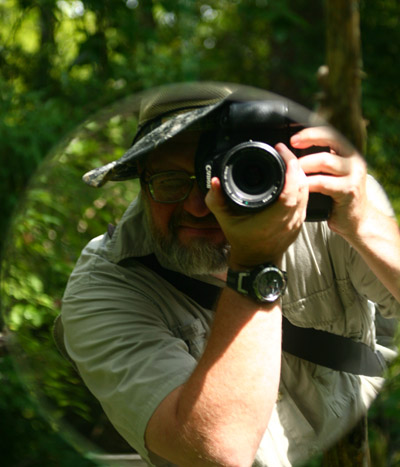 Another experiment, a gruesome one. At one point in the garden was an art installation that featured several round mirrors dangling from monofilament, twisting gently, and I crouched down and timed the rotation to snag a self-portrait. The focus is a little off, with good reason: when shooting a reflection, you are not focusing onto the surface that is reflecting, but past it all the way to the subject, the entire light distance. With a spinning mirror, however, there is only a fraction of a second when the distance is correct, too little time to snag autofocus, much less the manual focus I was using with this lens, so it’s actually surprising (to me, anyway) that it came out this well. I like the surreal aspect of it with the defocused edges of the mirror, done with no tricks at all, but don’t worry – it’s not going to be the end-of-month abstract shot.