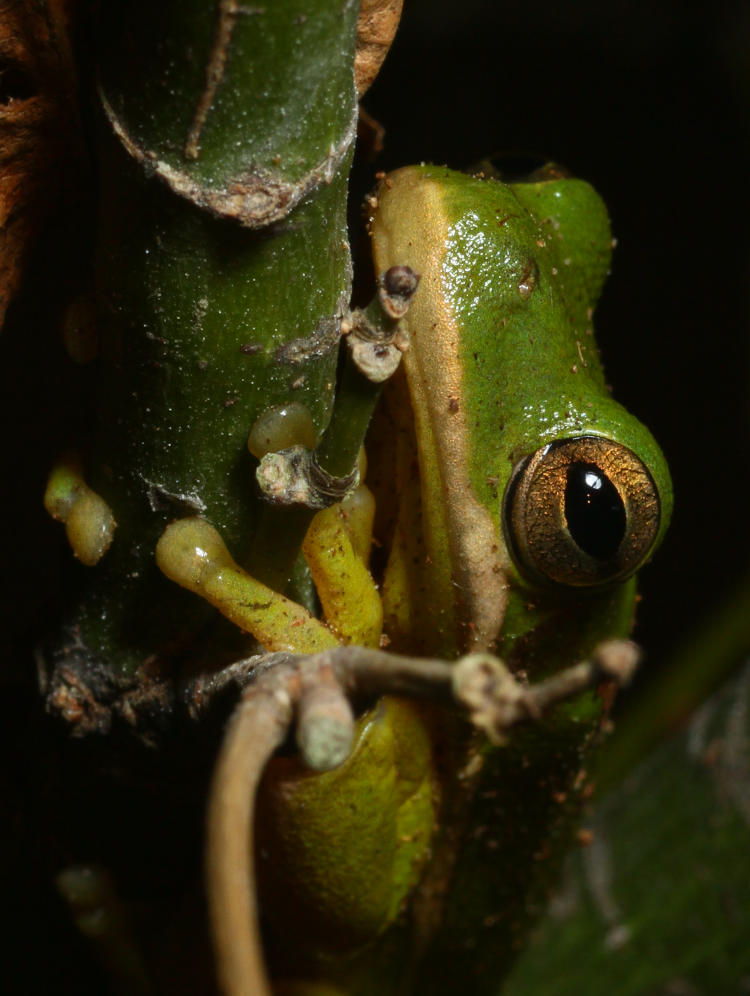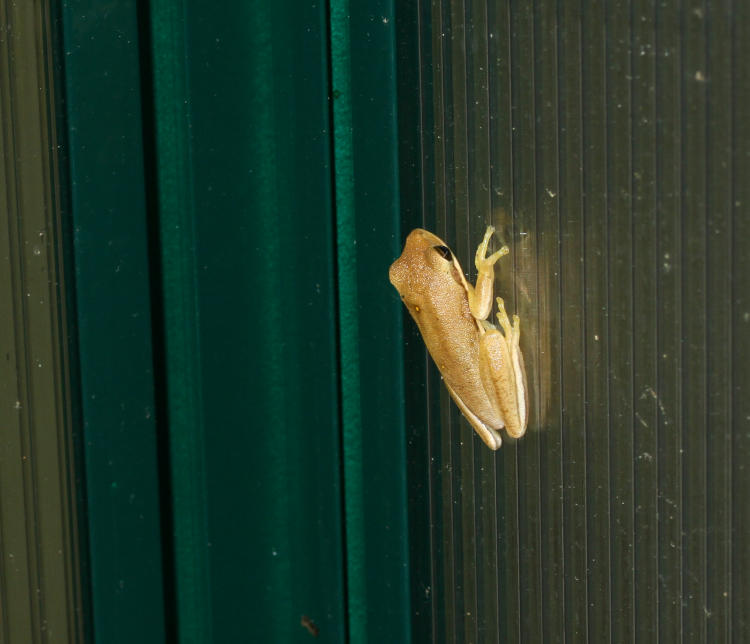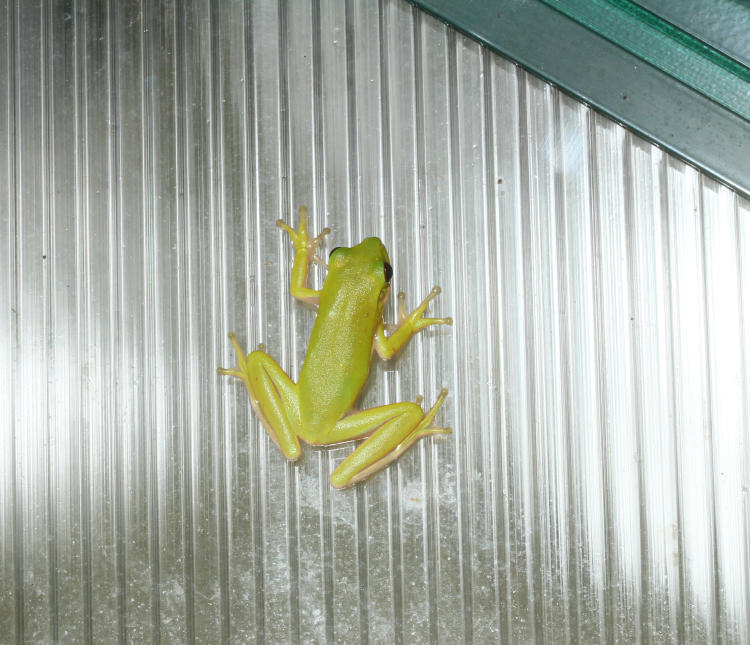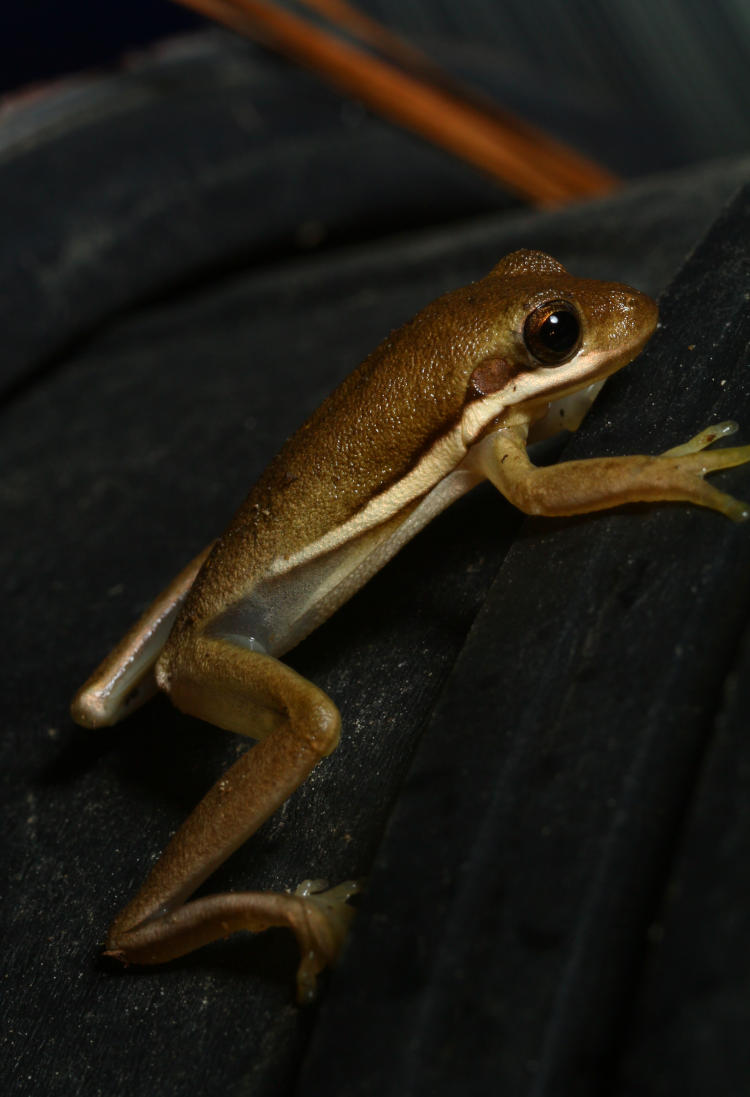
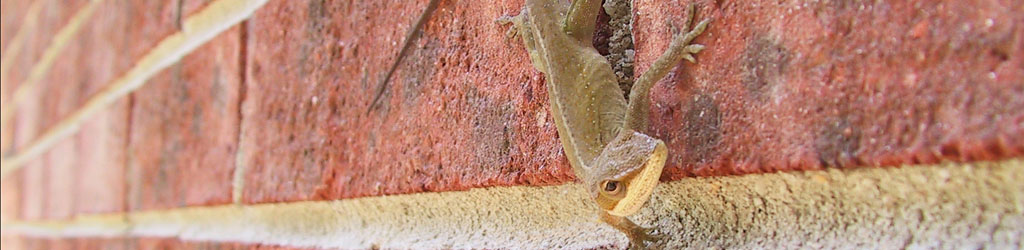
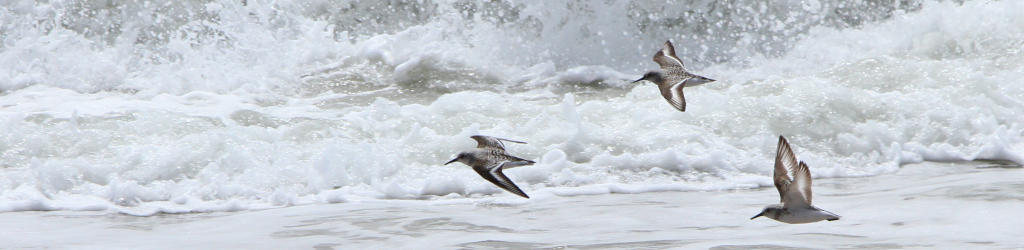
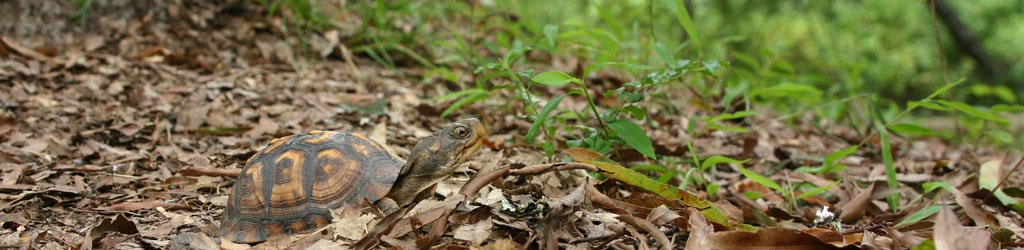
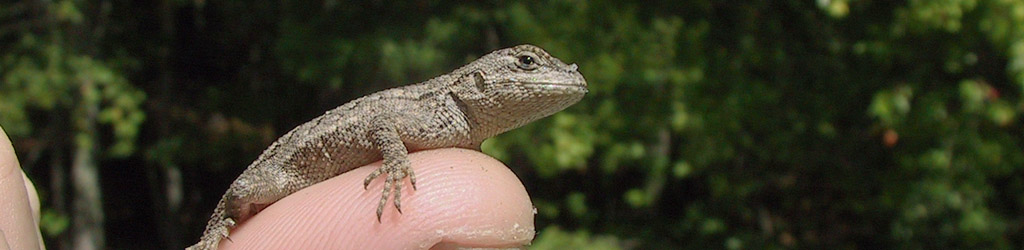
Reptilian buffer

Gotta have something between the birds…

On an outing along the Eno River a couple of days back, the trails we usually take were closed down for utility work, so we traipsed up over the hilltops on the ridge trails, usually well away from the water and thus with fewer subjects to be found. Spring has finally taken a good hold, however, and that means being able to find a few more species with a little effort.

Passing by one stump, I caught a hint of movement as something dark slid out of sight, and we paused to wait it out. It didn’t take long.

eastern rat snake Pantherophis alleghaniensis peeking from hollow at base of stump
This is the wide, establishing shot, representing pretty much what we saw without magnification – you’re looking for the thing that doesn’t belong. Well, okay, it belongs there more than we do, but what I meant was, the thing that isn’t inanimate. The thing we’d have an interest in photographing.

But sure, let’s go in closer.

eastern rat snake Pantherophis alleghaniensis showing head from burrow
That’s (now) an eastern rat snake, formerly black rat snake (Pantherophis alleghaniensis,) and a little one at that, edging out to take advantage of the warm sunlight after a slightly chilly night. We waited a little, but it was disinclined to venture further out and we eventually left it alone.

No flash was used for this despite appearances, by the way – it’s just the morning sun directly at our backs.

Even the birds were maintaining a bit of distance, save for some noisy titmouses, so I started overturning promising logs in search of subjects – carefully, because this was prime copperhead country and the various leaves off of the trail were perfect camouflage for such. The right kind of log is one that looks like it’s been down for a while, settled into the forest floor a bit and rotting away; this makes an ideal habitat for lots of critters. Routinely, I grab the log only on exposed surfaces well away from the edges and underside and roll it towards me, which means it’s between me and whatever irritated, venomous thing might be underneath. So far there’s been no need for this, but that’s not any reason to relax this behavior. And luckily enough, there were more of a particular species than I’ve ever seen before.

red-backed salamander Plethodon cinereus exposed from under rotting log
This is a red-backed salamander (Plethodon cinereus,) only about five centimeters in overall length, freezing in place as long as we didn’t move too abruptly, but after only about 10-20 seconds in the sunlight, it re-sought shelter under the wet leaves. There’s a narrow patch on two or three counties in central North Carolina that they appear, but then other patches in the western mountains and east onto the coastal plain – odd, but okay.

We found a half-dozen of these, actually, and while I would have liked to do more portrait shots, access in the hollows under the logs was difficult for that kind of low angle, plus I knew they wouldn’t hang around for the highly-visible movement that was required, so I never bothered trying. A few of them slipped from sight before we could even bring the cameras to bear.

We had better luck with the next discovery, though.

brown snake Storeria dekayi unearthed from under log
Brown snakes (Storeria dekayi) tend to be pretty mellow and count on their camouflage, so slow movement often won’t disturb them, and after Buggato got his frames, I relinquished the raised log to him and sprawled on the ground for my own shots, with the snake cooperating nicely. Brown snakes don’t get very big, and the listed average of 25cm seems high to me; this one was only about 15, a little less than typical in my experience. I’d be delighted (and more than a little surprised) to find one that was the listed maximum of 50cm long.

While down there, I was able to turn a little and shoot some low angle frames of another find, one that had hopped away from our feet as we approached.

small American toad Anaxyrus americanus depending on camouflage
Yeah, okay, it’s only an American toad (Anaxyrus americanus) – so common that I often see them in our driveway at night, but it was there and so was I, able to do a tight closeup, so, yeah.

I include a tiny bit of variety, because I was fascinated by these and had to get a few frames.

unidentified thick vines or saplings growing in helix shapes
I didn’t look to see if these were still alive, and if so what was growing from them, so I can’t say if they were vines (which I consider likely) or not. But they were the thickness of my calf, much larger than most vines. Strangler fig, maybe? I don’t know, but they were still cool.

I wanted to try some frames aiming along their lengths, but they were growing from a narrow drainage channel going down the hillside, still holding water, and getting a low enough angle would have been difficult and covered me in mud, so I settled for shooting blind, holding the camera down low and aiming up without being able to see anything at all. Didn’t turn out too badly for that.

same helix vines/saplings shot blind from below
This was Buggato’s cue to jump in and try to catch me chimping, which is examining the LCD after tripping the shutter to see what was captured – he’s been endeavoring to record this behavior from me for quite some time now, without success because I simply don’t do it. And even though this was an acceptable time to do so, because I had no firm idea where I was aiming, I refused solely because he was watching – it was more fun than confirming I got the framing correct. However, without trying, I still managed to capture him attempting to capture me.

All Bugg getting into the frame while futilely trying to capture bad behavior from the author
Obviously, he wasn’t considering the angle my camera was aimed, but at least he wasn’t in every frame. And he’s got the camera up to his eye.

He made the attempt later on as well, as we found an American five-lined skink (Plestiodon fasciatus) basking on a branch.

male American five-lined skink Plestiodon fasciatus basking
This is a male, and a good-sized one at that, and after Mr Bugg got his frames, I started moving in slowly to do the tight macro, seeing how close I could get. This ended up being pretty close.

male American five-lined skink Plestiodon fasciatus starting to get suspicious
This is the full frame, and I’ll be honest: I think he raised his head and turned because he was more alarmed at the noisy great blue heron that flew past quite a few meters behind him than by my presence, but the heron was moving a whole lot faster than I. Let’s go in for a detail crop:

male American five-lined skink Plestiodon fasciatus inset
Turning his head gave me better focus with the lens set at f4 for the natural light conditions, so I was cool with that. I watched him blink a few times, almost lazily, and he never moved from this spot as I closed in, shot my frames, and backed away again, but I wasn’t moving quickly and that helps a lot. While doing this Buggato was shooting his own frames, as I said, hoping to catch me chimping, but the only time I do that with macro work is to ensure that the flash is aimed properly for the subject, and I wasn’t using the flash here. But this demonstrates how close I approached, and how big the skink was.

author at closest approach to male American five-lined skink Plestiodon fasciatus, by Al Bugg
That’s the workhorse Mamiya 80mm f4 macro in use, possibly forty years old and the sharpest lens I’ve used. Manual focus and aperture (because it’s intended for the Mamiya M645 series of medium-format cameras and has no interface with Canons,) but I can cope with that – have been for years.

Boy, it didn’t take long for that beard to go solid white. I’d estimate about seven years, I think…

Soon to come: more birds, plus I still have to get part three of a series finished and posted, so that may sneak in. But it’s good to have a choice of subjects to post now.

Profiles of Nature 15

jumping spider possibly female Hentzia mitrata Gwendolyn sequestered in holly leaf shelter
This week we shout out, “Hi!” from a safe distance to Gwendolyn – not because of any fear on her part or ours, but because she has wicked hay fever and this is as close as she’s coming to the outside air during this time of year; you’d be the same way if a single pollen grain was damn near the size of your nostril. Gwendolyn is a bikini model in high demand, both because of those come-hither eyes and her ability to rock a wet, semi-transparent white top – Rowr! Not to mention legs for eight days. She’s not at all class-conscious or possessive, and gives most of her money to charities such as CARE (Cobwebs Are Really Enticing,) a program to move over-privileged spiders from upscale homes and into abandoned buildings where they’re less likely to be vacuumed up. “Humans inhale up to seven spiders a year in their sleep,” she reminds us. “With your help, we can raise that to thirty-five.” But she has her self-indulgent side too, liking nothing better than to curl up with a thick mothshake and watch any movie where William Shatner gets killed. Gwendolyn majored in Failing in high school, making her report card completely confusing, but admits her real passion is actually Indifference. She collects stamps and swats, and occasionally flaming Lysol. Her favorite legume variety is Tufrunner 297, because of its semi-prostrate growth habit.

Come back next week with a witty riposte!

Token cooperation

During a recent outing to Jordan Lake, Buggato and I received the barest cooperation from our subjects – enough for them to claim they were doing their part, but not enough to earn any tips over it, you know what I mean?

The animal subjects this spring seem to be slow in getting active, though maybe this is only perception, but I’m more than happy to put the blame solely on them. We saw a handful of osprey (Pandion haliaetus,) including one that circled for several minutes within easy sight, but it did not deign to even try for any fish, despite the fact that numerous fish were jumping from the water right in its immediate vicinity. Well, kinda – the fish were in the water, the bird in the air, but horizontally, mapwise, they were very close.

It’s not like it wasn’t paying attention, either.

osprey Pandion haliaetus cruising for food, maybe
It was exactly the kind of conditions we were hoping for: clear skies and good light, later in the afternoon so the light could get underneath the bird instead of silhouetting it, the osprey sticking very close to us and reasonably low – what more could you ask for? Well, at least beginning a stoop for a fish, to be honest, or alternately, some courtship behavior. But no. We got circling as if it was bored.

I managed to snag a point when it checked us out momentarily.

osprey Pandion haliaetus spotting photographer
There was no alarm, no change in behavior, just the quick glance in our direction before resuming its scrutiny of the water, perhaps nearsightedly because, as I said, I could see the fish therein. I guess just not the right fish – perhaps none of them had their “GMO/Gluten Free” stickers visible.

Naturally, one engaged in a little bit of action, when we couldn’t see it at all, and then flaunted this by flying directly overhead, very low, and passing smack in front of the sun as we stated tracking it. The glare effect was actually pretty cool, and shows remarkable flare control from the Tamron 150-600. And for reasons unfathomable, it was actually the sharpest frame too.

osprey Pandion haliaetus with capture almost directly against sun, with glory
I was, of course, blind at this point, stumbling around screaming and clawing at my eyes though I never really lost my professional composure, and simply tracked the osprey by sound while this was happening. Doubt it not.

The next one I’m a bit proud of, because it shows that becoming familiar with traits of different species can help out a lot. There were countless turkey vultures riding the thermals that day, mostly higher altitude and largely ignored by me because I have far too many photos of turkey vultures. But as we were walking back to the car to change locations for sunset, I looked over a flight of vultures overhead carefully, more out of curiosity than anything. And noticed a different one. Turkey vultures fly with a faint dihedral, a minor V-shape when seen from in front or back, which can often be made out as they wheel in circles. They also have a little ‘droop’ to their wings when seen from below, the front edges of the wings canting backwards very slightly. So when you see something without these, flying with flat wings that have more of a straighter leading edge, you get a closer look.

juvenile bald eagle Haliaeetus leucocephalus soaring
That’s a juvenile bald eagle (Haliaeetus leucocephaus) that was cruising around in the same thermals, almost indistinguishable from the vultures at a distance. From the color pattern I would almost say it was this year’s brood, but it seems far too early for that; it isn’t any older than last year’s, though.

We saw two or three adults as well (meaning older than three years, when their classic coloration appears) – again, maintaining distance and not doing any fishing at all, but worth a handful of frames at least. One of them was eventually seen wheeling around in the same flight of vultures.

adult bald eagle Haliaeetus leucocephalus just flying
We should be in the middle of nesting season now, but I’ve seen no evidence of any yet, though this doesn’t mean much; it’s unlikely that they would choose a spot close to the busy boat ramps that serve as our primary lake access, and as yet, The Girlfriend and I haven’t taken the kayaks out for a look at any potential nest sites away from human activity. And even if we spotted one, seeing anything from such a perspective would be nigh impossible, at least until the young were fledging out and preparing to fly.

One of the reasons we were at the lake at that time was sunset, which didn’t look terribly promising because the sky was far too clear;

[Okay, I just have to insert this here. At this exact point in typing this up, The Girlfriend wanted to go down to a neighboring city to pick up some stuff for a project, and on the return, we elected to do a quick stop by Jordan Lake just to see what was happening – she hasn’t been since the conjunction, I believe. Anyway, I have more pics, and Buggato’s probably gonna be mad, but they’re going to wait until I get through the backlog of other photos/posts that I have – I’ll try to make it quick. We now return to our story…]

One of the reasons we were at the lake at that time was sunset, which didn’t look terribly promising because the sky was far too clear; the impressive sunsets require some scattered clouds at different levels and decent amounts of humidity. But they’re also unpredictable, so we stayed for the whole show. As it was, we got a couple of useful images.

bare sapling in front of sunset over Jordan Lake
This is actually a demonstration that bracketing the exposure, and changing the contrast and saturation settings, is often better done with the camera than with an editing program afterward. I’d only used one choice of settings for this frame, and back home realized that it needed some contrast and exposure tweaking. But what this ended up doing is making the bright part of the sky too blotchy, not blended enough, almost oil-painting quality rather than airbrush, if you know what I mean. I find it acceptable, but far from ideal, and even when I’m not that impressed with what sunset produces, I’ve resolved to do more camera adjustments while on site.

And one more, a partial illustration.

sunset over Jordan Lake with evidence of fish jump in frame
That little ripple ring at lower left is the aftermath of a fish jumping, in pretty much a perfect position in the frame – it would have been an excellent composition had I captured the fish in mid air. Doing this, however, would either involve a lot of luck or the reflexes of a CGI hero. Fish jumps are brief, and if you’re not directly expecting it, the fish is likely gone before what happened even registers, but even if you are expecting it and have the shutter half-pressed in readiness, capturing it still requires exacting timing; I’ve tried this with flickering snake tongues and it’s a damn site harder than imagined. I have actually managed it, but it was with a fish that was semi-predictably jumping in a faint pattern, and of course without any kind of compositional merit. Still working on it.

Pining away

I was asked if I was going to do a post regarding the pine pollen this year, and I considered this kind of redundant and basically said, Only if I get something remarkable. And now, I’ll let you decide, because damn, it’s been a heavy year. North Carolina is virtually overrun with longneedle pines – they’re ugly, they can take over any wooded area within a couple of decades, and they produce copious, choking amounts of pollen right around this time of year. Seriously.

pine pollen visibly moving across Jordan Lake
Out at Jordan Lake, the water’s edge was typically stained that curious greenish-yellow, and large patches of the pollen could be found getting blown across the surface; with enough sight distance, a yellow haze could easily be seen in the air, and in a headlamp’s beam at night, it actually looks like fine mist. Gradually, it turns brown, and eventually either sinks or gets washed away. But until that time, it looks like a sulfur mine exploded.

six spotted fishing spider Dolomedes triton sitting atop water surface stained heavily with pine pollen
This little six-spotted fishing spider (Dolomedes triton) was not likely to catch anything in this muck which, as stagnant and polluted as it looks, is simply what occurs in the leeward portion of any body of water. And yes, you can see the dusting of pollen over the entire spider. It gets more noticeable, though.

Copes grey treefrog Hyla chrysoscelis with dusting of pollen
This Copes grey treefrog had only been out of its daytime shelter for an hour or so, but was easily showing the effects, and this was right here in the yard at Walkabout Studios, also the location of the next.

viburnum blossoms liberally coated in pine pollen
These are more of the flowers seen earlier, and The Girlfriend has identified these as viburnum. It’s a good thing that most species can’t hybridize, because every plant (and more than a few animals) in North Carolina would soon be a pine mule. While over at the nearby pond, it showed far better.

damselfly possibly female eastern forktail Ischnura verticalis liberally coated with pine pollen
The damselflies are becoming more visible, and several were sleeping on some fine reeds at the water’s edge. The one, only about 30mm long, may be a female eastern forktail (Ischnura verticalis,) but don’t bet the GameStop portfolio on it. And this isn’t close enough for the full effect, so closer we go.

damselfly possibly female eastern forktail Ischnura verticalis in closeup
I really do wonder what pollen does to compound vision, but I’m quite sure, once awake, the damselflies would clean their orbs before flight.

Now that you’ve seen those, this fartsier one will probably be easier to figure out.

unidentified damselflies head-on in pollen
This could be a male and female of the same species above, but I didn’t do any side shots and the markings are too obscured to be seen clearly enough anyway. They’re damselflies – that’s enough.

And they weren’t too far from this guy.

American bullfrog Lithobates catesbeianus coated in pollen 'camo' pattern
This American bullfrog (Lithobates catesbeianus) had apparently surfaced through a cloying layer of pollen, which had then dried onto its skin, getting additionally dusted by the airborne particles. On the plus side, it could easily blend in with a butter-and-pickle salad. Mmm, now I’m hungry.

All of this was last week, however. Just after peak production, the rains rolled in, and most open surfaces got washed free of the pollen with little to return, at least for another year. The stuff still remains in cracks and crevices, and cars need to be meticulously cleaned to eradicate all that which seeps into the seams, but at least things are looking a bit more normal. Here’s a trio of happy rosemary flowers just after the rains, showing off.

trio of rosemary flowers following rain
And more will be along in another little bit. Take your anxiety meds – it won’t be long.

Now it’s been 60

That’s right – sixty years ago today, Yuri Gagarin from the Soviet Union became the first human in space, and the first to orbit the Earth, and the first to scare the hell out of some Russian farmers when he landed, mostly due to the secrecy that the Soviet space program maintained. I’ve covered my thoughts on this accomplishment, and the space race in general, on both the fiftieth and the fifty-ninth anniversary (which happened to be easter,) and in the latter, I lamented that despite a couple of small shelves full of space program stuff, I had nothing that commemorated Gagarin’s milestone (but was acting on it.) I did indeed correct this oversight, in two ways, and the first was a model of the Vostok 1 rocket booster which carried Gagarin’s capsule (Vostok 3KA) into orbit.

Despite getting this by the end of April last year, this lounged around on my shelves until the anniversary was approaching again, and I got off my ass to complete it in time – with less than a day to spare. I used to be an avid model builder, but that was years ago and the practice had largely lapsed, so I had to get back into the swing of it, and I’ve certainly done better, but for a commemorative it works just fine.

1/100 scale model of Vostok 1, Yuri Gagarin's launch vehicle
1/100 sclae model of Vostok 3KA capsule and interiorI had to do a bit of searching for photos of the real thing, of which there are few (as in, just one of the launch itself) to try and get some details correct, and at 1/100 scale, it stands 38cm tall. This particular kit featured a semi-detailed orbital capsule, which also took a few searches to get the details of – this is what modellers do. I didn’t go nuts with it, because if I wanted to do fine detail it wouldn’t be for something so small, but I did end up adding some stuff to the capsule beyond what the kit provided.

Inside, the only thing provided was the seat and Gagarin’s figure itself (seen from the top down here, orange suit with white helmet,) so everything else was added, though the detail on the exterior ‘waist’ of the orbital vehicle was in the kit. The spherical re-entry capsule itself was (in the model) only 20mm across, so not a lot of opportunity to add stuff unless I felt like working under heavy magnifiers, which I didn’t. Plus the kit was sparse on other details so not worth the effort. However, it included a clear half of the nose cone, so the capsule could be seen in place, or you can rotate that around (like the photo above) to make it look a bit more realistic.

I was going to add some stuff about the launch, flight, and re-entry, but it’s been a long day as I’m typing this, with a major unplanned project taking over, so I’ll just refer you to better sources anyway. The most notable thing is that, unlike the US space program, the Soviet/Russian programs brought their capsules in over land. Gagarin’s flight was slowed by parachute and then he ejected to land outside the capsule, but later Soyuz capsules descended all the way on parachutes, but had/have a long probe extending out the bottom; when it touches earth, it triggers the retro rockets that slow the capsule a bit more and make the landing gentler. Because these might come down well out of immediate reach of recovery teams, out in the Russian barrens, cosmonauts were given survival training, including foraging, and even carried a gun in the capsule for protection against bears.

1/100 scale Vostok 3KA capsule and commemorative pin
There was another thing that I ordered, from Ukraine, and that was a Vostok 1 commemorative pin – near as I can tell, this is an authentic issue from that time period, but I could be wrong since I didn’t spend a lot for it. Regardless, I’ll be wearing it all day today, which probably wouldn’t have garnered any notice even if I was out ‘in public,’ but now about the only people who might see it are The Girlfriend and possibly a delivery person. If they remark about it, however, I’ll be sure to provide plenty of information.

And again, this posted at 06:07 Universal Coordinated Time, the time when Gagarin launched, because.

Soon, soon

I’ve been trying to get to a couple of posts, but there have been numerous outside projects to be tackled (which are coming along fine, and some even completed) and so the time just hasn’t been there. And I’m exhausted right now, so I’m sneaking in a little very late Sunday color, largely because it doesn’t fit with any other topic in the works, and promising that more will be along soon. Maybe later Monday; there’s an early Monday post lined up, but more plans for the morning, and who knows what’ll happen after that?

So, color, and promises. Open promises, no timeframes or deadlines, no specific promises of what, so easy to keep. But they’re coming.

swamp maple Acer rubrum seeds samaras against unidentified buds and blue sky

Profiles of Nature 14

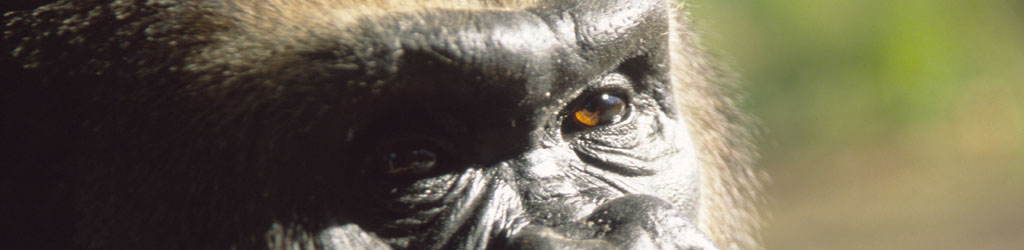
western lowland gorilla Gorilla gorilla gorilla Balthazaar pondering the meaning of hay
Our nature photography model this week is Balthazaar, also a drama coach, philosopher, father, and nativity display evaluator, here obviously disappointed at this disorganized mess. Balthazaar has been in the biz for over a decade and is highly sought-after by discerning art directors because of his chiseled features and extensive repertoire of legume trivia, which makes more sense if you’re familiar with art directors. He used to be incredibly shy, but got past this on the kindly advice of his ninth-grade teacher, who said, “Don’t.” [Amusingly, she had actually said, “Dolt,” which wasn’t discovered for years, but upon finally finding this out, Balthazaar thanked her anyway and then reported her to the school board for calling names.] Balthazaar collects the paper floor mats that mechanics put in your car, and often creates minor issues with his vehicle just to obtain more; as you might imagine, this has cost him quite a lot of money and has resulted in him having the transmission replaced seven times. Not that we’re saying anything. At some point in the future he would like to run for office because he really hates to see bare, uncluttered medians. He once said, “There’s a fine line between a reprimand and jail.” Balthazaar’s preferred dipthong is aʊ.

You don’t have to join us next week if you never leave!

Not even trying

great blue heron Ardea herodias in dead tree near sunset
Had an outing with Buggato, and as we parted, he vowed that he was going to post something before I did. And yet, it’s after 10:30 PM, I’ve already had dinner, and still no post from him. Ah well. Here’s a great blue heron (Ardea herodias) hanging out on a dead tree near sunset; he didn’t stick around for the real sunset colors, but they weren’t that strong anyway.

More pics will be along eventually, but first, we need to check in with our latest nature photography model. Let’s see, who’s it gonna be?…

Variety? No

We’re having great weather now, but so far the activity hasn’t changed significantly among the wildlife, or at least not that I’ve seen – they may be playing it cool when I’m around, because I’m old enough now to be a square, a real wet blanket. So yesterday’s circuit of the pond netted a handful of images, but nothing that really adds to the stock, you know?

pair of yellow-bellied sliders Trachemys scripta scripta basking on a snag
The turtles were out in force, and a little less spooky than normal, but I was approaching cautiously and peeking through gaps in the foliage, as you can detect the hints of from the green haze at lower left. The lead one here decided that she’d had quite enough sun on her legs, as opposed to the next one.

yellow-bellied slider Trachemys scripta scripta showing off the manicure
With restrictions being lifted, I’m guessing that this one had finally gotten her nails done and was hoping someone would notice – we are now in open-toed sandals weather. For a bit anyway, perhaps. And of course, the balancing act is none too subtle, so I’m pegging this one as a teenager. Either that or she’s been there for a long time while the water’s been receding; perhaps she’s stuck. Nah, I’m going with being an attention hound.

And yes, I backed off the focal length a little to get that reflection in there. Here you were thinking this was accidental or something – you should know better.

Around the other side of the pond, we approached another basking turtle slowly, but needn’t have bothered – it didn’t budge a bit, and as we got around front, we discovered why.

yellow-bellied slider Trachemys scripta scripta with damaged or missing eyes
Not only did it appear to be completely blind, but from the size I’m reasonably sure this is the same one from last year, so he’s doing okay for all that. He did eventually raise his head and begin listening to us carefully, trying to determine the threat level, but we left him alone at that point and moved on, so he could continue basking undisturbed.

And a handful of birds, of course.

female eastern bluebird Sialia sialis hanging out
Not far from a nest box, we saw a female eastern bluebird (Sialia sialis) cruise up to an obvious branch and sit patiently watching us, and I ended up having to creep closer to change the angle of the intervening twigs, which were sitting right in front of her eyes. No sign of the male, though I imagine he wasn’t far away – it’s that season, after all. For a bit anyway, perhaps.

A female double-crested cormorant (Phalacrocorax auritus) was hanging out in the usual spot, and I lined up for the fartsy shot with the pilings in the foreground.

female double-crested cormorant Phalacrocorax auritus perched on old piling
I managed to sneak in one frame before she offered her opinion of my skills and/or nature photographers in general:

female double-crested cormorant Phalacrocorax auritus defecating purposefully into water
Even as the moment had passed, the ripples and milky cloud remained, effectively ruining any further attempts at this composition, so there’s no question in my mind that she knew exactly what she was doing. I mean, look at the eye contact.

[To be serious for a mere second, birds can often be seen defecating when they find danger threatening, presumably to reduce weight as much as possible should they need to take flight, but there may be other reasons, such as the vaguely repellent effect. As you’re stalking birds you may see this fairly frequently.]

Back home, I was doing work in the front yard when I heard a sharp kip! from the immediate vicinity, and soon located the source in the neighbor’s tree, where we both had a clear view of each other.

either Cooper's hawk Accipiter cooperii or sharp-shinned hawk Accipiter striatus perched warily in tree
This is an accipiter, either a Cooper’s hawk (Accipiter cooperii) or a sharp-shinned hawk (Accipiter striatus) – they’re very similar in appearance, only slightly different in size, and have the same alarm call. The only decent way to tell them apart is from the tail in flight: Cooper’s will have a rounded end to the tail feathers, while sharp-shinned will have a straight edge like a broom. Cooper’s are slightly larger, but their sizes overlap (females of both species are larger than the males, and the female sharp-shinned may be the same size as the male Cooper’s.) Since we had a brood of Cooper’s raised in the immediate area last year, I’m favoring this being a returning member of that family, but I’ve also seen sharpshins in the exact same area and the neighbors have several bird feeders, which can attract the bird-eating accipiters, so it could go either way. In fact, let’s see one of those photos from last year again.

juvenile Cooper's hawk Accipiter cooperii perched on author's backyard fence looking cooperative
Looks drastically different, doesn’t it? The eyes don’t even match. But this is a typical change between the juvenile and the adults, for both species, so all bets are off, and as I said, I faintly favor the Cooper’s at this point because they’ll occasionally return to the same nesting location. I’m just pleased that a semi-secretive (well, except as new fledglings) and hard-to-spot hawk chose to attract my attention and wait around just long enough for me to get the long lens out. Not to mention being in such good light. I can live with it.

Dittyday 2: Madness and beyond

It’s time for a little more music – good music, mind you – and this fine Tuesday/Dittyday the selection is a rather largish English band called Madness. Formed in the late ’70s, peaking in the mid ’80s, they’re still performing today, albeit with a lineup that seems to change weekly.

I’m not the person to inform anyone about music styles and all that – I just know what I like, but edumacated sources pin the bulk of Madness’ style as ska or two-tone, primarily a strong bassline and beat-method that gave rise to reggae while branching off in another direction, gaining more rock/punk overtones. It’s different, very obviously, and energetic. Madness was also notorious for gently grasping the burgeoning field of music videos and thrashing the hell out of it, and no one ever matched their spirit and enthusiasm in those.

We’ll start off with the only official release in the US, ‘Our House,’ and it would be inexcusable to simply use the sound file.


To be honest, I have no idea how much of that was inspired by the band, how much the director, how much the label, whatever – it’s infectiously entertaining and upbeat, and even when you’ve known it for damn near four decades, it still gives an unmistakable vibe of having a blast. But within all that is a wonderful mix of instruments and riffs, blended in complementary ways that defined so much of the music of the ’80s. After disco died out, horns and brass virtually disappeared from the pop music scene save for saxophone, and it’s a shame because, done well, they provide great tone that offsets, really, too much guitar in a lot of music.

The theme continues with ‘House of Fun,’ sly commentary on the difference between ‘legal age’ and ‘adulthood.’


If you can emulate lead singer Suggs’ “N-n-n-n-n-n-n-no no miss,” you’re doing better than I can – I always imagine that little things like this, done in the studio where multiple takes are common, obligates the singer to repeating the feat for every live performance. He did it quite well when they appeared on the British counter-culture program The Young Ones though, the only band to be featured twice (but appropriately – they’re all kindred spirits it seems.)

This song was also used in the soundtrack to Shaun the Sheep Movie, reminding me that I needed to do this post.

Getting a little more ‘serious’ musically, we have ‘It Must Be Love,’ a cover of an original work by Labi Siffre, and much more representative of the typical ska style. Siffre’s version is also quite nice – not quite as dynamic – and Siffre himself appears in the Madness video right near the end, one of the violinists removing his sunglasses.


[Let me tell you something, writing this is introducing all sorts of rabbit-holes, and it’s taking far longer than it ever should; now I have to look for the movie The Tall Guy, which used the above song in its soundtrack and looks like it might be entertaining.]

There are plenty of other songs by Madness, with varying levels of kookiness, and I’ll leave that to you to chase down – this post could be a lot longer. Right now, I’ll feature a slight departure. I stumbled across this one a few years ago while ferreting out other music, and gave it a listen; it took a moment to realize this was the former (and returned) lead singer, Suggs, on a solo project. Camden Town is a suburb of London, a touristy area that was where the band originated, and Suggs pays homage to the eclectic nature of it, and to the Jamaican music roots, with ‘Camden Town.’


Oh yeah, we need the lyrics for this one:

Sing up tourists, sing

There’s a great crowd of tourists and they’re coming down the street
Pleased as punch with brand new Doctor Marten’s on their feet
Past stalls with leather jackets, old bric-a-brac
Indian sunglasses or a Chinese bobble hat

Tramps stare in the window of the local butcher’s shop
Like a pack of wild dogs they’d run off with the lot
In Primrose Hill, an angry man his hair standing on end
Shouts and rants in the ear of his imaginary friend

In Camden Town I’ll meet you by the underground
In Camden Town we’ll walk there as the sun goes down
In Camden Town
In Camden Town you can do anything you want to

A drunken busker hits the pavement, sending hot-dogs in the air
Towards a broken down bus full of people going nowhere
A string of Irish pubs as far as you can see
Greek, Indian, Chinese or would you like a cup of tea?

There’s tapas, fracas, alcohol, tobaccos
Bongs, bongo bingo, Portuguese maracas
There’s reggae in the jeggae, music everywhere
Every kind of song and dance, madness in the air

In Camden Town I’ll meet you by the underground
In Camden Town we’ll walk there as the sun goes down
In Camden Town

The tourists sing
Ooooh, they sing
Ooooh, sing up
Ooooh

And what’s my name in invisible game?

The two fat Americans interrupt their stay
They put down their bags, they were clamped and towed away
There’s Turkish cakes, designer fakes, fathers dressed as nuns
Every kind of music here, the night has just begun

In Camden Town I’ll meet you by the underground
In Camden Town we’ll walk there as the sun goes down
In Camden Town
In Camden Town you can do anything you want to do

In Camden Town
In Camden Town
In Camden Town
In Camden Town

… and you did catch the overdub when he sings, “madness in the air,” right? And that he plucks a Madness album cover out of the air when he does so?

[By the way, countless versions of this on YouTube are absolutely horrendous quality – this one took a while to find.]

If that was enough to interest you, there’s plenty more to be found, so have at it. And keep a couple of links handy when you’re feeling down.

1 120 121 122 123 124 323