







Sunday slide 45: you big silly

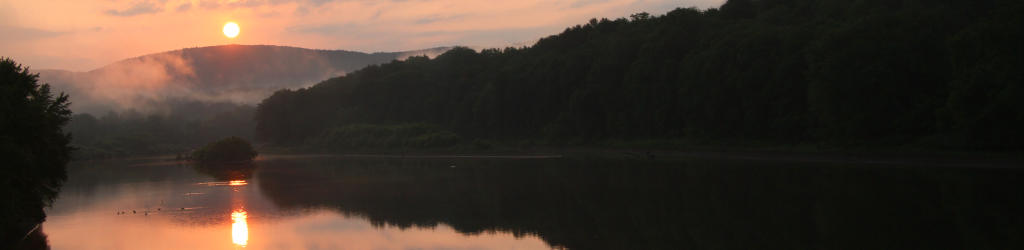
trees in fog on Falls Lake
So, I made a list of posts that began with the word, “So,” and it’s way too long. So I’m trying to stop doing that.

Just to let you know, this is the first time I attempted using the slide scanner after the failure, oh, this many weeks ago – I’ve just been using archive scans from my harddrive since then. The scanner worked fine this time around, so maybe it was a simple system glitch. We’ll see.

This Sunday’s slide dates from the days when I lived in Raleigh and had searched out a couple of natural areas to visit regularly because I was dwelling within a big city (it was convenient to work and inexpensive without being ‘cheap’ – you do what you have to do.) One such location was a spur of Falls Lake that had some hiking trails more-or-less following the lake edge, more less than more, really. This section of the lake fell into some steeper valleys, so as you moved away from the water’s edge you tended to rise sharply, and most times the trail simply followed the more level and stable terrain, which was often removed from the water by a notable distance. At one point, there was a section of almost-entirely-enclosed mini-lake, a bay with an isthmus that was most likely manmade, and along that isthmus sat a few trees. One foggy morning when I got out early, the view down that mini-lake was quite interesting to me, and I did a couple of abstract compositions.

As I was touching out the little specks and tiny scratches that are pretty typical of slides, something wasn’t seeming right to me. How was I seeing sharp reflections in the water of trees that weren’t sharp when seen directly?

Oh. Yeah.

trees in fog on Falls Lake not inverted
It helps if I have the slide the right way around in the first place – it’s the mist rising off of the water that obscured the reflections more than the direct images. But I think you can understand how easy it was to get it the wrong way.

In an ideal world

Wouldn’t it be grand if, when countless software companies are urging you to perform constant updates to your system, that these updates actually improved things rather than fucking them up? I know, I’m being unrealistic here, but a man can dream, can’t he? And if he can, I can…

I’m perfectly serious. I usually shut off automatic updates, especially with Windows and Firefox, because they’re not just frequent, they’re time-consuming and rarely do anything useful. However, somehow, without my making any changes to the settings at all, Windows has started telling me that I need to perform updates, and according to all of my searches, they have disabled any and all methods of eradicating these constant reminders from my system. And yes, it’s daily, often twice a day, and they even, out of the remarkable goodness of their hearts, keep reinstalling an update icon on my desktop. Silly me, I though that was for my personal settings and the programs that I actually have a use for, but it appears I was wrong – Microsoft knows better than I do (except for the perpetual “security holes” that they want to keep repairing, but that’s not either gross incompetence or attempts to phish information from my computer, I’m sure.)

Just now, noticing some faintly squirrelly behavior on a couple of websites, I thought perhaps updating Firefox might be a good idea. I have been completely cured of such radical and irrational thinking, however, as the latest release (56.0) was seriously buggy, with the bookmarks icon being worthless and an truly astounding amount of utterly fucking useless shit being added to the right-click menu. While I find it hard to believe that anyone in their right mind couple possibly have a use for right-click menu items that stretch off of the fucking screen, I’m pretty goddamn sure that having access to your bookmarks in the exact same manner as you were accustomed is the primary fucking purpose of a web browser. But we’ve already established that I’m weird.

I’ve been online routinely since 1998. In that time, the amount of security breaches or issues that I’ve had with unupdated software has been trivial – less than five times in my memory. This is mostly because a) I maintain decent anti-virus and anti-malware software, and b) I don’t fuck around with sketchy sites. However, the amount of times that performing updates has changed something that I use routinely, or outright disabled the software itself, is staggering – beyond my ability to count, which is what prompted my update-aversion in the first place. I wish I could fathom why such a state of affairs exists.

So, again, AVOID FIREFOX VERSION 56.0 AT ALL COSTS. If you need to roll back, 55.0.3 is readily available for download at several sites. And if you want to prevent such Firefox crashes from occurring without your input, here’s your quick guide:

1. Click on the menu bar at the top right of your screen – it will be three horizontal bars.

2. Click on Options (little cog wheel)

3. Click on Advanced

4. Click on Update

5. Click on Never Check For Updates (it will say Not Recommended, but that’s an outright lie – I am heartily recommending it.)

All set – you can close the Options tab.

By the way, there’s a little plugin for Firefox (and by extension, IceDragon) called uMatrix, which blocks scripts and bullshit from running on webpages per your own choices and settings – on some sites, this will significantly enhance your use of the site without countless bits of utter bullshit cluttering up the screen or, much worse, trying to fuck around with your system. Since far too many web developers like masturbating with the latest fads in scripts and effects, and advertisers seem to believe they should be snagging info from your computer, this can be a damn handy plugin to have running. But I’ll warn you, configuring it might be frustrating to some, especially if your favorite sites rely on constant content from YouTube, social media, or the more pervasive kinds of advertisers. YouTube alone is notorious for ‘bootstrapping’ scripts – permit the first, which has to load another (which you will also have to permit in uMatrix,) which loads another, and eventually the fucking video will play. Is this necessary? Of course not – Vimeo doesn’t have a problem with simply playing a video, which is why I switched to hosting my videos over there, since who knows what kind of bullshit all of those scripts are performing? I try to keep this site clean and safe; you will never see an ad here, and if anything on here sends up some flags, even just outside links, tell me.

Anyway, rant over – now I can return to what I’d planned to spend my time on today. Good luck trying to use your software without ongoing issues and needless stupidity.

A visit with the warbirds, part 1

Colings Foundation B-17G "909" departing RDU International Airport
Okay, I’m finally getting to this!

Several days back, the Wings of Freedom tour from the Collings Foundation made its visit to nearby Raleigh-Durham International Airport (RDU,) and the Immaculate Mr Bugg and I paid a visit. The Collings Foundation is a non-profit organization that restores and maintains vintage military aircraft, and there were four classic WWII planes that they were flying between stops of the tour: a Boeing B-17G Flying Fortress (seen above,) a Consolidated B-24J Liberator, a North American B-25 Mitchell, and a North American TF-51D Mustang. The latter is a pursuit/fighter (technically a trainer,) while the other three are bombers. As I mentioned earlier, the modest admission cost of $15 allowed visitors to not only walk around all of the aircraft, but to take a walk-through of the bomber interiors as well, which is actually a pretty good deal – it’s not often that you get the opportunity to see the workings of a warbird in person. Many years ago in my active modelmaking days, I had built a kit of the B-17G, a 1/48th scale model available from Monogram, that included fairly elaborate interior detail, so I was already somewhat familiar with the layout, but jumped at the opportunity to see the real thing. And the most prominent takeaway from the experience is that these aircraft were, shall we say, snug.

view down at author's foot on catwalk within bomb bay of Collings Foundation's B-17G "909"This is a view down at the catwalk through the middle of the (open) bomb bay of the “909,” the call sign of this particular B-17G, and yes, it’s only wide enough for one foot at a time. My main camera bag, a holster-style with two attached lens cases, was too wide to fit between the supporting frames of that catwalk, and it had to be turned sideways. To get here, one has to clamber awkwardly into the forward hatch, using something between a tight crouch and a crawl, then pass through the top-turret gunner’s mount that was stationed immediately before the forward bomb bay access door – those quarters were too cramped to actually allow any decent photos of this. The top-turret had a superstructure for the guns and turning motors, plus a platform that the gunner stood upon, and getting between these required crawling – I actually had to pull my knees through by hand to get them onto the catwalk, since they no longer will bend that tightly and readily on their own power. The only saving grace that I can offer about such tight access is that the crew almost never had to pass through the bomb bay during normal operations.

By the way, I was fairly spry compared to some of the WWII veterans that were on hand and touring the aircraft themselves, but they were still gamely maneuvering through the confines. I was happy to provide a little assistance to one gentleman ahead of me that had to scoot through that ridiculous space in the top-turret gunner’s position. As expected, there were more than a few vets on hand, but I think I only saw two that had actually served on these aircraft – it’s been a long time now, and not many are left.

view of Collings Foundation's B-17G "909" bomb bay from radio operator's station
Above is a view from the radio station looking forward through the bomb bay towards the cockpit. The door is only half-height, and you can make out that same catwalk that cuts through the middle of the bomb bay between the racks, with the tail fins of some display bombs visible. The bright spot ahead is the cockpit, to which access was denied, but in between the bomb bay and the cockpit is the top-turret gunner’s station and the actual forward crew hatch to the plane. Below and between the pilots’ chairs, not really visible, is the path to the stations for the bombardier and navigator in the nose, while we’re looking through the top-turret gunner’s station; there is a pair of grey ‘wings’ just above the sign keeping us from the cockpit that is the shoulder brace for the gunner, while just out of sight below the lip of the far doorway is the rotating platform that the gunner stands on.

Also of note: at the top edge of the photograph you can see the silvery lip of the stowed window/hatch that formed the ceiling of the radioman’s station, and I am aiming downwards with the camera because, standing upright, my head poked out of the open hatch. Though this particular plane wasn’t so adorned, normally the window mounted a .50 caliber machine gun aiming upwards, which meant that firing it would require a crouching or kneeling position. Duty in these planes wasn’t a luxurious experience, but when the crew was trying to fend off attacking fighters, I doubt much attention was paid to the awkwardness of the position.

interior view of ball turret of Collings Foundation's B-17G "909"
Further aft, we’re looking forward from the waist-gunner’s positions towards the radio station beyond that door, above and behind the belly-mounted ball turret – this wasn’t opened for inspection or ‘tours,’ but there was no way in hell I could possibly have fit in there anyway. It’s the round thing in the bottom of the frame, and the walkway around it can be seen on the left side, another tight squeeze. The cross section of the fuselage at this point was probably 2.5 meters or so. The big grey boxes hanging above are ammunition supply; the B-17G sported thirteen .50 caliber machine guns, two of which resided within this turret (with two more in the waist positions immediately behind me – another wooden ammo box and feed chute is seen to the right.) I couldn’t make out how the ammo actually entered the turret, but I know it had to be pretty flexible to allow for the emplacement’s range of motion.

Scattered throughout the plane were larger yellow tanks, seen here, and smaller green tanks often nearby. To the best of my knowledge, the yellow tanks were compressed air, the normal mix that we breathe of about 80% nitrogen and 19% oxygen, while the smaller tanks were supplemental pure oxygen – those colors are in current use at least. Since I have found no source to confirm this supposition yet, don’t quote me.

exterior view of ball turret of Collings Foundation's B-17G "909"
Here’s the exterior view of the turret – I’m sitting on the ground to get this perspective. Bear in mind that these planes weren’t heated in any way, and operated at high altitudes most of the time – flights were cold. Those fur-lined bomber jackets were an absolute necessity, and out here, exposed to the wind blast with only a thin layer of aluminum for shielding, the position was without a doubt hugely uncomfortable. I imagine that you learned quickly never to touch the bare metal with exposed skin…

view over horizontal stabilizer forward of Collings Foundation's B-17G "909"This is the first of my fartsy compositions, shooting over the horizontal stabilizer (tail plane) of the B-17G towards the nose, showing the starboard waist gunner’s emplacement and the open hatch over the radio station, with the top turret in view beyond. Notice how the waist gunner station is enclosed, with the gun projecting through a gimbal-mount port; this was a new addition to the G model, and earlier models (and the B-24J Liberator seen in the background of the pic above) had open windows. Freaking frigid operations in those.

I’ll take a moment and some empty space here to add in a few details. We initially saw two of the bombers, the B-17G and the B-24J, on the first day of their visit to RDU, which is where this pic was taken, but the B-25 and the TF-51D were late in arriving, and didn’t actually get there until after we left. RDU was crowded and the line to enter this particular plane was long, but the B-24J had been out on an air tour when we arrived and landed within the hour, so I hopped in the new line to pass through that one once it had taxied in and parked. Soon afterward, they cut off the line for the B-17G because it was going on an air tour of its own, so I never got to view the interior then. I had planned on returning two days later, but an illness prevented me from attempting it (it’s not a good idea to go out on an airport apron far from ‘facilities’ when you have a stomach bug.) However, the Wings of Freedom Tour had Burlington Regional Airport as its next stop, barely a 20 minute hop from RDU and not even twice that by car from where I live, so I caught them there not quite a week after my first visit, and all of the interior shots seen here were from that portion. I was happy to pay admission twice, and Burlington wasn’t crowded at all, so I could take more time without holding up people behind me.

tail gun emplacement of Collings Foundation's B-17G "909"Moving just a bit further back and to the left, we have the tail gunner’s position; the fuselage has narrowed so much at this point that it’s just wide enough for someone to fit in there, and the sighting windows for the guns are not a whole lot more than a helmet. My interior access to this point was also denied – it actually stopped at the rear crew hatch that exists just behind the USAAF insignia and under the tail plane in the pic above. Most likely, between the tight quarters that people would have to back out of and the need for clambering around the tailwheel structure, it was deemed just too much of a risk and hassle.

By the way, if you want a few more pics and a nice overall diagram of the crew positions and layout, this page does an excellent job. It’s a different aircraft but the same model, with only trivial differences in the equipment. And Air & Space Magazine online has another collection of interior photos. Overall, there were ten crewmembers in a B-17: pilot, copilot, navigator, bombardier, engineer/top gunner, radio operator, ball turret gunner, 2 waist gunners, and a tail gunner. Of those, only the pilots didn’t have guns at their positions – the bombers were, unsurprisingly, prime targets for defending aircraft, and for most of the war they had a much greater range than any escort fighters that the allies could field, so they often had to fly alone far into hostile airspace, and even with all of the guns they were easy prey for agile fighters. Feel free to do a search on damaged WWII bombers – there are more pics than you can imagine, and these are generally the ones that safely made it back. Thousands didn’t.

We need a look at the nose.

nose turret and bombardier's station of Collings Foundation's B-17G "909"
The G model added in that big gun turret and the two guns to either side of the nose; earlier models just had one straight out the front. Visible here behind the flat sheet of plexiglass is the Norden bombsight, an ingenious mechanical targeting computer that actually flew the plane onto the chosen target when it got close – the bombardier’s job was to ensure that the settings remained correct and the crosshairs remained aligned with the target. Above that near the top of the nose cone sits the aiming rig for the chin turret, and to the left running behind that little round port window sits the swing-away controls for the same turret. You can see a round window showing sky further back; that’s the navigator’s dome for doing celestial navigation, of which a greater explanation can be found here. The bombardier had control of the chin turret, while the navigator could man the two guns flanking the nose.

forward fuselage and nose art of Collings Foundation's B-17G "909"
Here’s another shot showing the nose art and the line to see the interior at RDU, and I apologize for the quality – I inadvertently had exposure compensation turned up from a previous shot, and this was the only photo I have showing the nose art clearly, so I tweaked it in editing. The forward crew hatch, through which the interior tours began, can be seen at lower center – the ladder was a courtesy to us civilians, since the normal aircrews never used them. You had to clamber in practically underneath the copilot’s seat and dodge aft a bit just to stand up in the narrow space between the pilots’ chairs and the top-turret station, before crawling through the same station to get into the bomb bay (you can see the open doors of the bay under the engine nacelle.) The boomerang antenna just ahead of the navigator’s dome is a modern addition I think, not part of the original model’s complement, but instead in support of current avionics.

The nose art is most likely fictional – very few WWII aircraft in this country ever saw combat, since when the war ended there was no reason to bring most of them back, so what are typically seen are trainers, rebuilds, and late-production aircraft that never actually got shipped out of the states, though there are a few notable exceptions (the Foundation’s B-24J being one of them, but more about that in another post.) This side of the plane shows the kind of nose art that might have been seen on a veteran aircraft, but the opposite side is liberally covered with the names of the big donors that help support the restoration and maintenance of these warbirds.

Collings Foundation's B-17G "909" taxiing in on RDU runway 5L
I did not neglect my overall views, and like this one best, taken as the 909 taxied in near sunset following an air tour – the same one that it is departing for in the image that opens this post, if I have my timing right. Between the ‘R’ and the insignia on the rear fuselage you can just make out a small window, more visible in the very first pic – that’s where the rear crew hatch is. And if you compare the propellers in the two images you can see the difference in light and its affect on shutter speed, because they’re spinning slower for this image than while climbing out up top, but blurred more here (I probably should have dropped the shutter speed a tad for the top pic, because they look better with a bit of blur.)

There’s another post coming, featuring the other aircraft, a lot more fartsy shots, and even some video. Give me a little more time – this one turned out long enough just concentrating on the B-17G.

October blows past

abstract propeller view of B24J Liberator "Witchcraft"
I pretty much knew when I took this that it would be the end of the month abstract; what I didn’t know was that I wouldn’t have the time to post all of the rest of the images ahead of it. There is at least one post coming up on the warbirds, possibly two, maybe a podcast, maybe an ambitious video – I haven’t decided yet, but that’s one of the things on the list for today (and I’ve already gotten a couple of others done, so, progress?)

This is, of course, the propeller of the number three engine of The Collings Foundation’s B-24J Liberator “Witchcraft,” shot with the Tamron 10-24 at 10mm. I’m pleased with how the sky turned out, and how there’s a faint hint of cloud reflection in the blade itself, lined up rather nicely. The sky I was aware of, but the cloud reflection had escaped my attention until editing, so don’t go thinking that I planned this meticulously. I did a lot of fartsy experimental shots, and you’ll be seeing a few more shortly. Lucky you!

Sunday slide 44

juvenile Eastern newt red eft Notophthalmus viridescens on fossil rock
Today’s slide comes from central New York back in… well, there’s no date stamp on the slide mount, but I want to say 2006 (because I like saying 2006. It just rolls off the tongue; try it. “Two thousand and six.” Doesn’t that just sound smooth? Stop looking at me like that.) Anyway, I was visiting family in the Finger Lakes region and my brother had taken me out to the head of a waterfall in the area, where the exposed rock flats from where the river had been much wider would reveal fossils in certain areas, if you knew what you were looking for. This particular patch was right on the surface, and we introduced a little newt that he had caught into the scene, a juvenile Eastern newt (often known as a red eft in this stage, scientific name Notophthalmus viridescens.) It wasn’t exactly a study in contrasts or anything like that, this tiny amphibian placed among dinosaur fossils, because that region only hosted fossils from waaayyyy before the dinosaurs or even any land animals at all, about 416 million years ago when the only terrestrial life was vegetation, and not much at that. Every fossil that could be found there were sea creatures, the most recognizable being trilobites; we tried, in vain, to extract a complete specimen from the strata unbroken, something that my brother had not yet accomplished by that point (or since, I don’t believe.) The images of that specimen may be along sometime later. However, we won’t be returning to this location, because it has since been closed off to public access, mostly due to the fact that the drop at the falls was ten or so meters and drunken teenagers had too frequently failed to maintain a safe distance from the lip. For that reason, I’m not naming the falls nor their location, since it’s all private property. It’s a shame, but there are plenty of other areas in the region to find fossils.

Macro photography, part 11: The lengths, the lengths

You undoubtedly remember the butterfly bushes that have served as a setting for some of the more recent pics here, but they have company – unintended neighbors, as it were. We maintain a compost bin, and use this as soil booster for all of the repotting and transplanting that we do, and naturally the result is that we almost always have something else that sprouts from the pot afterwards. In this case it’s something that appears to be a small tree, but what exactly it is I cannot say, due to advice from my lawyer (he said, “Al, if you don’t know what the fuck a plant is, stop guessing – these suits are gonna kill us.”) Distinctive about this plant, or alleged plant, are the tiny flowers it produces, a couple of millimeters wide at best – the kind of flowers that would make a tree own an oversized jacked pickup truck and talk loudly and aggressively in bars. And after a recent rain, they were sporting proportional drops of water – yes, little balls, too. I really haven’t been shooting a lot recently, except for something else that will be appearing here soon, so I did a quick photo session.

Actually, it was intended to be quick, but took a bit longer than anticipated, then a lot longer as I decided to illustrate something all-too-common with macro work. First, the pics.

raindrops on tiny flowers
These flowers and droplets are so small (hinted at by the perfectly spherical shapes of the water) that I was using the reversed Sigma 28-105, so very high magnification and commensurately short depth of field – even at f16, there’s really no depth. This is a cropped image, by the way, so a bit tighter than I was shooting and thus seeing in the viewfinder. The closest drop looks great, but not much else is sharp. Compare that against another frame.

raindrops on tiny flowers
Now the flowers look much better and there are more droplets in focus, especially that one at lower right – but the original drop has produced a disconcerting effect from going past the point where its edges are focused but finding the point where it acts as a lens for the vegetation behind it. These frames are good candidates for image stacking, the technique where you take the sharpest parts of multiple frames and combine them into one image. Yet what it really illustrates is just how precise focus distance must be to capture what you’re after – the higher the magnification, the more precise you must be. Trying to hold still in an exact position, with no greater than three millimeters variation, is more than challenging, and usually I’m just timing the shutter trip with the tiny bit of swaying that I’m doing. Yes, one could use a tripod – in certain circumstances, and this wasn’t one of them. But then, there’s the added element, which occurs very often: the breeze.

There’s nothing like macro work to make you realize how rarely the air is really holding still, and this is driven home when you choose a subject on the top of thin and flexible stalks. Thinking about a post as I was doing the shots, I recognized that video was going to illustrate this a lot better, and so here we are:


Right away I’m going to admit that I’m still learning video and editing work, so don’t pick on me. I’m struck, repeatedly, with the fact that while a DSLR allows a full complement of specialty lenses to be used, it’s still one of the most ridiculous ways to do video, especially with the Canon T2i which does not have an articulated LCD screen, so you’re forced to shoot in the worst possible position for steadiness in order to even see what you’re shooting – the viewfinder cannot be used, so you’re holding the camera out like a temple offering to frame with the LCD screen.

Meanwhile, the timing of the crows cawing was completely unintended – I knew they were in the audio, but recorded the voiceover track separately and had no idea where they would fall. But I’ll take it anyway.

The long and short of it is, you wait for the space between gusts, and do what you can to steady yourself at least (I was using a chair to provide some stability.) And one of the better techniques, when it can be utilized, is shooting at night when the air tends to be much calmer. But this daytime session meant a lot of trashed frames and more drain on the flash batteries. Still, it worked enough.
water droplets and tiny flowers
This is probably my favorite frame, from a slightly different angle but capturing a prominent drop and some of the blossoms in sharp focus together – again, this is pretty damn hard to see adequately in the viewfinder, but at least for still photos I could use the viewfinder. I will admit that the breeze and my abysmal inability to hold amazingly motionless meant a certain element of pure chance was involved in capturing these shots, but I improved the odds by shooting quite a few images in between gusts.
And one more, to illustrate something else.

water drops on leave sof Chinese fringe flower Loropetalum chinense
This is not the same plant of course, but the leaves of The Girlfriend’s Chinese fringe flower (Loropetalum chinense) showing off their water-repellent properties. I went with a tight crop of a larger frame to show something distinctly. If you look close, you can see that several drops are sporting reflections from the flash softbox, nice round and diffuse circles instead of, for instance, rectangular shapes or bright sunbursts from an undiffused flash tube. The effect becomes very subtle and quite natural-looking, and I encourage its use for anyone’s macro lighting rigs. Now that I’ve pointed it out here, you can go back and notice that it’s visible in all of the frames above too – but did you see it at the time?

Sunday slide 43

dead tree silhouetted against wispy clouds and deep blue sky
This has me conflicted, in multiple ways.

First off, right from the beginning I always felt this could be stronger, but somehow I keep coming back to it, so I guess there’s something visually compelling that is overriding my conscious thoughts on the composition. I mean, I like the effect, produced by placing the bright sun directly behind the trunk, but the shape of the tree isn’t quite as aesthetic as I would have liked, and that one plane contrail really doesn’t need to be there. Yet I still get this hand-painted feel from it, like someone was dragging the last of the paint from their brushes, or a chalkboard (ask your grandparents what that was) that someone inadequately washed. It’s almost as if someone tried to provide a surrealistic impression of the wind in the branches, but not quite – and yes, I did position myself to get the clouds right there.

Now here’s the other conflict: I can’t remember where this was. This is kind of a big thing for me, because I can remember shooting locations far too well, often to the point of driving right back to them years later, or finding them almost immediately on a map. It’s a stupid accomplishment, because I’m absolute shit at remembering faces and names – I mean, seriously. My memory matched the date stamp on the slide; August 2002, very soon after moving to Florida, and I know this was in some small nature preserve not too far away from where I lived, from one of my short expeditions to find shooting locations. I’d only been once, because there really wasn’t much to see there, but now I’m stumped (heh!) as to exactly where it was – I have no recollection of ever passing it again.

There is a vague suspicion that this is Turkey Creek Sanctuary in Palm Bay – the name sounds vaguely familiar, and the location is close enough to fit the impressions that I retain, but that’s the best I can say. And I’m worrying about it too much, but that’s how I get – I take it as a challenge to find some of these shooting locales from my past. But now there’s an additional bit of irritation that came up as I was trying to pin it down, since I discovered what might have been an excellent place to visit, now that I’ve been out of the state for over a decade. Viera Wetlands was only about a fifteen-minute drive from where I lived, just a few kilometers straight down the road from Brevard Zoo, and I knew nothing whatsoever about it – never found it online, nobody ever mentioned it to me, my nature photographer’s radar never guided me there, zilch nada bupkiss. I mean, I’d done multiple trips up to Merritt Island Refuge while living there, and never knew about this one many times closer. Gosh darn it.

Haven’t found what works yet

Collings Foundation B24J Liberator flying overhead
So the content has been pretty damn thin here lately, and this post isn’t going to alter that a whole lot. This week in particular, it seems, just kinda went by without anything happening, which wasn’t exactly true, but just the way it felt. Partially, this was because I have been fighting off something, some virus or bug or microorganism or brain tumor or demonic possession, that mostly sapped my energy and motivation, while I also suspect my winter doldrums have started earlier this year. I won’t say that I suffer from Seasonal Affective Disorder – I have no professional diagnosis and anyway I don’t think it’s that serious or prominent – but I can say that I’m definitely less chipper through the colder months. Since most people are, that’s hardly a case of Special Me or any of that shit…

But anyway, here’s something to put a space between the Sunday Slides, which themselves were partially to produce routine content while simultaneously motivating me not to have consecutive ones back-to-back, so we’re seeing how well that idea worked. The photo here is evidence that I did get out and do a little shooting, and might even add to it tomorrow. Some years ago I mentioned my interest in aviation and especially warbirds, and featured a video of the B-24J Liberator bomber owned and operated by the Collings Foundation. That very same B-24, as well as a B-25 Mitchell, a B-17 Flying Fortress, and a TF-51D Mustang, are all presently visiting Raleigh-Durham International Airport nearby, and for a mere $15 anyone can check them out up close and even tour through the interiors – that’s an unbeatable price, really. For $400-450, you can take a half-hour ride in one of the bombers, and for $2000-2200, you can do a bit of piloting of the Mustang. Unfortunately, the vast wealth that accumulates from nature photography is tied up in offshore accounts, so I wasn’t doing a flight this time around, but I’ll likely be back tomorrow for another visit, and even if I don’t, I’ll post eventually on the experience from Thursday at least.

I’ve been waiting for the Immoderate Mr Bugg to post his own take, since he accompanied me on the trip Thursday and shot, oh, I suspect about 4,000 images, though 75% of those were of commercial planes since that’s more his bag, the weirdo. But since he’s gonna drag his heels over this one, I guess I’ll pick up the slack shortly. The image above was taken as the Liberator headed out on one of the air tours, passing directly overhead while we waited at almost the exact same spot that we shot the night trails pics. I had hoped to get some better shots when they landed again, when they would pass much closer overhead on the opposite end of the runway, but rush hour traffic and their diversion to the other runway prevented this from occurring.

I have a couple of other topics waiting on the block for a time when I feel I can do them justice, so I haven’t abandoned the blog – just trying to maintain a certain standard in content, that’s all. What exactly that standard might be is left to your own judgment, and I’m quite sure I wouldn’t want to hear the feedback anyway. Suffice to say, more will be coming soon.

Sunday slide 42

brown anole Anolis sagrei on tree silhouetted against sky
March 2000. On one of several trips to Florida specifically for photography, back before I lived there for a couple of years, I’d had a slow day shooting almost nothing at JN “Ding” Darling National Wildlife Refuge and decided to check out a little attached hiking loop called Shell Mound Trail, not really expecting much. As it was, I shot many more slides there than in the entire rest of the refuge.

Now, there’s this little rule of mine: if you’ve been in Florida for more than an hour and you haven’t seen a lizard, you’re not paying attention. Maybe it’s a little overblown, but really, not by a lot – the state’s littered with reptiles. In this case, a brown anole (Anolis sagrei) was scampering around a tree trunk, reluctant to give up its relative position for my shenanigans even though it could have eluded me easily by going up into the canopy or down into the ground foliage. This is the fartsy shot, but if you want to see what a brown anole looks like in detail, you’ll have to look elsewhere.

I’ll talk briefly about the nature of slide film. First off, it’s higher in contrast than print/negative film, which the photographer has to make some allowances for. And a general rule is, the lower the ISO, the better the detail and color, which holds true even for digital yet for entirely different reasons. I’m very fond of Fuji Provia 100F, even though I don’t shoot it much at all anymore, but the best results were obtained by rating it at ISO 80 instead of its native 100. It was advertised as being pretty tolerant of “pushing,” which is shooting at a higher ISO and then developing it for a longer period – it’s a fairly common tactic of professionals when faster shutter speeds are needed, but of course you have to shoot the entire roll that way since you can’t selectively alter the development times for only certain frames on the roll. Pushing is done in stops, as in, doubling the ISO, though I suppose if you do your own developing you can do smaller increments, but photo labs are going to keep you to the broad measures. For this particular shot (and again, the entire roll,) I pushed two stops, but from my normal 80 rating, so setting the camera at ISO 320, and instructed the lab accordingly. This increased contrast even more, but Provia 100F was up to the task – while the anole became a silhouette on a pretty bright day, just be being in a patch of shade, the color and grain stayed within useful ranges.

And in the same general location, less than 20 minutes later, I found another model to work with.

When is a hoax not a hoax?

It’s funny – I started this post out with entirely different intentions, but as I was researching the details, it had to change, yet I could still keep the same title. Bear with me a second.

This post topic came up when I was reading an article in Skeptical Inquirer that dealt with the curious progression of the ‘Bigfoot’ legend, from the badly-mangled interpretations of Native American mythos to the outright hoaxes that had been shown to exist. And let’s face it: within topics such as Bigfoot, or UFOs, or ghost legends, or any other such fringe/paranormal concepts, the opportunity and impetus for hoaxes remains remarkably high. Any time that we have a lot of attention paid to astounding stories with little to no corroboration other than oral accounts, we have a ripe opportunity for a hoax to occur – the combination of wide effect and low critical examination is supremely inviting to those inclined to play such games.

The article touched briefly on the part that hoaxes play in the collective consciousness, but it’s something worth a little further attention. In the case of Bigfoot, one of the most prominent and compelling bits of evidence was the Roger Patterson and Bob Gimlin film clip of a bipedal humanoid looking at the camera as it walked away – you’ve seen it, everyone’s seen it. Released in 1967, it is the most popular representation of the topic that exists, and cemented the idea in a significant percentage of the population that such a being could be real. And it was a hoax.

Or at least, it most likely was, for numerous reasons. The funny part, and the reason that I ended up changing direction with this post, is that the things that would make anyone most likely to accept the hoax explanation aren’t actually all that strong; there have been several claims from various people that they had some part in the hoax, which would normally be enough. But in this case, it’s not only possible, there’s a certain likelihood that the admission of the hoax is a hoax itself – in other words, they’re lying about their involvement. Chief among these is the significant amount of time that has passed before their admission, long enough for any corroborative efforts to be nigh impossible and for the principle characters to be unable to comment. Second, unsurprisingly, is that there’s money and fame/notoriety to be garnered from the claim of a hoax itself, which should be enough for anyone to cast a critical eye upon the situation. And finally, lots of little details regarding the claims have inconsistencies or problems.

Now, it’s worth noting here that, even if the claims of a hoax turned out to be a hoax on their own, this doesn’t mean that the Patterson-Gimlin film isn’t a hoax by itself. Was that confusing? Let’s try again: even if someone was lying about their involvement in faking the film, the film could still be faked. As believers are often happy to proclaim, absence of evidence is not necessarily evidence of absence, and we simply may not have found the proof of the initial hoax yet. Even if we never find it, this has no bearing on whether or not it actually occurred. Believers often seem to accept the standpoint that lack of evidence to the contrary is proof of the phenomenon or whatever, but this is like saying that in all of the cases where we never found a murderer, the murder must not have actually taken place.

The change in approach and tone of this post was caused by a simple thing that I’m a bit frustrated to have found: that many of the skeptical accounts of the Patterson-Gimlin film and the subsequent claims of hoax involvement were given a lot more weight than they warranted, often considered a dead lock. “Look, we have an admission of a hoax – that solves that case!” [I’m paraphrasing melodramatically here but you get the idea.] What started out as simply confirming a few details for the post turned into a rabbit-hole of wildly conflicting information and more than a few loose ends, which should have been enough to give pause to anyone attempting to be unbiased. And yet, too much of the skeptical literature was more certain than seemed warranted, at least to me.

The whole point of skepticism, of critical-thinking, is to try and destroy bias and personal favoritism and to see things as openly as possible. The opposite side of the coin, the thing that we often warn against and point out mercilessly, is the weighing of certain factors more than others; when a believer considers a single eyewitness account as much stronger than another, solely because it confirms their own predispositions, that’s bias – we see it constantly, and damn near every media portrayal of this or that phenomenon practices this to astounding levels. But when skeptics do it, that’s not just hypocritical, it damages the entire practice as a whole. How can we be urging critical and unbiased consideration when we’re failing to demonstrate it dependably ourselves?

In all honesty, the evaluations of the film clip fall all throughout the spectrum, with a lot of professional opinions weighing in; there’s no real consensus on whether it’s demonstrably faked or not. It says a lot about ‘professional’ evaluations when the professionals cannot even come close to agreement – you have to ask, who’s incompetent, and how do you arrive at that conclusion? And the lack of quality of both the film stock and the camerawork prevent much more from being derived. There are, as yet, numerous reasons to doubt the existence of such a creature, and more than a few to doubt the veracity of the film and the sources: Patterson was a known schemer with lots of unhappy dealings behind him, who set out to a remote area to film a Bigfoot and did almost immediately – what luck! Curiously, he chose that area precisely because of the tracks that had been found – tracks that have lots of support for being hoaxes themselves.

For the original post idea, I was going to talk about how, all too often, when something long considered to be great evidence is revealed to be a hoax, the fervent believers may simply refuse to accept it, and claim that the reveal is a hoax itself; it was an examination of the need for belief outweighing the bare facts. Except that in this case, it’s not unwarranted or irrational – there are lots of problems with the hoax admissions. And also in this case, it’s some of the skeptics who are ignoring the possibilities and being more confident in the admissions than is prudent. It’s ironically circular: in a lot of cases, one receives a lot of impetus towards skepticism precisely because of hoaxes, of someone believing but then discovering how they’d been snookered – basically, “That shit ain’t happening again.” And yet it’s possible to be biased towards cynicism and disbelief as well, ignoring the aspects that either weaken the idea of a hoax or fail to weaken the idea of a cryptid humanoid (the phrasing is deliberate: we’re a long way from proof, or even strengthening the idea – right now what we have are evaluations that only say, “we haven’t ruled it out.”) While there are countless people who feel that skepticism is synonymous with cynicism, that’s not really how it’s supposed to work. Skepticism is, to be brief, the demand for adequate supporting evidence, and should require a confluence of factors for any position away from completely neutral.

All that said, the case for Bigfoot remains pathetically weak, with the overwhelming majority of evidence being trivially easy to fake, and the accounts resembling nothing more than folklore. We have no remains, no plausible scenario for such a species to develop, much less remaining almost entirely hidden, no biological support for a tiny population of humanoids to continue in such a narrowly isolated circumstance, and on and on. The film, in fact, created a convergence on the appearance of the supposed creature; accounts before then, including the Native American folklore that is quoted as supporting the whole idea, range all over the place in size and physiology. The entire concept falls someplace between ‘farfetched’ and ‘utterly impossible.’

But here’s the point that gets missed the vast majority of the times when any such discussions take place, for any paranormal, cryptid, extra-sensory, or extra-terrestrial topic: there’s no value to debate, and no ‘winning’ or even ‘correct’ position. What we want, scientifically at least, is a fait accompli – we want a species we can study at length, we want aliens we can communicate with, we want something solid. Just like the various archaeological finds such as Australopithecus afarensis and Homo floresiensis, actual remains and artifacts are just the start. We’re after knowledge, not self-satisfaction.

And in the fifty years (the actual anniversary of the supposed filming date comes up in a few days) since the Patterson-Gimlin clip, we’ve found nothing better or more indicative of such a being. That’s not really any use to us.

1 194 195 196 197 198 327