Thank beavers!

That’s a phrase that I’m hoping will catch on – do your part, okay?

Naturally, the full phrase is more along the lines of, “Thank beavers for our knowledge of prehistoric arthropods,” or at least some of it – they almost certainly helped. Though it was likely the evolutionary precursors to beavers. And anything else that might have done the same kind of damage to the trees of the time.

This deep insight was prompted by seeing sights like this (including this very one) while checking out the neighborhood pond the other night:

local tree showing resin running from areas stripped of bark by beavers several years earlier
While there was evidence very early this year of a single beaver in the pond, that one apparently didn’t stay long, and I’m familiar enough with the trees surrounding the pond to know that this bark damage occurred two years ago. Nonetheless, the resin was running quite distinctly from these yet-unhealed wounds – if resin can be said to ‘run’ and not ‘ooze infinitesimally slowly.’

[A quick note: sap feeds the inner tissues of the tree and is quite thin, only fractionally less so than water, while resin erupts from the bark and helps protect damaged areas from infestation, and is the consistency of almost-dried glue.]

But resin has the curious property that, once it’s buried in the right conditions, it continues to harden and can weather out millions of years as almost a gemstone, where we actually get ‘amber’ from. And amber, as anyone that knows their Jurassic Park can tell you, is where we get the detailed preserved bodies of arthropods of the time period when the resin was oozing.

two tiny ants quite close to actively running resin from damaged bark
I could not see any movement from the resin while I was there focusing, but the two ants (and many more) were noticeably active – no such luck in watching them get stuck for posterity. And I spot-checked a few other areas, but couldn’t find an example of a trapped insect. Nonetheless, it happens often enough to have given us a better record of arthropod species running millions of years back than we have of any other class on the planet. And it preserves them better than any other method of fossilization, too, since the exchange of moisture and the actions of microbes virtually cease when the subject is encapsulated. But it couldn’t happen without damage to tree bark in the first place, so thank the prehistoric equivalent of beavers, and bears, and deer perhaps – anything that can get the resin running. And you can thank clumsy insects too if you like, but that doesn’t roll off the tongue the same way.

* * *

A quick note if you’re like me and would like to have a genuine amber fossil yourself: the market is absolutely brimming with fakes, and you’re almost certainly not going to find a genuine one for less than a few hundred dollars. There are some simple tests that you can do to detect them, but of course, only if you can lay your hands on it, so online purchases are ruled out unless you can authenticate the source quite thoroughly. But even a cursory examination can reveal a fake; arthropods trapped in resin are stuck fast, usually by a leg or three, struggle, and gradually get rolled over and encapsulated. They are almost never in ‘good’ condition from all this, and usually share the amber with whatever debris also gets snagged in that time. If you’re seeing a nice, clean (and recognizable) mantis species in an action pose with little to obscure it? It’s more fake than Faux News, though considerably easier to digest. And yes, I found this out before dropping any money on such examples, and still don’t have a genuine one either. But feel free to send one along, you know, in appreciation of all the stunning content here…

Scattered, in all directions

Once again down at the lake (actually, most of the lake photos all came from the same day, but still unrelated and random,) I heard the passing of a jet and looked around, but didn’t think a whole lot of it because the lake sits near the approach corridors for the nearest major airport and this happens all the time. But then in the search for more birdlife, I looked almost directly overhead and saw this:
KC-135R Stratotanker in air-to-air refueling position with C-17 Globemaster, overhead in central North Carolina
Well, not exactly this, because this was with the Tamron 150-600 at 600mm and cropped tighter for that – what I could see before raising the camera was just enough of a double-winged outline to know what I was looking at. I’ve only seen it in person once before, too, many moons ago in central New York. This is what mid-air refueling looks like from underneath.

Mostly, anyway – I don’t think they were actively refueling because the refueling boom (evidenced by that tiny little fin sticking out from the forward plane just ahead of the tail) appears to still be in stowed position, plus both aircraft were banking. The lead aircraft, according to my FlightRadar24 smutphone app, is a Boeing KC-135R Stratotanker from Tampa, while the trailing aircraft, according to my knowledge of military aircraft, is a McDonnell-Douglas/Boeing C-17 Globemaster III, which like many military flights, did not show up on FlightRadar24 – I was a little surprised to find that the KC-135 did, and also that it had come from Tampa and not Seymour Johnson Air Force Base, much closer in Goldsboro NC, because I know that they have an air refueling wing there.

According to the app, these aircraft were flying at 27,000 feet at the time, and while the trailing aircraft seems much closer, it isn’t by more than a hundred meters, probably half that – the Globemaster is a heavy-lifter cargo aircraft and is much broader in body width than the Stratotanker. But a neat capture for the day, and I almost missed it.

Scattered, by the numbers

This time, when I went down to Jordan Lake it was at night, because I thought I might be able to see some moderately distant thunderstorms looking south. They had all petered out by the time I got there, and it was still World Snake Day, so I poked around briefly in the idle thought that a snake might be visible. I saw none, and indeed not much of anything, but walking along the water’s edge I heard a curious drilling-whining sound that I didn’t quite recognize, and it was coming from right in front of me. I paused and shone the headlamp around carefully, seeing nothing, and crept forward slowly while the penetrating sound was still being produced.

Now, I want to set the picture here, because I was walking on a sandy shore right at the damp line, and it was flat and featureless, the only thing that was not ‘sand’ was a small line of fine washout debris, dark fragments of old wood and lake reeds that were only slightly larger than the sand itself, driven in by the breeze coming off the lake, which was also causing tiny wavelets to splash right there. More like a painting, in other words, with just some dark stuff making more contrast than concealment, for anything. I was easily seeing small sand-colored spiders running along ahead of me from the shadows that they cast and the reflections of their eyes.

Eventually, I realized I was right on top of the producer of the sound, pinning it down to within a 20cm radius right at my feet – and still couldn’t see anything, nor did I disturb anything as I approached. The sound was piercing and very directional, so much so that a simple tilt of my head produced decibels of difference in either ear as I turned. I did a quick recording with my smutphone, but was without a decent mic and so this is only with the phone’s, and suffers from wind noise, distortion, and the sounds of the waves, as well as likely some dropoff from the mic not being sensitive enough in the outer ranges. But this was what I got:
Mysterious lakeside sound

If you have decent spread on your stereo speakers, or are using headphones, you can actually hear the sound traverse between ears as I tilted the phone, but for the full effect, kick the volume up until you’re wincing.

Finally, I settled on a little hollow at the debris line, perhaps a bit over a centimeter in diameter, what appeared to have been a burrow – nothing else was visible at all, and again, I’m now bent double right overhead and the sound still hasn’t ceased. It did immediately, though, as I touched the sand right behind the hollow, and so I quickly plunged my hand in far enough back and scooped up all of the sand that held the burrow.

Almost immediately I unearthed a small, strange grey critter than endeavored to rebury itself as soon as it was exposed, whose appearance brought an involuntary and out-loud, “What the fuck are you?” from me – it resembled nothing more than a small squid, which might have been okay if this were oceanside, but not from a freshwater lake in the middle of North Carolina. I also felt it attempting to dig past the sand and down through my fingers, so I dropped it and kept exposing it as it tried to hide. The camera sling bag was on my back and I knew I had to get pics, because after a moment I recognized it as a species that I’ve only seen once and didn’t get very good photos of then. What followed was a lot of thigh-slapping and hand-rubbing as I attempted to rid my hands of all vestiges of damp sand before handling the camera. No macro lens or flash rig, so I had to rely on the on-camera flash and the 18-135 lens, but eventually I got a decent enough frame of it.

likely tawny mole cricket Neoscapteriscus vicinus unearthed from its burrow on the very edge of a lake
This is likely a tawny mole cricket (Neoscapteriscus vicinus,) which the sound should have helped me out with (indeed, I felt it was either a cricket or a chorus frog species, but it was different enough and piercing enough that it didn’t seem like either.) At roughly 30mm in length it was nearly double the size of a typical cricket, and as it burrowed it simply trailed those hind legs behind it as it dug with its wicked front legs – that large thorax head shield and the trailing legs, never seen clearly due to the movement, certainly looked a hell of a lot like a squid.

I screwed up here too, in that I somehow felt I had nothing to carry it home within even though I’d just removed the camera from the bag that always has a few empty film cans in it for exactly this kind of opportunity – when they’re not actually holding fishhooks from irresponsible fishermen (which is, to all appearances, redundant.) So I did a few frames until i knew I had a decent shot and simply let the cricket be and walked on, when I could easily have brought it back to do quite detailed shots in a studio setting, especially of those front legs. Silly me.

Scattered, part of a series

Once again, clearing out a bunch of recent photos that aren’t related to one another and don’t make a narrative, but far be it from me to post something without words. I mean, c’mon…

osprey Pandion haliaetus looking down from overhead
On one of the trips down to Jordan Lake, I didn’t see a whole lot of action, though a couple of osprey (Pandion haliaetus) cruised overhead, perhaps hunting, perhaps just bored. It was later in the day which changed the sun angle, and that added a little mood to this capture of one looking back at its falling keys or something.

There, see? I can get by without too many words. If I’d just shut up now of course…

Crucial update

Sneaking this in before it becomes tomorrow, but I had to check and see if our new little friend had taken up a sleeping spot nearby, and indeed it had:

newborn Carolina anole Anolis carolinensis sleeping upright on hosta seed pods
These are the seeds of one of the two hosta plants that our newborn Carolina anole (Anolis carolinensis) was skipping around on this morning. In the afternoon we got another horrendous downpour (I’m not complaining,) and I figured the anole would have gone for deep cover, but apparently the call of the hosta was too strong. And now The Girlfriend and The Girlfriend’s Sprog both got to see it too, so we’re all good.

Well, now…

newborn Carolina anole Anolis carolinensis peering around hosta plant
Had to feature a sudden find late this morning – if this guy had held still, I would have easily missed it, especially since I’d about given up on seeing one this year. This is a newborn Carolina anole (Anolis carolinensis,) scampering around on one of the hosta plants, appearing at a time when even the adults could barely be found. This might have come about because we had some heavy rains in the past day and the temperature finally dropped to, “Not Deadly,” but I wasted no time in trying to get a selection of pics, including some scale shots. Afterwards, I measured the stem that the anole is clutching, and it’s 5mm in thickness; the twig off to the right is actually just some pine needles. Though we can do even better than this.

newborn Carolina anole Anolis carolinensis on gardenia leaves near hosta leaf, with author's fingers in background
Not only did it let me get away with slowly sliding my fingers close to it, for a moment it looked like it was about to jump onto them, then appeared to reconsider that idea. This is in a line along the front walk that has two gardenias (one of which is seen here, the roundish leaves,) two hostas, and two butterfly bushes – in other words, happy hunting grounds for little anoles, and they’ve used it as such all last summer. It’s great to see one doing so again.

newborn Carolina anole Anolis carolinensis perched vertically on hosta leaf
Now, I say “newborn,” but I honestly don’t know how new; I suspect that they remain sequestered in leaves for a while after hatching, but they’re largely independent and the mother doesn’t feed them at all. According to Wikipedia, egg development in the mother takes two to four weeks, and incubation after laying from five to seven, so we’re within the scheduled period – maybe a little later if this one was close to laying eggs, but that pic was around the back of Walkabout Estates fairly distant from the newborn, so not likely the same clutch. Overall length is roughly 55-60mm – not far from newborn, at least.

But we need a better look at that detail.

close-up of newborn Carolina anole Anolis carolinensis perched vertically on hosta leaf
It looks like it’s napping here, and might well be – I’ve seen the behavior countless times, where right in the middle of scampering around in their slightly manic way, they pause and simply close their eyes, even when they know I’m nearby. It only lasts for a few seconds and I have no idea of the purpose – maybe it’s an attempt to Force Hurl me away. Still, look at that wonderfully textured skin.

I may dribble a few drops of the hummingbird food on the leaves near here to attract the ants, because that’s what these guys like to eat, among other things. I do what I can for my subjects.

Scattered, the start

I have a collection of semi-recent but unrelated images in the blog folder awaiting my attention, either to include them in a post or simply discard them as irrelevant, and so I decided that I’d do posts around a single image, partially because I haven’t been posting much and this is easier. Somewhere in there will sneak in a couple of longish, philosophical posts as I get motivated to tackle them, but for now we have these.

image of sun with solar filter showing sunspots and hints of clouds at edges
This one I’m faintly annoyed with myself over. Not because of the image itself, which is not bad for an initial experiment, but because I didn’t do the experiment sooner. It is the sun of course, through the solar filter material that I purchased specifically for the total solar eclipse in April. The material was/is flimsy mylar film however, and to keep it in good shape I sandwiched it between two pieces of picture frame glass and made a holder to go onto the lenshood of the Tamron 150-600 to keep them all in place. The results were terrible, and while I did a few frames during the eclipse, to say that they’re unremarkable is vastly understating it.

Then recently, I created a new holder that simply clamped the edges of the filter but otherwise left it alone ahead of the lens, and got this result. Well, shit – that would have been nice to have during the eclipse, right? And I kick myself for not trying it before now – in fact, I’m wondering how the experiment escaped me, because I was suspicious of the quality of the glass even back then.

But I also recall that I was ass-deep in the tracking motor project, concentrating on getting some esoteric images during totality, and that this dragged on with issue after issue right up until the day before the eclipse, when I finally gave it up. I had rebuilt the platform, re-printed several parts, tried umpteen different variations of the motor driving software, re-ordered another motor and a driver for that, fretted through interminable and pointless postal delays, switched software, and so on. It was obsessive, and truth be told, I wasn’t really fired up to get images of the partially eclipsed sun as much as what totality might allow.

Still, damn, should have at least tried a quick experiment.

By the way, those are indeed sunspots, with perhaps a hint of clouds around the edges – I was timing the sun between appearances of scattered clouds and may have caught the vestiges of some, which I wouldn’t have been able to see in the glare. That one spot in the middle is so distinct and round that I wondered if I didn’t catch Mercury in front of the sun, but no, Stellarium told me it was well off to the side. And just so you know, I’ve been trying to reprint a better filter holder, but my 3D printer is being balky for as-yet unknown reasons, and other projects have prevented me from troubleshooting this right now. I know you need this minutia to feel complete…

Just once, part 29

long-billed dowitcher Limnodromus scolopaceus wading
I was a little surprised to find that I’d only ever featured a long-billed dowitcher (Limnodromus scolopaceus) once before, because I was certain that I’d gotten other images of the species – and I had, even featured here before. Kind of. Here’s how it works.

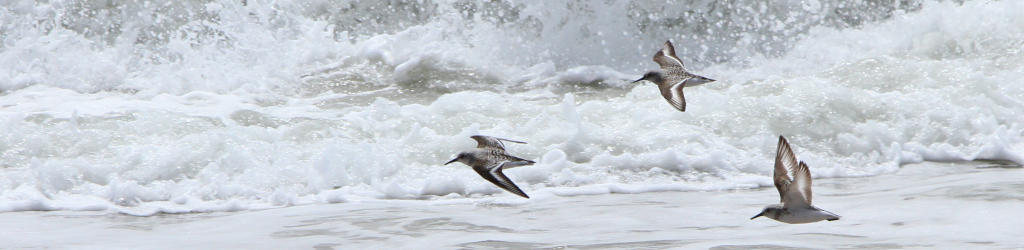
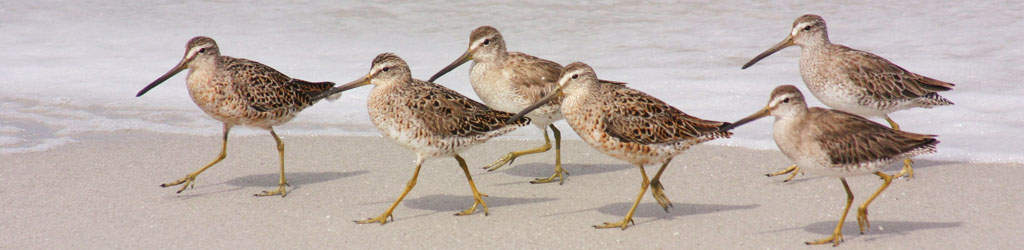
The source that I’m using to find the ‘Just Once’ candidates is a dump from the database of tags that only appeared once before, just like the tag roundup at the beginning of each year. So they’ve only appeared once when identified by name. However, not only do they appear in the rotating banner at the top of the page, another frame from that same session was edited to use as a page break where needed, like so:


Curiously, this was discovered when I started this post and searched on “dowitcher” in the library of uploaded images for that photo above, finding two other hits – both the page break images, which then reminded me of the banner image. So yeah, they’ve been seen before, but not specifically named at the time.

The one at top was taken in Huntington Beach State Park in South Carolina, five years ago (doesn’t seem that long to me, damn.) The others were all from Sanibel Island in Florida, like fifteen years ago – which was the last time we’d been to Florida, something that I keep vowing to correct and yet still haven’t. And it won’t be this year either, not even if someone funds it.

These are not snakes

green treefrog Dryophytes cinereus calling among pond reeds
No, I’m not trying to show off my amateur naturalist cred, and no, ‘amateur naturalist’ doesn’t mean I’m bad at getting nekkid – that’s ‘naturist,’ goober. And you still wouldn’t want to see it.

No, I’m referring to the fact that all of these were shot while I was looking for snakes for World Snake Day, which is still going on as I type this and might, just might, see some late entries. I was just seeing a lot more than snakes, like, the green treefrogs (Dryophytes cinereus) were remarkably active last night, possibly because it had cooled down a little more than it had been. This did not make it ‘cool’ – I was still covered in sweat from the session without any physical exertion and only a tiny bit of stress, but we’ll get to that.

pair of green treefrogs Dryophytes cinereus, one calling, on pond reeds
None of the snakes that I saw were anywhere near the spots where the frogs were, which suggests that snakes would do better if they could hear, because these guys were hard to miss. But hearing takes place in most animals through the repurposing of jawbones from our ancient reptilian ancestors, the same bones that snakes kept in their jaws to allow them to swallow prey much bigger than their head. Now, snakes are pretty sensitive to vibrations felt through the ground (or anything else they’re sitting on,) and I spooked one of my potential subjects by carelessly trodding softly on a pinecone that was over a meter off – the snake’s immediate reaction would’ve convinced you that they could hear. But a day of heavy rains wasn’t enough to counteract six weeks or more of scalding sun, and so the earth remains dry and packed and may well have carried the vibrations better. Or the pinecone was wired into the snake’s vibrating cellphone. Meanwhile, I wonder if frogs have developed calls in a frequency that doesn’t elicit many vibrations where snakes can sense them, because they certainly were louder than the noise from the pinecone.

small green frog Lithobates clamitans sitting near pond edge
This was one of several other species out last night, a green frog (Lithobates clamitans,) a larger and aquatic frog, though this specimen was only fractionally bigger than the treefrogs. These were calling too, as were American bullfrogs, eastern narrowmouth toads, and some ‘ratcheting’ bugger that I didn’t recognize by sound and couldn’t get a peek at. Yep, one big singles bar of attempted procreation, and me voyeuring in the middle of it.

trio of green treefrogs Dryophytes cinereus on pond reeds
I think these were the same frogs and reeds seen above, now on my return pass, and I’m pretty sure another was calling just out of sight behind these reeds, suggesting that these were all ardent males. I’d sit and video the process but I’m not sure that I’d see much, because the light of the headlamp (and by extension the video light) makes them nervous and tend to stop calling. Plus in reeds like this, it’s easy to get a bad light angle and throw shadows, which makes them even more nervous because something blocking out the sun is often an indication of danger looming.

pair of green treefrogs Dryophytes cinereus in amplexus
However, I did at least find a pair that had almost sealed the deal, yet still sitting complacently on a trunk instead of heading down to the water to lay and fertilize some eggs. I’ve seen this plenty of times – there is often a period of just sitting there, and I don’t know why this is – possibly that ‘small talk‘ thing I keep hearing about.

By the way, if you noticed that the female’s eye doesn’t have the distinct reflection of the male’s, this was even visible in the headlamp while I was focusing, and is potentially a damaged cornea.

There were more than frogs out too. Like spiders.

large fishing spider possibly Dolomedes tenebrosus standing more upright on log
There were scads of fishing spiders all over the place, skating out across the water, but all of those that I could see clearly were smaller examples of the six-spotted fishing spider. This, however, was many times their size, curiously standing ‘tiptoe’ on a log out in the water, so I couldn’t get closer. It’s likely a Dolomedes tenebrosus, the largest species of fishing spider in this area, whose leg spread can cover your palm. Why it’s sitting like this I can’t say, but it does remind me of how I stand sometimes when it’s too hot and those sweaty areas are getting annoying.

possible rabid wolf spider Rabidosa rabida hunting on weeds
According to a quick search just now, this would appear to be a rabid wolf spider (Rabidosa rabida) – the markings fit the description and the photos. What got my attention were brilliant and largish reflections from the eyes; I’d been seeing such all night, because both wolf and fishing spider eyes reflect vividly and they were all over the place, but these were brighter and more distinctive than I’d seen before and I went in for a closer look. She didn’t want to come out in the open and this was as good as I could coax her to pose, but she almost got a free meal from me because the moths were attracted to the headlamp and they kept blundering into her eyrie – she made a couple of failed attempts to catch them as I watched.

The other was a lot more cooperative, however.

unidentified female wolf spider Lycosidae with brood on her back
This one was large enough and dark enough to be found without any help from reflections, which was a shame because there should have been a lot of them. Too few markings visible to try to identify, plus the fact that many wolf spiders (Family Lycosidae) are difficult to distinguish anyway, but it’s clearly a mama wolf spider with bebbies. Note the rearmost row of eyes, the position of which distinguishes this from fishing spiders, where they would be more in a row with the two largest eyes. And of course a few bebbies moving forward onto her cephalothoraz. She paused and held still nicely for several close frames, and even allowed me to sneak my finger into the frame on the smutphone for a scale shot to freak out friends – in leg spread she was probably close to 60mm.

And even more – not spiders, but we’re also not reducing the leg count.

likely red swamp crayfish Procambarus clarkii foraging just out of water of pond
I’ve seen these from time to time, most often after a heavy rain which tends to bring them out onto land. I believe this is a red swamp crayfish (Procambarus clarkii,) quite large as far as crayfish go, not just rivaling shrimp, but they also used to form the bulk of the crayfish served as food – this one was over 100mm in length, snout to tail, and much thicker than my thumb.

likely red swamp crayfish Procambarus clarkii, male, foraging out of water from pond
Those larger chelae (pincers) indicate this is a male, and it was foraging enthusiastically in the mud at the water’s edge, almost wholly exposed from the water. Those eyes were producing red internal reflections which showed up well in the headlamp, only vaguely visible here (the flash was offset a bit.) Eventually, I did an incautious move that alerted the crayfish somehow, because after several frames and a little maneuvering from me for a better view, he decided to hurriedly slip back into the water.

And finally,

female eastern bluebird Sialia Sialis watching photographer carefully from bluebird box
Remember what I said about stress? One of the bluebird boxes along the pond was occupied again, the second brood for the year (quite common around here,) and the female eastern bluebird (Sialia sialis) was just watching me, unblinking, unmoving – it was seriously creeping me out. What? I’m just looking for snakes, I don’t give a shit about your eggs – go glare at someone else.

1 45 46 47 48 49 334