It qualifies

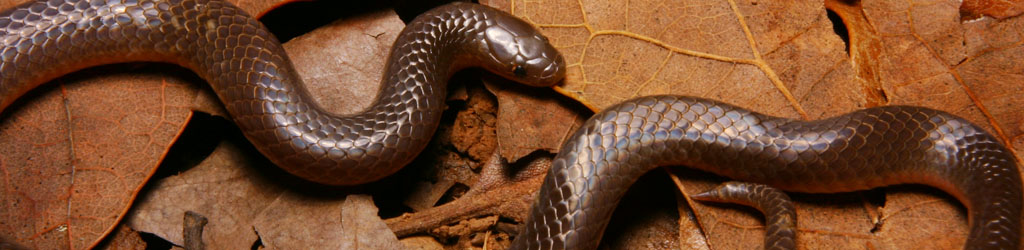
Today, as you undoubtedly know, is World Snake Day, and while you might think this is one of those crass bogus holidays that I make up to feature some convenient photos on hand, this is for realsies. Knowing that this was coming up, I went out to find some world snakes to feature, knowing that at the very least I was in the right geographic area (the world) to do so.

northern water snake Nerodia sipedon sipedon settled on pond edge
This is a northern water snake (Nerodia sipedon sipedon,) and here’s the deal: I was reasonably certain that I’d find at least one example by going over to the neighborhood pond at night, when they’re most active. Not to mention that the days have remained brutally hot and even blog posts aren’t worth the abuse of searching around in the open for any extended period of time during the day. So as the last light was fading from the sky, I ventured over to see if there was any activity – for some reason, foregoing the camera and taking only the smutphone. This meant that I saw three separate snakes on shore, but could get no decent photos of any of them because smutphones suck – I really don’t know why I went without a real camera, but I was thinking I might set up the video rig instead and do it as moving pictures. But since all I’d seen were snakes that were motionless until I got too close, I instead came back with the macro rig (different brackets and lighting,) for my blog images. And that meant that only one of the three had reappeared for the holiday.

northern water snake Nerodia sipedon sipedon showing cloudy eye from being close to shedding
And you see here what might be the reason why. As snakes get close to shedding their skin, they eyes get cloudy and they tend to bask more to help the skin dry out and peel away, and so this one returned to the same spot twice after having been spooked from it by my shenanigans. This was a relatively small specimen, about 1/4 the mass of one of the others that I tried using the shitphone to get pics of, and I could have easily picked it up, but there was no point. First, I’d get bitten exuberantly, because water snakes do that even when they’re not overly defensive from not being able to see through their cloudy eyes well, but this has happened to me many times before and it really isn’t an issue. More, I’d have to be juggling the camera one-handed if I did so, while trying to manually focus by the light of the headlamp because that’s too dim for autofocus. Plus the snake had already been disturbed enough.

I saw plenty of other subjects that were not world snakes last night as well, and they’ll be along soon. But it’s kinda busy today and I wanted to get this out before too much came up and I missed the holiday – you know how important those are to me.

Blink and you missed it

first quarter moon five seconds before occulting Spice
The conditions held and I did get out to watch Spica disappear behind the moon. I tried a short video clip, unable to tell if it was actually capturing Spica or not but suspecting that it wasn’t – the frame rates for video translate to a pretty short shutter speed and even as bright as it was in comparison, Spica was still pretty dim. Upon returning home, I found that I could indeed make out Spica in the video through its scintillation and should have tried it – except that the batteries were running a bit low and video absolutely trashes them, mostly through having the LCD on the back of the camera active constantly, and I was close enough to the event to not want to switch out batteries. All that said, you can see Spica up there as the little speck to the left of the moon, very close to the shadowed portion – as in, about five seconds from it.

Now, I was using mirror lockup as I said, so timing wasn’t really a thing even if I felt (which I didn’t) that my watch was perfectly synchronized to orbital periods and all that. I was waiting about five seconds after locking the mirror up before tripping the shutter to actually snag the picture, so watching for some telltale that it was about to happen wouldn’t work in the slightest. Even without the delay it wouldn’t have worked, because I was watching Spica in the viewfinder to see if I might make out it dimming or something and it simply winked out without warning. So the next frame is five seconds after that:

first quarter moon immediately after occulting Spica
The sudden disappearance didn’t really surprise me, given that nearly all stars are so distant that they’re mere points of light to us no matter what telescope is used, but I’d hoped there might be a hint of something, especially if I could capture it. Nope.

But while we’re here, we’ll take a look at something that I said I might try.

two-frame animation of first quarter moon roughly 150 minutes apart
The first image is the whiter one, taken at roughly 9 PM EDT, while the second is shortly before Spica skipped out, about 150 minutes later. Not only was the moon at a different angle, somehow I’d shortened the zoom down a bit from maximum for the second session and it was shot at 552mm, so I had to tilt and resize them to match – and I’m almost certain you’re seeing evidence of the moon’s libration, the faint wobble that it has as it orbits (watch the distance of the mares from the right side.) You can definitely see the advancement of sunlight along the terminator, as well as the softening of the shadows within some of the craters more towards the center of the sunlit portions. And yes, the color change was that noticeable, even though the moon was quite some distance from the horizon – atmospheric haze and thin clouds were the culprits I believe.

Overall, however, I’ll watch only for planetary occultations, because stars are too boring.

Preliminary

first quarter half moon with Spica showing off to left
Just now, took a peek out there as the sky was darkening, noticed that it was more than clear enough, and did a couple of test shots. I also noticed another speck in the viewfinder and reframed, but I was still working handheld and sharpness was lacking. As I was setting up the tripod and getting the remote release out and the camera set for mirror lockup*, the last little light and color was fading from the sky, but it still allowed me to snag the moon and Spica in the same frame – that’s the star well off to the left. It’ll be closer in a few hours.

I can see a couple of little specks on the terminator of the moon, edges of craters or mountain peaks just catching the hint of the sun over the moon’s horizon. It’ll be interesting to see how much they’ve advanced by the time of occultation – I may have some comparisons then.

*Mirror lockup: the mirror slapping up right before the shutter opens introduces a pretty good amount of vibration into the camera, which can show on the images at high magnification if the shutter speed is low enough, such as for night sky photography. Mirror lockup is an option on many camera bodies, which allows the first press of the shutter release to simply raise the mirror, allowing the vibrations to die down before another press opens the shutter itself – some cameras simply set for two seconds of delay, but in my experience with long lenses, five is much better. It really can make a significant difference.

Watch Spica vanish before your eyes!

Stellarium plot of the occultation of Spica for July 13, 2024
I really haven’t been finding posting material recently, because I’ve had a lot of other things going on, though I have a few unrelated pics that may show up a little later. Right now, I’m providing what little warning I can, having discovered only this morning that the moon will be occulting Spica this evening.

Basic orbital dynamics: the stars move across the sky only because the Earth rotates, but the moon has its own orbit and thus moves slightly differently than the stars, which means from time to time it will block them. Actually, it blocks a lot of them, but it’s often bright enough that we can’t see the stars close to it anyway, so we notice nothing. In this case however, Spica is one of the brighter stars and will disappear against the half-moon’s darker side, at roughly 11:30 PM EDT.
If you’d like to see this for yourself. I’d highly recommend downloading Stellarium (which produced the screenshot above) and getting your location plotted and saved within; this will provide a much more accurate account of when and where it will occur for you (though you can probably figure out where easily enough by watching the moon.) I might endeavor to do this on video if Spica is bright enough to snag at the normal frame rate, which it may not be. But if the skies remain clear, I should have some still photos at least.

Spica will actually re-emerge from the other, sunlit side of the moon roughly 100 minutes later, but it will have set by then at this location. I played around with locations a bit, and determined that from Avon, NC – far out on the Outer Banks – there’s a slim chance that this could be seen just before it dips below the horizon, but this is close to a five hour drive from here and stands a very good chance of being obscured by atmospheric haze anyway, even if the sky is “clear,” so I won’t be making that attempt. Further west in the country, however, the re-emergence should be visible, so give it a shot if you like.

H/T Universe Today

Just once, part 28

elephant mosquito Toxorhynchites rutilus showing iridescence
elephant mosquito Toxorhynchites rutilus shown in scale with 'normal' mosquitoThis week we have a curious specimen that was rather obvious when spotted that one time, nine years ago, because of both its size and its coloration. This is an elephant mosquito (Toxorhynchites rutilus,) and it was surprisingly easy to catch when it was perched atop the car, less so to photograph even with the help of a terrarium – the top image was tweaked to remove the contrast-reducing haze caused by the terrarium glass. It really is an iridescent blue and gold, and as you can see from the size comparison at right, much larger than a ‘normal’ mosquito (whatever species that is – there might be several.)

Since The Girlfriend and The Sprog both react badly to mosquitos, I did not keep this one around, much less release it, once I was done with the photos, but preserved it in alcohol. This was before I attempted to identify it, when I found that I should have released it, since not only do they not bite humans, their larva prey on the larva of the mosquitos that do. They are, in fact, used as a control measure in areas where the parasitic mosquitos breed. However, I can see how this might meet with mixed success, because anyone seeing a mosquito this size is quite unlikely to allow it to fly off unmolested.

Elephant mosquito Toxorhynchites rutilus head detail
The iridescence really does extend down the legs a bit and even out onto the proboscis – if you’re gonna be flamboyant, don’t half-ass it. What actual purpose this serves, I cannot even speculate on – no, that’s not true, very little stops me from speculating, but let’s just say, take it as seriously as Faux News deserves to be. Since this species feeds on flower nectar as adults, the coloration may help them camouflage among the blossoms when they’re holding still during feeding and thus most vulnerable. Or they may simply be Notre Dame supporters (and given how dismissive of all sports that I am, I had to look that up.)

So as I type this, I find that Wikipedia says there are many species of Toxorhynchites and they’re extremely hard to tell apart, making my specific identification somewhat suspect, but going back to BugGuide.net, there’s only one species in North America, so we’re staying with Toxorhynchites rutilus. The amount of research I do for these posts…

This evening’s display

male northern cardinal Cardinalis cardinalis flying against rainbow as female watches from blooming crepe myrtle Lagerstroemia indica
Late this afternoon or early this evening – before sunset, anyway – we had some storms roll through, looking quite ominous for a bit, but what we ended up with were summer showers. The scattered nature of the thunderheads did let the sun poke through, and so we got a quite vivid rainbow for a decent amount of time, but granted, I boosted contrast on these for better display – in this case, as much to make the northern cardinals (Cardinalis cardinalis) stand out as to enhance the rainbow. The male didn’t want to pose out in the open like the female down there, but I snagged him as he crossed the bow, just not sharply.

The neighbor’s crepe myrtle tree (Lagerstroemia indica) was in the same direction as the bow, and so I didn’t even have to leave Walkabout Estates to frame a foreground element.

There were two items of note in the few minutes while the bow was visible, however.

both rainbow arcs against blooming crepe myrtle Lagerstroemia indica
The first was the second, meaning the secondary rainbow arc, seen here faintly above the first – this entered and left visibility in the space of two minutes or less. It was still raining lightly where I stood, and if you look at that higher arc, you can see a darker round shadow from a raindrop on the lens. This was better than the lens fogging up in the heat and humidity, which is what was happening when I first got out there since the camera had been sitting indoors in the air conditioning – it’s still hot as blazes around here, which the scattered showers have done little to alleviate.

I also suspected that I was seeing a hint of something else, and tweaking a few of the frames after I unloaded confirmed it.

contrast-enhanced rainbow arc showing faint supernumerary bow beneath
Significant contrast enhancement was used here, but it shows the ‘echo’ of a supernumerary arc underneath the primary Roy G. Biv pattern of the main bow – I go into them in more detail (with better illustrations) here, but what you’re looking for are the faint violet and teal bands repeating underneath the rainbow, which happens in certain conditions.

So it gave me something to shoot for a few minutes, which was about as long as I wanted to be outside anyway. Balanced out nicely.

female northern cardinal Cardinalis cardinalis in blooming crepe myrtle Lagerstroemia indica against background rainbow

Oh thank you

After spending far too much time seeing countless online displays of American hubris and mindless patriotism for the holiday yesterday, I ran across this little gem.

frame grabs of Diane Morgan as Philomena Cunk, dumping on the US' long history of slavery
While I’m not familiar with the specific episode, I feel obligated to say that this is Diane Morgan as her character Philomena Cunk, the host of a few shows that interview various historical experts while being even more ill-informed than the majority of Americans (yes, I live in North Carolina, and yes, I’ve been an American all my life, so I’m well qualified to make this statement.) If you have not seen Cunk on Earth, it’s worth seeking out, because it’s quite entertaining and Morgan is excellent.

On a serious note for a moment, I think it says a hell of a lot more when we recognize the shitty behavior we used to have and accept it as our history – it’s not going to change, after all – to reflect on how much we’ve changed for the better and can continue to do so, rather than attempting to whitewash it or pretend that it doesn’t exist to escape any culpability. One is growth; the other denial. Perhaps we’re big enough to recognize that? And then we can tackle, oh, the shit that we still do and really shouldn’t be…

Just once, part 27

red-backed salamander Plethodon cinereus exposed from under rotting log
While we found several examples of this species on the day this was taken, to my knowledge, I’ve never seen it before or since. Yet this red-backed salamander (Plethodon cinereus) was found in the best location nearby to find salamanders and newts of any kind, which is West Point on the Eno River in Durham, NC. Their range across NC is curious, to be sure, especially when it doesn’t seem to follow the rivers that salamanders tend to congregate near. Why is it patchy and separated like that? My guess would be family issues – you know how it is sometimes.

While this image is rather straightforward from the top, something that I try to avoid as much as possible, what I like about it is how the natural speckling of the salamander is duplicated from the underlying leaves, a purely serendipitous effect from the sun angle, but I’ll take it. There’s a potential that pine pollen season had something to do with this too, since this was shot in April, but it looks far more uniform than pollen usually does, plus the fact that until moments before this image, everything you see was under a rotting log. Pollen can certainly get around, but not quite that well.

Plus, these guys are certainly less sticky and oogy to handle than white-spotted slimy salamanders, for eponymous reasons, though they were both found in the same location, just in different years.

It’s all cool

Or at least, a lot cooler than it has been for the past month.

Sunday finally brought some rain – not a lot, but enough to make some of the wilted plants look happier – and it also brought a brief drop in the overall temperatures, enough that last night we actually had the windows open, being cooler outside than in the house with the AC on. This morning, not facing the idea of overwhelming heat like I had been all through June, I ventured out to the neighborhood pond to see what was happening.

osprey Pandion haliaetus wheeling overhead at neighborhood pond
I know we have no osprey living in the immediate area, but that doesn’t mean we don’t get singular visits from time to time, and they always have the pond to themselves. This one circled around for a bit, dipping once to get a closer look at something that wasn’t enough to provoke a predatory stoop, and I fired off a bunch of frames hoping for something a little more than “osprey in the sky,” but that’s what I got anyway.

Though under a tree canopy nearby, a pair of sizable fish were remaining safely out of sight, which was good because they were too shallow to escape.

protruding tail of unidentified larger fish in pond
Actually, this one might have been safe just from its size, since there’s a very good chance that it was too large for an osprey to lift from the water – the visible tailfin here was perhaps over 15cm in width as the fish foraged in the shallows. I did my part by flushing it from the shadows and into sunlit water, but the osprey didn’t respond. You try to help a guy out…

We’ll go slightly out of order here, just to feature this one, sunning itself on a log while others around it had already plunged into the water at my approach.

possible yellow-bellied slider Trachemys scripta scripta basking on log, potentially quite old
I’m going to tentatively identify this as a yellow-bellied slider (Trachemys scripta scripta,) based on the shape of the carapace and that’s what the pond is full of, but I’ve never seen one completely without markings. Does this make this an old specimen? Possibly – it certainly wasn’t lacking in size, but the mud on the carapace didn’t help matters any.

However, what I was really after was something that I spotted early yesterday morning, when the sky was still overcast from the rain and the light thus crappy. It was much better today, and allowed for a handful of useful frames of my target.

newly-fledged green heron Butorides virescens trying to remain hidden in foliage
That’s a green heron (Butorides virescens,) and a newly-fledged one at that, hanging out in the same tree where I photographed (and videoed) the newly-fledged pair a couple of years ago. This is encouraging, because overzealous homeowners around the pond cut out the healthy tree that had previously housed the green heron nests for many years – I don’t know what’s going through their heads, but it has nothing to do with conservation or responsibility. So at least the herons have chosen this tree instead, to all appearances anyway, since I’ve never spotted the nest myself. This one was endeavoring to remain out of sight while I crept closer, maneuvering to new locations and keeping a careful eye on me.

newly-fledged green heron Butorides virescens peering down through foliage suspiciously
For my part, I was slinking around trying for a nice clear shot, while the heron did its best to prevent it. I have other frames where the eyes are less-obscured, but liked this one for the appearance of that left eye – or is it the right?

If you look very close, you can just make out a little tuft of baby down feathers atop the head, but we can do better than that too.

newly-fledged green heron Butorides virescens showing baby down and muted markings in sunlight
I’m now certain there are a pair of them, not half as reluctant to fly as the ones that I watched two years ago; this one popped up from the shoreline with a brief alarm call and flew to a nearby tree, giving me a bit better light and perspective. Now the down feathers are obvious, but you can also see the lean physique and the muted colors, even though in size, this is only marginally smaller than a full adult; most birds reach near adult size before they leave the nest. I’m a little sorry that I wasn’t trying to track their growth, but since I’ve never found the nest, this might have been hard, and given the heat index for all of the days I would have been trying, it’s probably better this way. See? Professionals can justify their failures as intended all along…

Oh, gosh, another one

I was just glancing down at the clock and calendar of the computer after completing a stack of tasks tonight and said to myself, Thirty days has September, April, shit. Because of course it’s time for the end of the month abstract and I didn’t have anything prepared.

Not only that, but I shot extremely little this month, for reasons that will eventually become clearer, though it won’t be for a while yet. So I dug this out, one that just barely made it through the sort in the first place, and not even shot this month, but the tail end of May instead.

lichen-stained tree bark
Is this all lichen, or do some trees just have bark that always looks like this, or what? I don’t know – I just know I’ve done better in this regard, both with much more interesting-looking bark and from an abstract standpoint.

If the heat breaks, maybe I’ll be more motivated to go out and shoot something – and the same might be said if it doesn’t break, though we’re talking different definitions now. It’s been over a month with nothing more than a sprinkling of rain, not enough to even register on a gauge, and the plants look horrendous; we really are hoping for a hurricane at this point. But I’ll stop bitching now…

1 46 47 48 49 50 334