


Mason Farm 2: Arachnidy

unidentified tiny orbweaver strung between tips of goldenrod Solidago
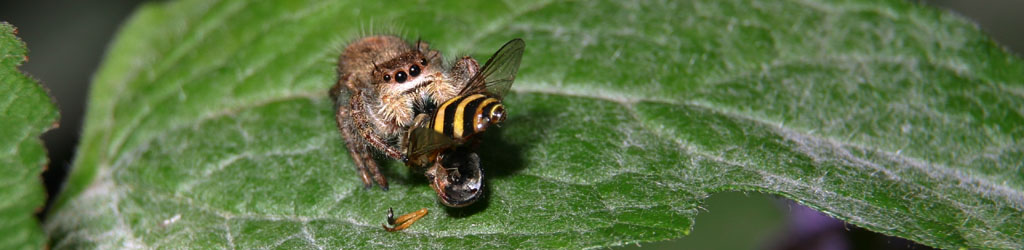
We now return to Mason Farm Biological Reserve, only not really because all these photos were taken during one visit that’s already days past now, so all we’re doing is seeing more photos – vacation slides from your creepy neighbor. And as the name implies (well, outright announces,) it’s gonna be spider heavy.

Part of this is because, late in the season and with chilly nights, there really isn’t a lot else active at the moment, especially not first thing in the morning. Truth be told, the spiders weren’t very active either, but the morning mist and dew certainly highlighted how damn many webs there were. Like another example of what appears to be the same species in the teaser from the previous Mason Farm post.

unidentified spider in horizontal orb web
Many years back, I’d done photographs of twisted, horizontal orb webs like the one seen here, and suspected the same species, but in comparing them, the markings aren’t similar at all, so my vote is no. And none of them were in such a position to allow me detailed shots, because they were in thickets of dense, tall weeds, soaking wet with dew, that almost certainly would have been disturbed with any attempt at approaching them. Plus I wasn’t all that motivated anyway. We’re still being slightly fartsy here.

banded argiope Argiope trifasciata in sunlit web
This one, however, I can identify – this is Hortense. Hortense is a banded argiope (Argiope trifasciata,) large and rude because, like the black-and-yellow argiopes, she builds her webs at roughly waist height, meaning they’re often discovered right before you walk through them. And at half a meter in span, this isn’t something you brush away easily. Hortense herself was roughly 40mm in body length, so much larger counting the legs (8,) and busy with her meal, so I tried to use the light on the web as best I could from the best angle I could get. I could have sworn I’d featured one of these here before, but the species names didn’t exist in the tag list, so maybe not.

The abundant goldenrod plants played host to numerous spiders and a few other arthropods.

nursery web spider genus Pisaurina on goldenrod Solidago
The most that I’m going to identify this one as is a nursery web spider, genus Pisaurina, because I didn’t get enough details to pin down exact species – I didn’t even get close enough to distinguish male from female. The sun had risen high enough to brightly illuminate it, but also cast a slightly distracting shadow across the abdomen. Ah well.

The next came a little earlier from a more tree-shrouded field, so it’s more muted, but a better pic.

nursery web spider Pisaurina mira stretched out on dewy goldenrod Solidago
Another nursery web, hanging out before the dew had cleared, which added some nice elements to the photos. Especially when we go in for a cropped closeup.

inset of previous nursery web spider Pisaurina mira in closeup
Isn’t that dew great? I know I like it at least; your taste may vary.

And that straight bottom row of eyes pins this down as a Pisaurina mira, because the other species in the area all have a curved bottom row. Little lesson for you: when you spot a nursery web spider, try to see the eyes clearly.

Which might be a little challenging, given that the spider may average 4mm in body width and often faces head down, so better to call in a professional. My rates are reasonable.

On another stand of goldenrod, the feathery tops being twisted over and clumped together told me to take a closer look, and this time the flash was necessary.

green lynx spider Peucetia viridans on egg sac deep within web-shielded hollow
I’d been expecting to see more of these than I did, but I’d also been expecting to see more praying mantises too, so we see how strong my powers of prediction are. I know it’s not easy to make out down there, but this is a green lynx spider (Peucetia viridans) snuggled in with her egg sac. Her head is down and to the right, facing slightly away from us, while her abdomen, almost centered in the frame, blends in so well with the goldenrod that it’s nearly indistinguishable. If she hadn’t given herself away with the unnatural clumpiness of her webbed-together lair, she would have been extremely easy to miss. Right, Buggato?

And I did say that it wouldn’t be all spiders, you’re correct. Let’s see, what do we have here?

unidentified dew-covered carpenter bee on goldenrod Solidago
This carpenter bee – or perhaps bumblebee, I’m not bothering to look it up – was almost perfectly motionless, definitely not at all fired up about the morning, at least until it got warmer out there. None of my subjects here were likely to die of thirst, that was certain. Maybe one day I’ll do a time-lapse of something like this in the morning where we can watch the dew evaporate away – that might be cool.

All of these, the previous post and this, were taken around the open field portion of the farm, with one exception in earlier post (the mushrooms.) Because there wasn’t a lot to see in the portion that ran along a small feeder creek, but as our time was coming to an end, we (well, I) found two subjects in quick succession. The first I’d almost mistaken for something else, given how far it was stretched out of the water initially.

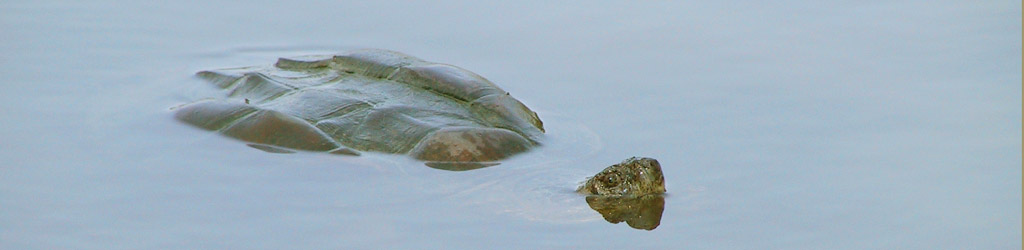
common snapping turtle Chelydra serpentina eyeing photographer distrustfully
This common snapping turtle (Chelydra serpentina) was clambering over an exposed log when I spotted it, half hidden behind the edge weeds, and I’d suspected a beaver, but it settled down more like a turtle by the time I maneuvered around for a clear shot. In carapace length it was at least 35cm, so not a small specimen. Tucked in among the logs, it had no easy retreat, and so it viewed us stoically and wished for us to go away. Which worked, eventually, so maybe someone should look into the telekinetic powers of turtles. I mean, why not?

And just a little further on, I got a peek of something not quite right under some leaves, and bent down for a closer look. In science fiction movies this is a bad idea, but for nature photographers it should be a routine habit.

female Carolina mantis Stagmomantis carolina well due to deposit egg sac
This Carolina mantis (Stagmomantis carolina) looked to be in her fifth trimester, ready to deposit an egg sac any second, but I knew this might take hours and may not even occur if she noticed us and felt threatened, plus we were at the end of our session, so while the opportunity to finally get photos of this was there, I really couldn’t take advantage of it. So much for dedicated nature photographer. But as I’ve said, let me know how much you’d pay to see that and we’ll make some arrangements – I can always work some flexibility (the key word there being, “work,” and not, “obsessive hobby.”)

So that’s it for the Mason Farm photos, except it’s not – we’ll see more before the month is out. But that’s enough for this post at least.

On this date 42

Like I said last week, not a lot to work with, since I really hadn’t shot a lot on this date. To be more specific, there are only two years (in the digital folders, anyway) that have entries, and one’s pretty sparse.

full moon - what else can I say?
In 2008, we had a full moon, and apparently clear skies where I was. I was shooting with the old Sigma 170-500 on the original Canon Digital Rebel, otherwise known as the 300D, the 6 megapixel model, so what you see here is full resolution – compare that to the second photo here from the 7D.

And the next year that I shot something was… last year. It was a lot, granted.

head-on shot of osprey Pandion haliaetus in flight
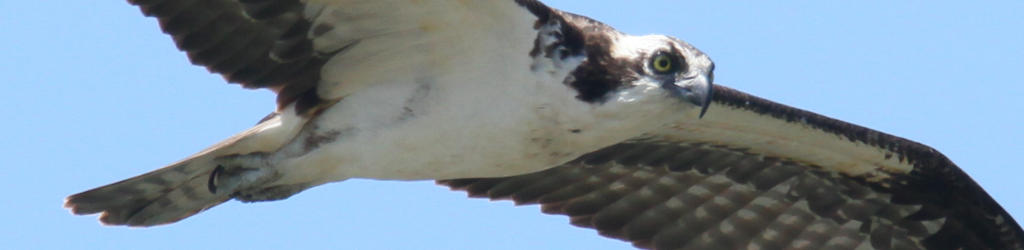
I featured the best of the hundreds of frames that I did that day in a post (more than one, really,) so we have this random pic that I like for its symmetry and faint air of malice. I’m not sure why this osprey (Pandion haliaetus) seems so dark, but roll with it – it’s not nice to comment. The speckled leading edges of its wings puts me in mind of WWII aircraft, their paint pitted and chipped from striking flak and debris during the missions.

It gets better next week – I have hundreds taken among six different years.

Probably not the last

Mostly because I’ve seen later.

Yesterday morning, when I went out after two solid days of rain courtesy of Hurricane AK924601 (or whatever it was named,) I found something I was beginning to suspect was gone for the season. I’ll start with giving you the big picture, which was roughly my view as I was standing there.

front of house with oak-leaf hydrangea Hydrangea quercifolia
See it? [I’m never sure how easy it is for others to see, so we’ll continue the game.] Let’s go a little closer.

oak-leaf hydrangea Hydrangea quercifolia with another subject
How about now?

We’re going still closer, whether you need it or not.

green treefrog Hyla cinerea on oak-leaf hydrangea Hydrangea quercifolia
Surely you see it now – if not, there’s no hope for you. But I was impressed at how well it blended, especially without brighter light to throw shadows, and if it hadn’t been for the white stripe, it would have taken me even longer. Which, mind you, would still have been less than a minute, because mad skillz.

Yes, there’s been no shortage of green treefrog (Hyla cinerea) photos on the blog this year, but you can never have too many, is what I say in defiance of all evidence. This is an adult – I haven’t seen any young’uns recently, but I noticed only a few minutes ago that there’s at least one tadpole in the backyard pond, which was way unexpected, and don’t ask me the species because I don’t know. The weather has only gotten a little crisp at nights, nothing serious, so there’s little reason not to keep seeing them, but the numbers have dwindled, which may only mean that they’ve moved on to someplace where no one keeps sticking a camera in their face.

green treefrog Hyla cinerea on oak leaf hydrangea Hydrangea quercifolia
Meanwhile, with little else to chase in such grey and damp conditions, I did a variety of approaches.

green treefrog Hyla cinerea peeking around edge of oak-leaf hydrangea Hydrangea quercifolia
If I’d done this one first, you might have gotten the impression that the frog was endeavoring to hide from me, instead of merely sitting complacently and waiting for the night. I’d switched to the Mamiya 80mm macro for this, for the short depth-of-field that it could render, and really, trashed too many frames because I wasn’t at perfect focus distance (holding still and aiming down in a semi-crouch while standing in one of the few safe places in the front garden means enough wobbling to shift out of the minuscule focus range very easily, so I fix the camera focus and move myself and the camera until things are sharp, trying to trip the shutter before I wobble out again. It doesn’t always work.)

How about the other side?

green treefrog Hyla cinerea peering through gap in foliage
Now we got the stalker vibe going, and believe me, there’s nothing more ominous than looking up and suddenly finding a green treefrog sizing you up through the foliage. Pure shivers.

But since I had the camera in hand, I did a few other frames for giggles.

unripe cherry tomatoes dripping with rain
The rain had stopped hours earlier, before sunrise, but with no wind and no sun, it remained on our cherry tomatoes (planted late, so running late) and I desperately needed a shot like this to add to my stock. I tried to use the drops as lenses to show the background, but really, in the grey light and with nothing but greenery back there, it wasn’t worth the effort. That’s the kind of stuff you try in a blooming garden, or at least with blue skies.

And as late as they are, they’re still blooming too.

cherry tomato blossom with single raindrop
Again, short focus, pinned on the drop. The clouds were thin enough to brighten the halos around the leaves and stems, but that was all, and it remained that way until late this morning. Might mean some good fall colors a little later on though, since they rely on a certain amount of rainfall to get vivid. We’ll just have to see.

Okay, now, where were we? Ah, yes, more at Mason Farm coming up.

Looming just ahead

If you’ve been checking out that sidebar for past posts, you knew this was coming: Thursday, October 15th, is National Grouch Day, an honest-injun American holiday that, if we’re being faithful, we can’t really celebrate, but we can observe – wearily, cynically, and fatalistically, secure in the knowledge that it won’t be anything to write home about. Yes, this is our day, but what good will that do? Most of those chipper assholes will ignore it or deny it.

Nonetheless, we have to make the effort, wasted as it is, because if we don’t, we’re admitting defeat. Well, sure, we will anyway, but in this case, it’s tantamount to agreeing with someone, and we all know how poorly that turns out. So let’s not be one of those pathetic slacktivists, announcing the holiday as if it would make any difference to anyone, but instill the true spirit within one and all in the worst manners possible. To that end, I provide a few more helpful tips, though you can always peruse my previous examples as well.

  • Set the clothes dryer a little short
  • Forget to replenish key supplies
  • Spill sand on the table
  • Find those socks that always slip down past the heel
  • That radio station with too many obnoxious commercials, not quite dialed in
  • ‘Just miss’ putting things back where they belong
  • Spill some ammonia on your mask (and everyone else’s)
  • Mutter something under your breath every time someone turns away
  • Velcro in your underwear
  • Keep asking stupid questions in meetings
  • Greasy thumbprints in the center of your glasses
  • Double a random ingredient in a recipe
  • Remind people at work about that kid that makes $750,000 annually on YouTube
  • Splash a lot of water around the bathroom
  • Leave your phone at home
  • Argue the positive aspects of The Debate
  • That’s a start, but if you’re really into the holiday, you don’t need my suggestions. Just remember that it should be spread equally between ourselves and others, and if you’re enjoying yourself, you screwed up. Again.

    Trust me, this will do no good at all anyway – I’ve seen this day go past for years now, and nothing bad ever comes of it. Hell, I can tell from the site stats that no one even reads my suggestions. So whatever.

    Mason Farm 1: Fartsy

    I got enough photos from a recent outing to Mason Farm Biological Reserve to separate them into two broader categories, so we start off with the fartsy ones, since I don’t do art.

    Actually, we’ll start off starting off with a setting one.

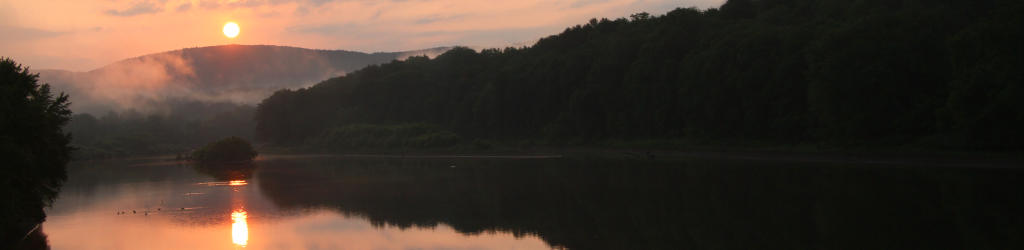
    low lying mist at sunrise at Mason Farm Biological Reserve
    We couldn’t quite call this ‘fog,’ (or at least, I couldn’t, but Buggato had no problem with it) – it was more of a low-lying morning mist, which Mason Farm is prone to when the temperature is right. They say a cloud can weigh a few hundred tons, and it’s easy to believe when you see conditions like this with the dew all over everything: a two minute walk through that undergrowth would soak you to the skin from the waist down.

    This meant lots of dew to play with, but also low light, at least until the sun rose high enough, and then the dew would burn off in a matter of minutes. So there were some narrow windows and specific conditions to work within, but we did okay.

    unknown wildflowers laden with dew
    I spent, really, a ridiculous amount of time trying to determine what these were, with no definitive answer. The closest that I got was finding a perfect match in a photo, to find that it was illustrating something entirely unrelated, because far be it from a news station to complete their trivial post with finding a photo of the actual subject that they’re talking about. Chuckleheads.

    As the sun broke through, we got some color to play with.

    rising sun breaking through gap to selectively color mist
    This came out better than expected; the sun was just barely breaking through a gap in the trees, and its light only impinged on the mist in a small area, giving this very cool local glow. One of these days I’ll set up the camera on time-lapse and get a video of the light curtain from the rising (or setting) sun traveling across the landscape. Especially if I can find nice foreground elements that cast shadows that can be tracked.

    And then, we have this ray effect, which may or may not appear ominous, depending on the movies you tend to watch.

    rising sun breaking through trees and casting rays through the mist
    I got lucky with the mist hanging within the trees, which doesn’t often happen – it tends to be more open-field oriented, and caught this composition in the two minutes or so that it existed. A little shifting allowed the sun to just barely peek past the tree and put a starburst there, instead of either being entirely blocked, or coming full strength into the camera, affecting exposure and causing flare and ghosts – more thought goes into these than you might expect. Sometimes, anyway. By the way, white balance was set for full sunlight (essentially no correction,) which retains these nice orange colors that are so expressive.

    It also retains the blue tones in the shadows, which may or may not work, depending on what you’re after.

    possible evening primrose Oenothera biennis against background of goldenrod Solidago
    I believe this is an evening primrose (Oenothera biennis) – the one in the front, anyway, while the background is goldenrod (one of over a hundred species in the genus Solidago.) It wasn’t intentional that the supporting stem for the primrose vanished from focus, making it look like another bloom on the goldenrod spray, but I’ll take credit for that compositional element anyway.

    Because of the tree lines in the reserve, large portions of tour remained in shadow for a long time even after the sun was well up, and likely would have until late morning, so some of the opportunities had a muted look.

    dense blazing star Liatris spicata spikes against goldenrod Solidago background
    This one had a slight tweak to the curves to counteract this a little, but it would have been unrealistic if I’d taken it much further. The blue/whatever spikes are dense blazing star (Liatris spicata,) and in fact, I’m encouraging people to write in and tell me what color they actually are. The wildflower database had them in the red section and not the blue, but they also don’t have a purple section, so…

    As the light improved, the subjects started to take on different hues.

    honeysuckle Caprifoliaceae blossom sporting dew
    Since I couldn’t get too close to this honeysuckle blossom (Caprifoliaceae family,) this is a tight crop of a larger frame, but it shows the dew detail better. The sun is almost making an appearance here. It gets more noticeable with the next.

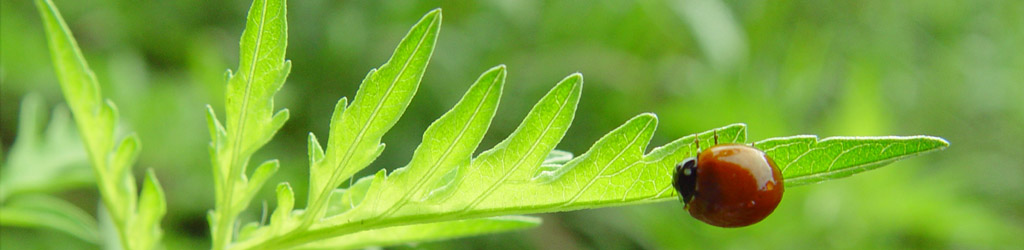
    lady beetle Coccinellidae on goldenrod Solidago
    The goldenrod was, really, all over the damn place, for the most part forming a yellow accent to much of the landscape, but at times it hosted various critters of interest, which you will see more of in part 2. I couldn’t pass on the red lady beetle throwing some contrast in.

    possible sheet web spider web with dew
    I still have yet to identify the type of spider that makes such webs, which is surprising since I see them all over at this time of year, revealed by the humidity that adheres to them. To the best of my knowledge this is a variety of sheetweb spider, family Linyphiidae, but that’s all I have right now, especially since getting even a glimpse of the occupant is difficult, much less detailed photos. In this case I simply did the short depth-of-field thing with the backlighting to go all abstracty.

    And as the light got even stronger, more depth was available.

    dew on sunlight on unidentified leaf
    Just liked the light on this one.

    Had to cheat on this next image, though – wanted detail that was in too deep shadow.

    underside of mushrooms sprouting from trunk overhead
    Given the opportunity for a rare perspective by some mushrooms sprouting from a treetrunk overhead, I used the flash to illuminate them sharply – the flash will show up more often in part 2 as I went for details over fart. Most times to get this view you have to be crawling around on the ground, but here I didn’t even have to crouch. And the timing was pretty good, since mushrooms have a very short ‘healthy’ period before either being eaten or rotting on their own, or both, so hooray us.

    And finally, a harbinger of things to come – this was still more fartsy than illustrative, but serves as the lead-in to part 2, whenever I post it. I’m not trying to identify this spider, I just liked the curve of the web and tried for a new approach, given the opportunity. I took several frames, trying to nail focus at f4 (with the Mamiya 80mm macro, doncha know,) and only one came out sharp enough. But that’s why you take a lot when the depth is so short.

    unidentified sheet web spider family Linyphiidae under curved web
    More on the way…

    More random stuff from the pond

    newborn six-spotted fishing spiders Dolomedes triton still by egg sac
    Just a handful of photos, other stuff that I collected on the same days that I was shooting the great egret and the turtles. More or less, anyway – I actually returned to capture the above shot of newborn six-spotted fishing spiders (Dolomedes triton) because I didn’t have the macro flash rig along when I first spotted them. Unfortunately, the nice composition of the mother running interference atop the web tent wasn’t there when I returned; instead she was hidden in the leaves underneath, and not very cooperative in coming out into view. But as it turns out, this was one of several hatchings all taking place in the same time frame, so I could pick one of the other mothers to feature. Like so.

    adult female six-spotted fishing spider Dolomedes triton near egg tent
    Six-spotted fishing spiders are fairly big as reproducing adults, this one being roughly 50-60mm in leg spread. And while I always interpreted them as remaining near the hatchlings for protection (as the green lynx spiders seem to,) all of the ones that I found were more inclined to seek cover than to dispute my presence, so who knows? Another, without an apparent egg sac, also sought a hiding spot as I leaned in, but it wasn’t the most effective attempt.

    six-spotted fishing spider Dolomedes triton hiding ineffectually behind leaf
    Interspersed freely among all of these, which were all found on low plants directly bordering the water, were the ubiquitous long-jawed orb weavers (genus Tetragnatha,) some of whom appeared to be engaged in courting behavior. I would have initially considered this late in the season, but spiders take all spring and summer to mature, and the young are often born in the fall and overwinter as tiny little things before starting their serious growth in the spring. Also, since I saw the same behavior taking place at Jordan Lake a few days before this, I think it’s safe to say it’s a trait.

    male long-jawed orb weaver Tetragnatha in profile
    Long-jawed orb weavers are gangly things, with not just spindly legs but long pedipalps and chelicerae, and this image makes it seem almost chaotic. The pedipalps are the things with bulbous ends at lower left, the shape defining this one as a male – this is what they use to impregnate the female. While behind them, the thicker and spiky protrusions are the base of the chelicerae, more show than function, as I understand it. Tetragnathas are not particularly aggressive or formidable spiders, despite having a decent size to them (body length in the 20-30mm range) – I’ve accidentally passed through their webs any number of times, and had them running across my arms, camera, and hat every so often, usually complacent enough to let me scoop them up and return them to their host plants.

    I found a couple different species of very large caterpillar while out there, both of which I had to look up since I’d never seen them before.

    larva of banded sphinx moth Eumorpha fasciatus, showing two different color phases
    No, this is only one of them – they can change color drastically at different instars of the larval stage. These are the caterpillars of a banded sphinx moth (Eumorpha fasciatus,) and quite good-sized; the larger one measures roughly 100mm in body length. The adults are large and vivid, and I’ve seen them around occasionally.

    About 20 meters away, a more threatening species was found.

    smeared dagger Acronicta oblinita caterpillar
    This is the larva of a smeared dagger moth, which isn’t very pretty as an adult, but those spikes and the aposematic coloration were more than enough to convince me to keep my hands back, and that impression was accurate: they do have an irritant that’s administered with those daggers. Slightly smaller than the largest banded sphinx caterpillar, but still an appreciable size.

    And finally, the great egret was still hanging out.

    great egret Ardea alba hitting the limit of water depth
    I saw it coming along the bank and took up position ahead of it, and true to its nature, it came almost directly alongside me. This time I didn’t have the longer lens but didn’t really need it – the Canon 100-300 L was more than enough, and in this case, I’d zoomed back out to 100mm to get the broader view. You can see the water reaching the egret’s belly, and I believe that it decided, immediately after this, that it couldn’t detour a safe enough distance from me and still remain in water shallow enough to wade, so it flew off to a nearby bank. It was hardly too spooked, because I eventually caught up with it there for more close portraits. But I’ll close with a slightly earlier one, as it hove into view through the screening plants on the banks – I just liked it better for the atmosphere and the abstract rippling water background.

    great egret Ardea alba seen through the undergrowth
    Fear not! There are at least two more posts coming up, regarding a recent trip to Mason Farm Biological Reserve, and perhaps whatever else I photograph as I build up to them – catching up has been ongoing, but it’s much better than having nothing to photograph, and that season is approaching. Then you get to slog through my philosophical posts.

    Not the bluest

    lot of black vultures Coragyps atratus roosting in dead tree
    On a sunset outing to Jordan lake almost a week ago, we had clear skies – not ideal for sunset – except for some haze down on the horizon – not ideal for birds, which were pretty much the only thing that we saw. The majority of those were more distant, which put them down lower and thus against the haze, so most of the backgrounds for this post are going to be anywhere from pale grey to an anemic blue. But whatcha gonna do?

    Above, the dead tree on the point at one of our two common shooting locales was heavily loaded with roosting black vultures (Coragyps atratus,) apparently exhausted from a long day of circling and looming. I’m guessing, anyway. Yes, this is aimed almost straight up, and yes, we were at times directly underneath, yet nothing untoward befell us – the vultures were slightly edgy about our presence, but not seriously. At times most of them would take to the air and circle widely for a bit, not because of anything apparent that we did, then some would return while others would find roosts a few hundred meters away. Not the kind of behavior we were looking for, so we largely ignored them.

    In the distance, I tracked a bird passing low and straight beyond the causeway road to our left, and fired off a few frames to ensure that I had the identification correct.

    passing auslt bald eagle Haliaeetus leucocephalus
    That is indeed a bald eagle (Haliaeetus leucocephalus,) an adult, and we watched to see if it would turn or circle and start hunting, but like many of the times we’ve seen them at that location, it seemed intent on going someplace and never wavered from a straight line path.

    likely second year juvenile bald eagle Haliaeetus leucocephalus banking in distanceCuriously, less than a minute later it was followed by another bird, this one marked differently, who banked back and forth briefly in the middle of its path before continuing on in the same direction that the previous had been heading.

    This is cropped tightly from a much larger frame, cutting out the power lines that were visible (and found in the adult picture above it,) but this is a juvenile bald, likely second year from the mottled coloration and the lack of an eye stripe in a paler face, which develops in the third year. And just so you know, the first year they’re largely unmarked brown, while fourth year they get the adult coloration of white head and tail that we’re all familiar with. While it seemed to be following the adult (so I’m supposing a parent,) it was with enough distance that it wasn’t obviously following it. Or it may simply have been a coincidence, traffic on the eagle highway. But can you see the joker face on the lower wing? I see it plainly, but The Girlfriend couldn’t, even when I pointed it out. Must be something Freudian.

    [Whether that’s on my part or hers, I’m not saying…]

    There were osprey present, but they were being only semi-cooperative.

    osprey Pandion haliaetus lifting from water with fish
    Generally, when they chose to dive after fish, it was at a great distance where detail wasn’t going to be forthcoming, and I only snapped a few frames of this one as it lifted off after a capture. Let’s back off a bit to see the full frame.

    same image without croppingThis is the full frame, and a bit smaller than it appeared in the viewfinder, but enough of an impression anyway, and this was with the long lens at 600mm. There’s no easy way to gauge distance over open water, but the background was a measured (Google Earth can be handy) 0.6 kilometers in the distance, so I’m guesstimating that the osprey was between 200 and 300 meters away – not what we really wanted to see.

    And while I’m filling up space alongside the photo before we go to another full-column-width image, I’ll point out that I’m still having problems with keeping the camera level, but at least I know now (from paying some attention at times) that it seems to stem largely from how the camera sits in my hand; it feels level, but is actually at a slight angle, and I may try to trick out a small grip addition that helps intuitively bring it back to proper orientation.

    Yet the ospreys weren’t entirely uncooperative…

    osprey Pandion haliaetus banking in good light overhead
    One came in close and wheeled around the small bay to our left a few times, and since the sun was dropping lower in the sky, it provided great light as the osprey banked away from us, which is when I start cranking off the frames. You can even tell that it’s intent on the water, but it never found anything to dive on when it was close and well-lit like this – bugger. But you take what comes, unless you know of some way to coax fish close to the surface at the ideal position to compose the osprey pics. If so, let me know; you owe me, after all the content I’ve provided.

    As for the speck in the frame, I’m guessing an insect, but fore or aft of the bird I’m not sure. Don’t ask for identification.

    osprey Pandion haliaetus in level glide looking for fish
    Nice light, nice distance, autofocus largely behaving itself – but no real action. No, the same bird (I’m pretty certain) ended up cruising away directly into the sun before it found itself a fish to capture, eliminating everything that would have made for good images. I mean, see if I send it a christmas card this year…

    distant osprey Pandion haliaetus shaking water from its feathers after capturing fish
    This demonstrates the radical difference in conditions when turning roughly 180° away, but also a dependable habit: osprey will climb out a few meters above that water after a dive, then shake vigorously to disperse most of the retained water, often dropping a meter or so as they do. The backlighting served a useful purpose here in highlighting how much water this can be.

    A little later on, I tracked another bird well off, at least twice the distance of the first osprey up there, unidentifiable until I got the long lens on it.

    bald eagle Haliaeetus leucocephalus banking on sighting a fish
    Yep, another bald eagle, and soon after spotting it, it did a wonderful dive after a fish.

    bald eagle Haliaeetus leucocephalus in vertical dive after fish
    The vertical portion didn’t last long, but I was happy to capture it as it occurred; you can just hear that WWII diving fighter sound effect, can’t you? In fact, why imagine it?


    [Yeah, I really did spend about 20 minutes searching for that, downloading and converting it, just for a throwaway part of the post.]

    Naturally enough, the autofocus started doing its random tracking thing as the bird crossed the horizon treeline, even when the camera is supposedly set to avoid doing that, one of the advanced custom functions on the 7D; a lot of this might be due to the extreme difficulty in maintaining the eagle in the AF ‘crosshairs’ of the viewfinder, handheld with a heavy lens on a moving and tiny target, but it still irks me. So I did not regain sharp focus until the eagle had already risen with its catch, but it did allow me (us, really – Buggato had by this time acquired the target and was shooting his own images) to watch a curious behavior.

    bald eagle Haliaeetus leucocephalus bending down towards fish in its talons in midair
    The eagle bent down several times in mid-flight to worry at the fish clutched in its talons, and I surmised that it was trying to ensure that the fish was dead and not going to wrest itself free. Which had me wondering a little, because eagle talons should be more than adequate for that job, so was this somehow a dangerous fish that could bite back or something? I’ve seen hawks in such difficulties with snakes, but this didn’t appear to be a snake and was way the hell out over open water where I wouldn’t expect to see one.

    same image at full frameBut while we’re here, we’ll take a look at the full-frame again, to give an idea of distance and difficulty in keeping the subject centered within the focus area; you can compare this with the full-frame image of the osprey from earlier in the post. This also shows the difficulty in discerning what exactly the eagle was doing, which wasn’t actually revealed until I was back home and could look at the frames at full resolution – you’re not quite seeing full resolution in most of these images, but close enough for our purposes.

    bald eagle Haliaeetus leucocephalus eating fish in midair
    Because the eagle was actually eating the fish in mid-flight, something that I’ve never witnessed from a raptor, and not even waterfowl, except for very small meals.

    bald eagle Haliaeetus leucocephalus already finished with fish in midair
    In moments, it was gone, and the eagle continued on its merry way as if seeking a perch to consume a meal that was already polished off on the way home. It’s like when your dad gets home with fast food and you ask, “Where are the fries?” and he replies, “Damn, they must have forgotten them…” In fact, this may help explain why the juvenile was following distantly behind the adult earlier in the day, trying to catch the parent in the act. Kids aren’t as stupid as we think sometimes.

    I’ll close with a couple of great egret (Ardea alba) photos – really, this might be the year of the great egret, because I’ve shot a lot of them. I might have to check and see if I’ve gotten one every month so far.

    great egret Ardea alba posed against blue sky
    One flew in as we were standing there, circled around the boat dock area as if undecided on the perfect perch, then flew back out again in roughly the direction that it had come. I’m guessing it was looking for its credit card.

    The differences in the sky are evident in these two frames, and the sun was closer to behind the egret than in an ideal position, but this led to some nice sidelighting and glow from the wing feathers, so it works, and the AF locked on nicely, so these are sharp enough to make into large prints. Not a bad end to the day, even when sunset didn’t pan out.

    great egret Ardea alba departing against hazy sky

    Intermission, part 1

    I find it interesting that I’ve never used this blog title before (I keep a list,) and expect to want to again, so, part one it is. These are some of the semi-random images that were obtained between bigger or more thematic sessions that will appear here shortly.

    three yellow-bellied sliders Trachemys scripta scripta perched on snag with partial reflection
    While ambling around the nearby pond, I spotted these yellow-bellied sliders (Trachemys scripta scripta) from a distance and fired off a couple of frames before they were spooked into the water, but I’m a little mad at myself for this image. I didn’t recognize the quality of the color and reflections as I was shooting, and thus didn’t frame it better to capture the mirror-image, letting it get cut off by the shoreline in the foreground. It’s possible that I might not have been able to get a better frame anyway, requiring a much closer approach to get the shoreline low enough, which the turtles probably wouldn’t have tolerated, but it never occurred to me to try.

    Up on shore a bit further around, there was another encounter that was curious.

    huge blind yellow-bellied slider Trachemys scripta scripta on shore
    The Girlfriend and I saw this massive slider from a distance, and through the lens I could see the eye on our side was damaged – but it was also perfectly still, and much further up on shore than we normally see them. I was thinking perhaps it was another dead one, a thought that remained right up until I was standing directly over it and finally saw movement. I could see that both eyes were either missing or ruptured, rendering it totally blind, and I’m more than suspicious this is from the idiots misapplying the copper sulfate for weed control; I’ve said earlier that the number of dead turtles that we’ve seen has been disturbing, especially since we rarely find any. It’s been close to a dozen this year alone.

    huge blind yellow-bellied slider Trachemys scripta scripta portrait
    Most times the sliders perch on logs, as seen at top, or on the shallow banks in secluded areas, ready and willing to flee into the water as soon as danger threatens – which for that pond is often, since numerous people walk their dogs around the perimeter. Few turtles come onto the banks this far (a handful of meters,) and when they do, it’s generally in the spring to lay eggs. This one was aware of us, but mildly or distantly, and did not attempt to flee. I considered herding it into the water, but figured that it either knew what it was doing, or was too injured to care, and decided not to induce any further stress; it was far enough away from the bulk of activity (plus it was a turtle and well-protected) that the risk wasn’t significant. But I did take a few frames with my sandaled foot inserted for scale.

    huge blind yellow-bellied slider Trachemys scripta scripta with author's foot for scale
    And I will note that it was missing the following day, so presumably it made its own way into the water.

    Not far off, we heard some little “chip” bird calls directly overhead, and looked up to find a downy woodpecker (Dryobates pubescens) industriously excavating a hollow into a rotting limb not very far up. Serious excavations.

    chunk of rotting wood rising to opening
    For a moment, it looked like an animated chunk of wood pulp.

    downy woodpecker Dryobates pubescens lifting chunk of wood pulp out of excavation in limb
    … but then the woodpecker became evident.

    downy woodpecker Dryobates pubescens looking down from overhead excavation
    Had the bird been silent, we may not have noticed it, since the wood was so rotten that it was taking little effort to break up, and thus minimal noise, but the woodpecker’s little chirps gave it away. I was initially shooting almost straight up into the sun, but soon moved to the side for better lighting, at least, and a profile shot.

    downy woodpecker Dryobates pubescens peering from hollow overhead
    I found this all curious, because it’s not exactly nesting season, but on researching the species, there’s a suspicion that there may be two breeding seasons in the south; are we far enough to count? It was also indicated that mate pairing may occur by late winter, so perhaps the males start the nests for potential mates in the fall instead of the spring – I know bluebirds will scout out nesting sites on their fall migration south, to return to in the spring.

    This one wasn’t to be seen around that limb a few days later, not surprising in that the space available in that limb wasn’t even 25 cm before reaching the broken-off stump. But on a higher branch several meters away, The Girlfriend spotted him (I’m assuming it was the same) working on another hollow, this one looking more promising.

    downy woodpecker Dryobates pubescens excavating another limb
    Since they’re all within easy sight, I may try to keep an eye on them and see if the evidence of a brood appears, either this fall or in the spring.

    Some time in the past week or two, a new resident appeared at the pond.

    possible muscovy duck Cairina moschata hanging out at pond
    While I have never seen one in this color pattern, the caruncles around the eyes would seem to indicate that this is a muscovy duck (Cairina moschata) – not native to the region but commonly introduced into stocked ponds and farms, so whether this one had been dropped or abandoned here, or wandered in from some source nearby, or was honestly wild and got a long ways from home, I can’t say. It seemed a little timid but not overtly so; not as blasé as the ones around the pond where I used to live in Florida, but not as cautious as most wild ducks either. Regardless, you gotta like the color pattern.

    These various sessions were all part of the pursuit of the great egret, seen in an earlier post, and on exhausting the possibilities for the day we returned home. Standing out in the front yard with The Girlfriend (because that’s what we do, just kinda showing off for the neighbors you know,) we heard the calls of a red-shouldered hawk over the trees just out of sight, and in searching for that one, we saw a few medium-high altitude vultures cruising over, and then, above them, a high-altitude raptor. The wings were vulture-like, but at that distance I could just make out the white head and tail, and as that was registering, another appeared, and they were wheeling in a large circle together.

    bald eagle Haliaeetus leucocephalus high overhead with much more distant, unidentified bird
    Definitely adult bald eagles (Haliaeetus leucocephalus,) quite some ways up there – a thousand meters, at least. With the long lens I could just barely get some detail, and believe me, this was as good as it was going to get. This was curious in that there are no large bodies of water anywhere near the place, and the pond was too small for eagles, but they didn’t seem to be hunting anyway. What they were doing, I’m not sure, but certainly not something that I expected to see here. Now, Jordan Lake isn’t that far away – about eight kilometers to the northern tip, so not even a hard flight for them – but still, why here? Nonetheless, it means we’ve been keeping an eye on the skies since then (so far in vain) for a reappearance.

    Meanwhile, did you see the other avian in the frame? Yeah, something else was even higher, far too distant to make out by eye, and even at 600mm there aren’t enough details to discern anything dependably. The pattern and color look like a great blue heron to me, but that’s a lot higher than I’d ever expect to see one. Not that that’s definitive, by any stretch, but the mystery remains.

    Yeah, that’s, uh, timing

    So, a few minutes back, I’d been editing photos for an upcoming post and had taken a break, skimming though some nonsense posts from theChive.com. The particular one was about the scariest sounds anyone has ever heard. Just to set the scene, it’s 11 PM, The Girlfriend is asleep, the house is dead quiet, as is the neighborhood. I’m on #8 at this point, looking at the illustration provided as ambience and thinking, “Yeah, that’s a pretty spooky animation” – it was, in fact, the one below, except that they’d used an mp4 video and I converted it to a gif (pronounced “gtfo”) for convenience:

    spooky gif… and right at that moment, there came this curious howling wail, really, not far outside the office window. I’ve never heard anything of the sort before, but it was reminiscent of a woman hooting or wailing, in a tone like a dog’s howl but not that kind of sound quality. Remarkable timing.

    Now, I’m familiar with a lot of noises, not just from kids in the development, but all kinds of wildlife, from owls bickering to rabbit screams to cat fights, and this fit none of them, but I’d have to say it was closest to a cat fight, though more hooting than you imagine. I couldn’t make it fit anything that I knew.

    Did I run upstairs and hide under the covers with The Girlfriend? Nope – I grabbed the headlamp and went outside in the direction that it seemed to have come from. I don’t call this any kind of bravery, but just the attitude/perspective that I’ve arrived at where imagination (or the influence of superstitious horseshit) doesn’t fill in the gaps. I really wanted to know what did make that noise, even when I believed it unlikely to be repeated, or the emitter to stick around while I was walking through the yard, however quiet I tried to be.

    I found nothing, and heard just a few little rustles here and there from the branches above me, typical for night. So I watered the plants while I was out there, since I hadn’t done it earlier like I’d planned. Drama all gone.

    If you went to that link, I can tell you that I agree with #10, though I didn’t find out what it was until years afterward, but I’d been out walking on the road late at night in rural NY when I heard the sound of a woman being beaten, roughly a hundred meters off in the woods to my left. Easily the scariest goddamn sound that I’ve ever heard, and I had little idea what to do about it; the police would be a while getting there, once I’d run back home to even get to a phone, and all I would be able to do was point in a general direction. Such a thing called for more immediate action, but again, where, exactly, and what was I gonna do about it, blundering around in the woods with an inadequate flashlight against, what, exactly? So I stayed rooted to the spot and listened intently, not hearing another sound at all. And while this was happening, I realized that, as clear as it was with no other following sounds, this was suspicious in itself, as well as being a regular cadence, perfectly spaced and even in tone and volume; that generally means intent, not randomness – calls of some sort. Damn weird calls, admittedly, but if it was an assault, it would be almost certain that I’d hear something else. Eventually (I have no idea how long I stood there, but it was several minutes at least,) I assured myself it was some unknown form of wildlife and moved on. Like I said, years later I found that I’d heard the mating calls of a fox.

    A few years ago, I was out doing night sky time exposures in the darkest area that I could find within 20 minutes of driving, a dead quiet country road amidst nothing but fields, and heard a pack of coyotes howling, a few hundred meters off. Unlike so much of what I’ve heard from wildlife, this was exactly like TV and movies had it, a wonderfully emotive sound, and I was delighted, while at the same time chagrined that I had no way to record it (not that they gave me a chance with a repeat performance anyway.) I knew coyotes wouldn’t bother me, or even draw very close, so I just reveled in the perfect quality of it.

    There really are some great sounds out there, though admittedly a bit creepy when first heard, especially if you have no idea what makes them: screech owls and barred owls, raccoons fighting, the aforementioned squeal of an injured rabbit, even the piercing alarm whistle of a woodchuck (which I had the misfortune of hearing directly underneath me in a raspberry patch one day in our back fields, again in rural NY, but at least it was daylight.) Woodchucks whistle? Yes, rarely, but it’s very clear and loud, and they can even climb trees when fleeing.

    But yeah, I might have to rig the infra-red cameras back up…

    On this date 41

    Copes grey treefrog Hyla chrysoscelis sheltering in lee of potted plant
    It would appear that we’ve entered the slow season now, at least if the numbers of the images in my date spreadsheet are any indication, so not a lot to offer this week – next week will be worse, because I’ve already peeked. For now, we hearken back ten years, to the first little Copes grey treefrog (Hyla chrysoscelis) to take up residency with me, alongside a potted plant on my deck railing. The deck faced a set of sliding glass doors into the office, where I would often be up late at night, so even though the blinds were closed, there was light to attract insects; the frog knew what it was doing. A day or so later, it would reciprocate by providing one of the cutest poses (it took me a while to post it,) even running as a gallery print now.

    [I identified it there as a common grey treefrog, but since then I have only found the Copes variety in the area, so I now think it’s most likely one of those. The differentiation can only be done easily by the pitch of their call, which this one never performed for me, and they’re otherwise identical. So, you know, call it whatever you like, no one’s going to correct you…]

    unidentified plant with Carolina anole Anolis carolinensis camouflaged atop
    We then jump forward to 2014, in the NC Botanical Garden I believe, but why exactly I decided to shoot this plant I’ll never know. I mean, it’s not too healthy-looking, and the bud’s out of focus, and… oh, yeah, there we go.

    On the same date, from Mason Farm Biological Reserve (which is almost attached to the Botanical Garden, and administered by the same organization,) we have… a dead leaf.

    marbled orbweaver Araneus marmoreus sheltering almost hidden in large dead leaf
    No, wait, we learned our lesson a moment ago, so, yeah, there’s the real subject. And take it from me, it wasn’t small. I rarely see marbled orbweavers (Araneus marmoreus,) but when I do, they’re always sizable, this one having a body larger than a typical marble. I’m guessing that, like the barn spiders, they’re nocturnal, hanging out in their ‘cartwheel’ webs by night but sheltering away from the birds by day. So this is why you always crawl underneath any dead leaf you see; you’ll never know what’s waiting for you there.

    1 133 134 135 136 137 323