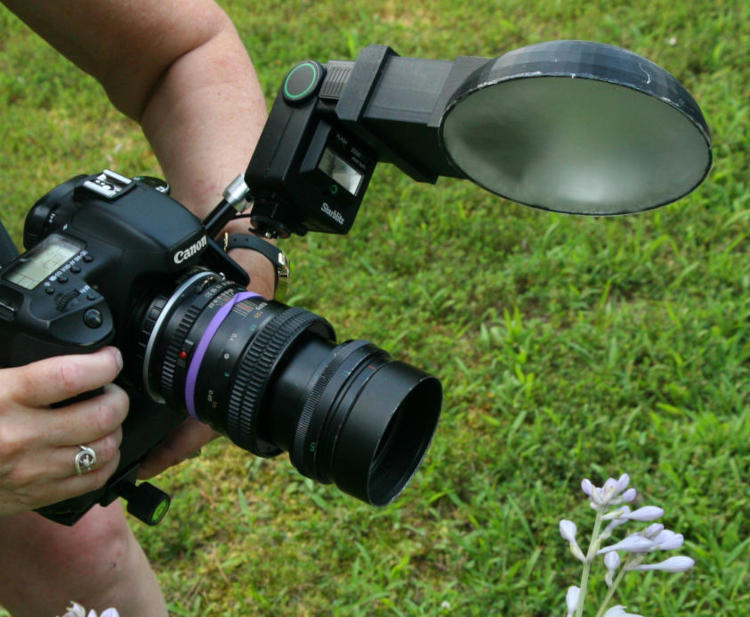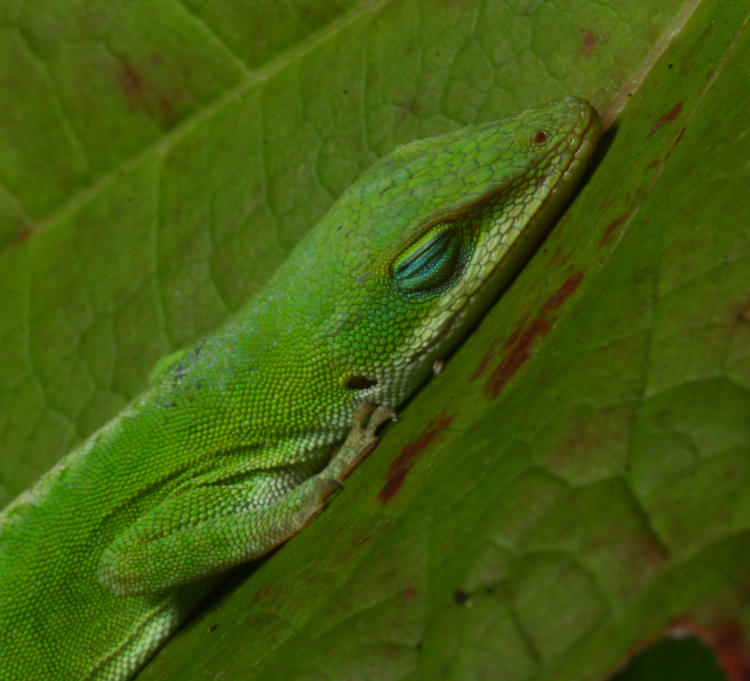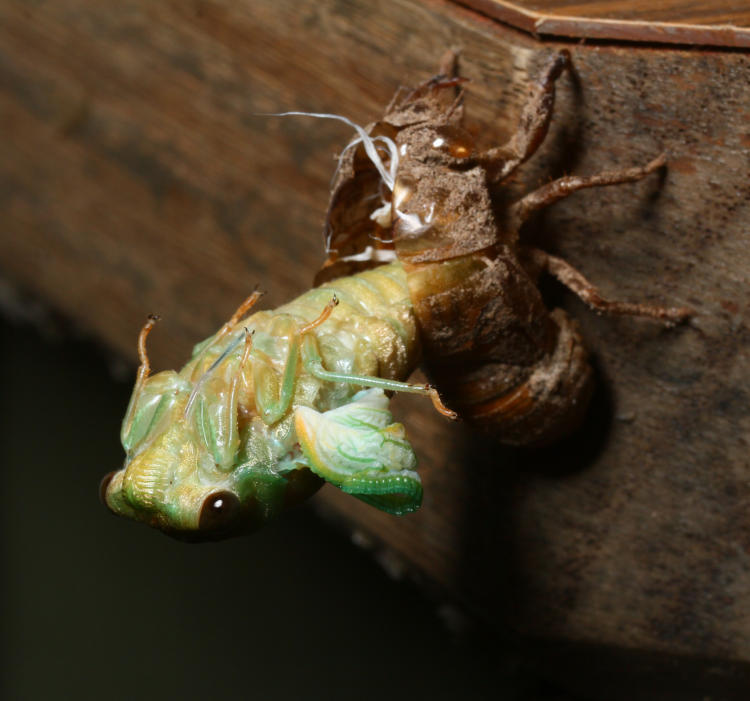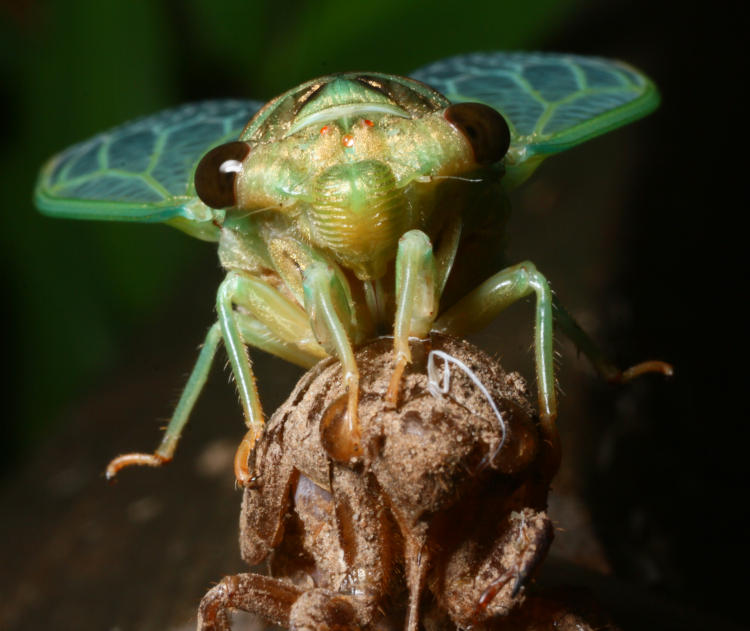

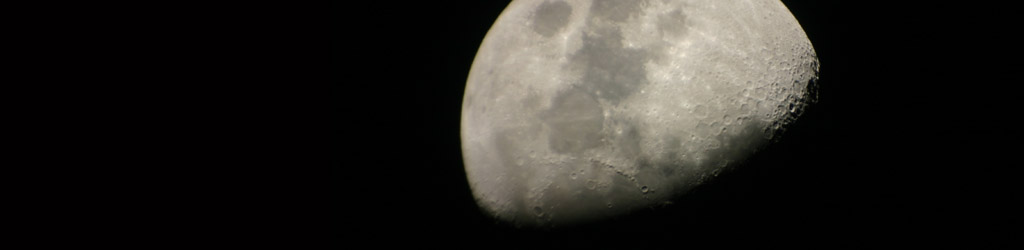
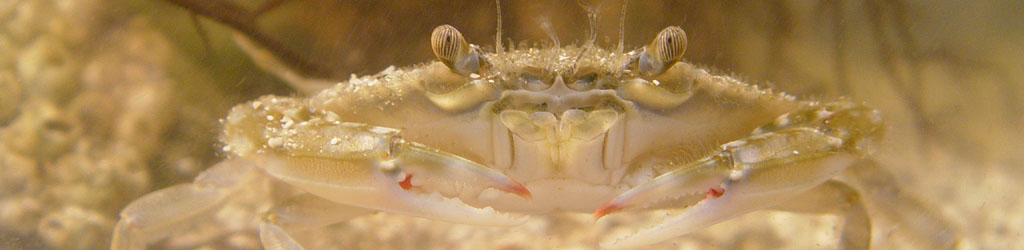
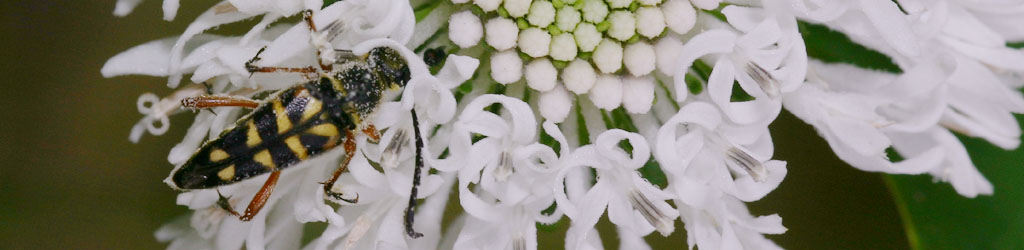
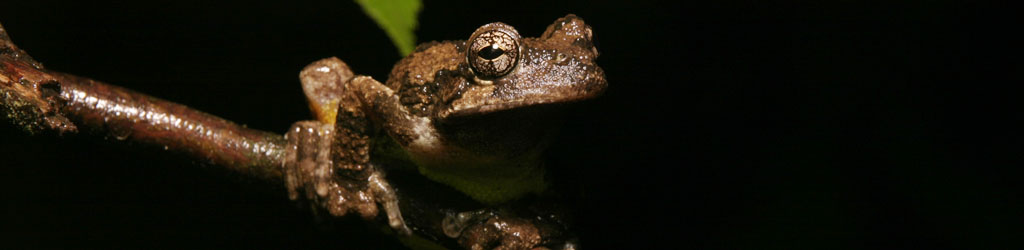
Robbed

Today is apparently a holiday of sorts, or at least one of those days that seems to merit special attention solely because of the numbers that represent it: May 4th, or, “May the fourth be with you.” Star Wars Day. Granted, there isn’t much that goes on, save for social media and the occasional post (ahem,) but you know, even that would have been welcome thirty, forty years ago, had either such thing existed. You see, I was a Star Wars fan from the moment I saw it in the theater, or theaters, because I saw it multiple times on its first run, and so you know, Star Wars refers to the first movie – that ‘A New Hope’ bullshit didn’t appear for years afterward, once George Lucas figured out that the movie not only wasn’t bombing, it was becoming a brand – he was trying to create a ‘Lord of the Rings’ thing after the fact. And I can tell you, in that time period while Star Wars and the two sequels were tearing up the box office, people that were ‘into’ Star Wars were still widely considered nerds and basement dwellers. Wearing a Star Wars shirt, having a model kit of R2-D2, making any reference at all to the characters or quotes or whatever, was decidedly uncool. Granted, I was in high school at that time and it took no effort at all to be considered uncool, because teenage insecurity and pissing up trees is typical, more so in the late seventies in a rural farm area.

Yet now we have a day for it. There are Lego kits of the Millennium Falcon and Star Destroyers costing hundreds of dollars being bought routinely. One of the more popular streaming shows is spun off from the lamest character from the original trilogy (seriously, Boba Fett was hyped significantly for his appearance as a new villain in the second film, to have two lines I believe, only to die as comic relief in the third, with a belch even.)

It’s funny, because I no longer follow it all, and couldn’t possibly be considered a fanboy of any sort – I’m not even sure how many movies there are anymore, to say nothing of the streaming series and the animated stuff. But I would have appreciated the current popularity back a few decades ago when it would have been useful. Granted, I now have the immense prestige and respect of being a nature photographer, especially of bugs and lizards, but this was a long time coming.

Improving autofocus

Earlier I mentioned having pretty egregious autofocus issues with the Canon 7D and the Tamron 150-600 lens, and sat down to see if I could improve things. My efforts were quite successful, so I’m going to go over what I did in the hopes that someone else may benefit from this. Virtually all of these will apply to any DSLR camera, with perhaps minor variations.

Clean the contacts. The electronic contacts between the lens and the camera body are how the camera can tell the lens to start and stop focusing, so ensure that these are clean and shiny. A pencil eraser is a good way to clean off anything stubborn – just be sure not to get eraser bits in either the camera or lens. To this end, holding them up higher and facing down helps the debris fall away – this is also recommended just for cleaning dust.

Blow out the mirror/shutter box, carefully. Generally, a blower brush or bulb is recommended for this, and again, while the camera lens opening faces down. Canned air is not the best; while it’s much more powerful, it can damage the shutter and introduce fluid and solvents into the camera. If used, always fire a test blast into the empty air first, to clear the tube of residual fluid, and then apply it indirectly into the mirror/shutter box, preferably from a moderate distance. The shutter blades are very thin and delicate and a solid blast of air may kink them, and you don’t want that repair bill. You can find air bulb blowers at most camera supply places, or a battery filler bulb (which I use, much more volume for stiffer blowing) from auto supply stores for about 1/4 the price.

Use a soft brush to clear stubborn dust and debris. A decent artist’s brush, preferably a flat brush in the realm of a centimeter wide, can help get out stubborn stuff without using enough pressure to scratch anything. Be aware that there is often a bit of spongy padding at the top of the mirror box, front of the focusing screen, for the mirror to hit without clattering, and this often snags stray hairs that don’t come free with a brush, in which case careful attention with tweezers can get them out of the way.

Clean both mirrors. Hopefully, you don’t have smears or stains on these mirrors, but occasionally it happens – if it happens a lot, you have some bad habits to clear up. For the most part, you can just use the artist’s brush to clean off the reflex mirror, but do this gently – these are front-surfaced mirrors meaning they’re easy to scratch.

If you have to clean oils or gunk off of them, use lens cleaner or high-grade alcohol (90% or better) on a microfiber cloth and swab gently – it shouldn’t need much.

interior view of DSLR showing dual mirrors
labeled mirror/shutter box in DSLR cameraBut there’s a second mirror in there too. Using a non-metallic object just to avoid the possibility of scratching (I use the handle of another brush, because you’ll need the first one in a second,) gently push up on the forward end of the mirror – it’s only held down by spring pressure. Underneath, you should see another mirror on its own hinge coming up with the main mirror, angled differently. While holding this up slightly – not all the way – blow some air in there too, and brush gently with the brush as needed. You’ll see that the main mirror is actually semi-transparent, half-silvered, and some of the light entering the camera goes through this mirror to reflect from the second one underneath – this is how the autofocus sensor works. Schmutz on this mirror can affect the AF sensitivity.

[Note that the Canon 30D is shown for these photos, though most DSLRs should be largely the same.]

autofocus sensors in floor of mirror/shutter box of DSLR camera
Clean the sensor too. Now lift the main mirror all the way, which will raise the second mirror too. Gently blow some more air in there, aimed towards the bottom of the mirror/shutter box – you should see some openings in the floor there, where the AF sensors lie. Again, do this while holding the camera front facing down. Brush gently with the brush while you’re at it, to clear any dust from the face of the sensors themselves.

Twice now, I’ve had enough dust and pollen and whatnot get in there to affect autofocus – the perils of doing lens changes out in the field, so this should be a routine thing if you’re changing lenses in dustier environments.

Camera Settings

Some of this will be ‘season to taste’ – my shooting habits are not necessarily going to be your own, plus camera and lens variations have an effect. The best I can say is to try them and see what works.

AI Servo focus mode. This is Canon’s nomenclature, but what it means is that the camera will attempt to maintain focus as the camera and subject moves, even while you’re tripping the shutter. This is best for moving subjects, but occasionally it will result in images being defocused because the lens is adjusting as you trip the shutter. Overall, it seems to work more dependably than other modes for action.

Custom Functions. The 7D has an elaborate set of parameters that can be adjusted and these will likely be in different orders or menus with different camera bodies. In my case, these all fell under Custom Functions III: Autofocus/Drive.

1, AI Servo Tracking Sensitivity, set to fastest. May result in more twitching of AF or even hunting if the subject gets out of the focus area for too long, but overall, with subjects that can shift distances quickly, this probably gives the best edge.

2, AI Servo 1st/2nd Image Priority, set to 0: AF Priority/Tracking Priority. I’ve tried others, and they all seem to wander or lag too much for wildlife subjects, especially flying ones that can leave the AF area in any direction.

3, AI Servo Tracking Method, set to 1: Continuous AF Track Priority. Seems to work best, again, for moving subjects, as well as for compositions that do not necessarily center the subject in the frame.

4, Lens Drive When AF Impossible, set to 0: Focus Search On. This one is the one I have the greatest misgivings about, because it can make or break the shot. When on, it will track in and out trying to locate a subject with enough contrast to lock onto, which is fine – it’s what autofocus is all about. But it’s not very ‘smart’ on the 7D at least, and when failing to focus on a subject that was focused only milliseconds ago (a moving bird that slipped out of the focus area, for example,) it can start tracking from near-infinity inwards, shorter, which will throw the bird so far out of focus that it vanishes from the viewfinder, right at the time that you need to see it at least a little to keep it centered so the autofocus can lock onto it again. This is where the focus limiter switch on the lens comes into play, where you can select the ability to only focus between infinity and, say, 10 meters, which will prevent the AF from tracking way too far. As long as it’s already switched on.

There’s no option, for instance, to make the lens focus out first, or search focus only in small increments for a moment or so when focus was locked almost immediately before. Moreover, a major shortcoming of the Tamron 150-600 (the Generation 2 model) is that even if you manually bump the focus wheel in the right direction, it can stubbornly keep trying to focus inward.

[To be sure, focusing outward can have issues too, because that would make the lens lock onto the distant background more often, something I’ve already had issues with. Some of this is assisted with the AF Point Expansion bit further down.]

5, AF Microadjustment, set to 2: Adjust by Lens. This allows the camera to tweak focus by individual lenses, and with the Tamron 150-600, I’ve set it to focus just slightly short, a little closer than what the camera defaults to, which seems to be producing pretty good results. This may be because the lens is ever-so-slightly off when focusing, or it may be because AF grabs the areas of highest contrast, which would be the wings and body against the sky, which are slightly further off than the eyes or fish clutched underneath. Also, depth-of-field extends farther beyond a subject than closer to the photographer, so this bias takes advantage of this trait.

And one more, from the Shooting Functions menu on the camera back, selected by the INFO button.

Shooting Functions menu of Canon 7DHighlighted here in cyan is the AF Point Expansion mode, and selecting this will provide different options for how specific the autofocus is. The one shown, with its orbit of smaller dots, tries to maintain focus in all of the five focus points shown, which gives a little slop in tracking a moving subject while still being reasonably specific. The main focus point can still be shifted throughout the viewfinder area (offset to one side, for example) and the surrounding AF points will follow. Note that you may have to enable this particular option in the Custom Functions menu.

This mode can still be confused by the camera, by small subjects with lots of surrounding or intervening clutter (like birds in branches,) which is where I simply switch to manual focus – this happens often enough. The biggest problem with manual focus – I mean, after the much slower speed that it takes place – is that the viewfinder screen is too small and too low in resolution, from using a ground glass surface, that it makes crucial sharpness particularly hard to determine; even when doing moon photography on a tripod, everything nice and stable, I’ll fire off several frames and keep reviewing them in the camera LCD under high magnification until I feel the image is sharpest, and then make it a point never to touch the focus ring.

[This needs a caveat, by the way: if the temperature is dropping, and especially if the lens hasn’t had time to match the outside temperature, re-focusing will be necessary because the contraction of the lens body itself will alter focus – astronomers are very familiar with this.]

Side note: There is another specific option that I finally got around to trying. Tamron has an additional bit of equipment for select lenses, called the TAP-in Console, that attaches to the lens mount and interacts with software via a USB connection; in this manner it can update the lens firmware as well as providing some specific options. I’d purchased one some time back but finally got around to setting it all up, since it wouldn’t work on my present workhorse computer, requiring Win 8+ (or MacOS) only, and I had to load the software on a spare computer. The options, however, were only for three things: manual focus ‘speed’ (how responsive the manual focus ring is to input,) focus limiter range (what distances are effective when using the focus limit switch,) and specific tweaks to focus at different focal lengths and distances. In other words, if you find the lens is consistently a little off at 300 mm focal length and mid-range distances, you can adjust this by small increments for more accuracy. Sounds very cool, but to implement it effectively and accurately, you’d need a significant set of high-contrast targets at varying distances, which you would shoot test photos of at varying focal lengths, examine the resulting images at high magnification on a computer, then adjust accordingly; for maximum efficiency, you’d also need secondary targets slightly ahead and behind the primary ones, offset far enough to be outside of the AF sensor range yet still in the photo, that would tell you if the focus was off slightly ahead of or behind the target. Obviously, setting all of this up and shooting the test images would take a few hours, and this didn’t seem to be my issue anyway (other than the change made above to the camera’s Custom Functions) so I’m in no hurry.

What it didn’t have were any options to change which direction it would begin to hunt within, or something to limit initial hunting to small increments to assist with moving subjects that momentarily got outside of the AF area – no one needs the lens to suddenly rack down to its shortest limit in such cases. There’s a balance point between the lens seeking autofocus as needed, when first raised to the eye for example, and trying to regain or retain focus for a moment when a moving subject proves hard to track, which is (I would think) a very frequent occurrence with a long lens. However, this might be a function of the camera body itself, though not something to be found or altered in the Custom Functions of the Canon 7D.

[By the way, after updating the firmware, the only change I made to the lens settings was to boost the manual focus speed, mostly to manually counteract that damn hunting, and we’ll see how much this negatively affects nailing sharp focus when intentionally focusing manually – these have yet to be tested.]

Anyway, that’s all the jazz I played with to improve autofocus results – turned out to be longer than I imagined. Hopefully someone will derive their own improvements from it.

osprey Pandion haliaetus overhead in much better focus

Tripod holes 18

fishermen at sunset on Old Drum Inlet, Portsmouth Island NC
N 34°51’19.93″ W 76°19’6.58″ Google Earth Location

This one’s a little fun in that, if you go to the location, it’s not technically there anymore. Well, it is, but storms between the time this was taken and now have radically reshaped the islands, and what was once inlet is now mid-island. Not only that, but reaching it takes a lot more effort.

This came from a work-related fishing trip back in 1999, to what I believe is known as Portsmouth Island on the South Core Banks of North Carolina. To get there we had to use a four-wheel-drive vehicle and take a ferry, putting in at Long Point Cabin Camp, the offices of which should be noted in most map services further northeast on the island – I mean, what was the same island back then, since we drove down to the photo location. Fishing bores me to tears, so I treated the trip as a photo excursion instead, which didn’t net me a whole lot of great images due to bad weather most of the time, but at sunset it had cleared and produced these skies. This shows two of the guys I was there with, actually doing some fishing instead of drinking – I had to be lightning fast to catch it…

A few years later, storms had cut a new channel through the island and filled this one in – you can see the changes in the Google Earth program, though I haven’t found a way to see old photos from the online version. Then, subsequent storms did even more reshaping – and then more. Not a place I’d want to own property, especially since one good hurricane will scour the very low island clean. This is the nature of Atlantic barrier islands.

This is also the place where I found numerous paths through the beach grasses, wide enough for beavers though this wasn’t their habitat, and wondered about them. Awaiting the ferry back at the end of the weekend, I found out from a regular visitor that they were caused by “nutra” [sic], and kicked myself for not staking out some of them in the wee hours, because I’d heard of nutria but had never seen one. This would eventually be rectified 23 years later.

April? I thought you left already

April is now toddling off into the past, never to be seen again or at least not for another eleven months depending on your interpretation (or remaining perpetually according to yet another,) and so we arrive at the end of the month abstract. Which looks amazingly like thus:

double-crested cormorant Nannopterum auritum flapping in water just after sunset
The sunset didn’t perform all that well this day, but the double-crested cormorant (Nannopterum auritum) that came in to land in the dwindling light worked well enough for me, gaining some surreality just from the condition of the water – most poses wouldn’t have worked as well, so the timing was key here, but I’ll only take partial credit for that, having fired off a sequence of frames as it took place. Ink on bronze – this was my art school final project. It got a C- but I passed.

That’s a bit better

I was out on two photo excursions earlier this week, and the first made me distinctly aware that something was wrong with my autofocus. Well, mine was all right, but the camera’s was off noticeably, for damn near every frame. I provide some examples:

osprey Pandion haliaetus overhead, not quite focused
This is full-frame, and while it’s taken at 600mm, the osprey (Pandion haliaetus) wasn’t that far away – obviously, if the frame is nearly filled with the wingspread. We’ll go in closer on the same frame:

same frame at full resolution
This is full-resolution, and the lack of ‘streaks,” elongated details, tell me that this is a focus issue and not a motion issue. While I can have stability problems when birds pass right overhead, because aiming straight up is difficult for this old man, there’s really no reason for this result.

It showed in plenty of other frames, too:

distant osprey Pandion haliaetus nest
This is full-frame, what I could see in the viewfinder, and while there are branches much closer that are crowding the autofocus point in the center, I was reasonably stable. Cropped tighter:

crop of previous frame showing bad focus
You can see that the AF wasn’t locking onto the surrounding clutter either, being further out of focus than the main subject. Not cool. This was especially annoying in that I could have had some decent shots of dad bringing in more nesting material (I’m quite sure mom was already on the eggs,) but same crappy results:

osprey Pandion haliaetus bringing material to nest, still unfocused
So the next morning I sat down with the camera and did some specific cleaning routines, as well as making a few changes to the autofocus settings in the Custom Functions, and initial tests (on subjects admittedly not moving as much as my normal fare,) were promising. The acid test was the next outing later that day, and things were hugely improved:

juvenile bald eagle Haliaeetus leucocephalus banking towards tree
This is full-frame again, and you can see that the juvenile bald eagle (Haliaeetus leucocephalus) is significantly smaller in the frame, easier for the AF to miss, but no issues this time. Closer:

close crop of previous frame showing distinct sharpness
That’s more like it! A subsequent post will go into what I did to the camera to improve matters, but for now, some more pics from the outing.

osprey Pandion halaietus cruising past with fish
This is full resolution, of another osprey that was further off than the first above, and if you look closely you can even see water drops still falling from the fish. This one, by the way, was the only one (of several spotted that day) that captured anything while I watched, and was pretty accommodating in flying quite close past as it climbed out, though at its closest it was obscured by branches. It circled around and found a perch with great light to tackle its meal.

osprey Pandion haliaetus perched in tree with captured fish
This is cropped tighter as the osprey chose a tree that was still a bit distant, and even with all the surrounding clutter the AF was fixed on the osprey nicely. I started working closer, but the osprey realized someone was fishing from a small boat too close by (in a pool that I’ve never seen a boat within,) and decided that there were quieter places to eat, leaving almost immediately with its capture. Ah well.

Most of the birds from this outing remained distant and/or doing little of interest, but way off, I spotted an altercation and started firing off the frames, not even sure what I was seeing.

two juvenile bald eagles Haliaeetus leucocephalus squabbling in midair over a fish
Before you say anything, these are all tight crops of something extremely distant; I have no way of pinning down an accurate distance given that they were over open water, but I feel comfortable saying that it was in excess of 700 meters anyway. This is a pair of bald eagles, and in the viewfinder I considered the one with the white head and tail an adult, but close examination of these frames show some distinct blotches throughout the plumage, indicating to me that it had just reached its fourth year and was sporting brand new ‘adult’ plumage. The other isn’t seen clearly enough to pin down, but I’m geusstimating it was only in its second year.

two juvenile bald eagles Haliaeetus leucocephalus squabbling in midair over a fish
What was clear enough, however, was that the older one was heading to a perch (maybe even a nest, though I’m skeptical) with its fish when the younger one decided that it deserved the fish more, and a significant aerial ballet ensued from the dispute. I fired off 37 frames over 28 seconds, and in that time they had no fewer than six midair altercations – each of the frames that you see here are separate bouts with short flights in between.

two juvenile bald eagles Haliaeetus leucocephalus squabbling in midair over a fish
Yes, the attempted thief is actually upside-down in this frame, trying to yank the fish away from its rightful captor. I’d heard about this kind of behavior many years ago, but the first I’d ever seen it was only a month ago, and I’m hoping to get it a lot closer and in better detail. Video would also be nice, but I’d have to be specifically aiming for that just to have the rig to keep the camera stable enough. We’ll see what happens.

two juvenile bald eagles Haliaeetus leucocephalus squabbling in midair over a fish
To the best of my knowledge, the thief was never successful; the original owner still has the fish in this frame, at least. It is entirely possible that the eagle seen further up banking towards the tree (which was on a small island, almost in line and splitting the distance to these pics) was the same one trying to wrest the meal away. Curiously, the amount of effort expended here was way beyond what would have been required to capture its own fish, but I doubt eagles think in terms of working efficiently and net-loss scenarios. Likely it just saw a passing fish and thought, I should snag that, regardless of who was already in possession.

About ten minutes later, another eagle cruised past, still pretty far off but nowhere near as much.

bald eagle Haliaeetus leucocephalus showing brand new adult plumage
Definitely just transitioning into adulthood, so four years old now – you can still see dark feathers from the juvenile stage in the white areas, as well as paler patches on what should be uniformly deep brown wings. Same one as above? It’s possible, given the direction that it came from and the time that had passed, enough to finish off a half-shredded fish, but that’s only speculation.

Overall, however, eagles were spotted seven or eight separate times, so definitely an active area. I have suspicions of where a nest might be, but it doesn’t appear to be accessible from land and I’m not taking serious camera gear out in the kayak, so I doubt much will come from this suspicion.

Soon to follow will be a shorter post about the things that I did to improve autofocus – I decided to break things up since this was already long enough.

Can’t be assed

Seriously? Another holiday? But yes, as I look at the calendar, I see there’s something else to celebrate today, though I simply don’t have the inclination to pursue it in detail. Today is Token Appearance Day, possessing a rich history and some very specific ways of recognizing it, which I would enthusiastically tackle if I could tackle anything enthusiastically right now. Which I can’t. I’m just letting you know so you can do something about it on your own, and because it’s been a few days without a post. I do have photos to put up here but, you know, later.

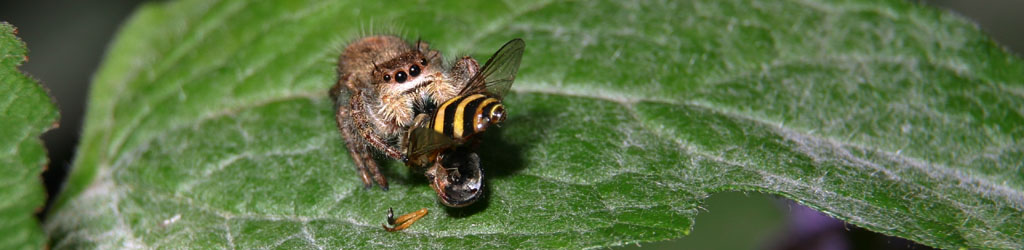
Ah, hell, I’ll throw out one that’s from years ago, just for the sake of it. Better?

unidentified jumping spider peering around edge of leaf

Dittyday 8: They Might Be Giants

Oh my, oh my my my, this one’s liable to be polarizing, or it might be if I had readers anyway. This band is notorious for, if nothing else, earworms, songs that stay with you for a very long time, but I’ll readily admit this might be a bad thing if they’re really not your thing – I think they accomplish the ‘catchy’ part without necessarily getting to the ‘likeable’ part for a lot of people. I also suspect that they’re liked a bit more than openly admitted, especially when hanging with the cool crowd. As the title says, this is about They Might Be Giants, composed primarily of John Linnell and John Flansburgh, and they’ve been going strong for four decades and counting now, and have some pretty impressive credentials.

Describe them? A million different adjectives can be used, like, “eclectic” and “quirky” and “weird,” which their music videos do nothing to dispel. But then there’s also, “clever” and “slick” and even “educational,” and I’m not going to delve into my half-assed attempts to break them down or evaluate them. Just pay attention:


It always amazes me that they got so popular with John Linnell’s amazingly nasal vocals, but then again, that might be a part of it. Or it may be that their compositional skills transcend such meager shortcomings.

This post was provoked by listening to ‘Birdhouse In Your Soul’ Sunday night and having it get stuck in my head, and naturally I felt I wasn’t going to be the only one, but seriously, you have to appreciate lyrics that include, “filibuster vigilantly,” and,

Though I respect that a lot,
I’d be fired if that were my job
After killing Jason off
And countless screaming Argonauts

What’s amazing is that they pull these off with more style and talent than most popular artists, and almost force you to find the lyrics to confirm that they really did just reference the Longines Symphonette, and then, to find out about the Longines Symphonette…

And their videos, so many of which fit the music so well, not necessarily in a timing and choreography way, but in that they appear to be created by college kids up way too late at night in their dorm room. We really should be studying, but did you ever think of what a communist robot would look like?


[I doubt that’s what they were after, but that’s what I see, anyway.]

This one gets a little lost in the mix, so check out the lyrics here to find that it’s a love song, of sorts, kinda maybe.

My cousin and I did get to see them perform live back in 2000, I think, in a ballroom-style auditorium, and you will not be surprised to know that during one song, the vast majority of the audience joined together into a bunny-hop conga line that snaked across the floor, threatening to submerge those tiny islands of holdouts of which we were one – terrifying in a completely absurd way. They had a backing band for the tour, but John Flansburgh can seriously jam with his guitars, pipe-smoking-nuclear-dad image notwithstanding.

My introduction to the band came through attending an animation ‘festival’ film featuring the following video:


… which also introduced Ren and Stimpy and Bill Plimpton so… yeah. But ‘Istanbul (Not Constantinople)’ is actually a cover of one performed by Four Lads nearly five decades earlier – probably TMBG’s most well-known song, just not their own. It reflects their style pretty well, but perhaps with a little less hidden depth in the lyrics.

There are more songs out there than you can imagine, so feel free to poke around and find a favorite – they’ve released 33 albums, give or take (depends on how you count them,) including five aimed at children and educationally-oriented:


And, seriously, check out their Wikipedia page to realize just how much they’ve been doing, and still are – they’re on tour right now.

This rabbit hole can get really deep and I’m trying not to spend five hours on a post, so I’ll simply close with another favorite of mine, as much for the video as for the music. I identify a little too well with the scene of John shouting over the phone at John, who laughs it off, and I’ll let you ponder the psychology of that on your own…


Hubble comes of age

That’s right, the Hubble Space Telescope (HST) was launched 33 years ago today, which makes it now a functioning adult if you’re into Tolkien – ‘course, I don’t think you can be seriously into Tolkien and a functioning adult simultaneously, which is simply an invitation to a flame war, to which I reply, Bring it,you Lazy Lobs

All that aside, we check out a couple of things that Hubble has been up to. Clicking on these images will take you to the full-resolution versions of them, quite large.

Serpens Nebula HBC 672 from Hubble
Serpens Nebula with HBC 672 from Hubble, courtesy NASA

This is region known as the Serpens Nebula, and the key focus is on a star at upper right, HBC 672 – the one that is flanked by ‘bat wings’ of shadows. Click here for their professional explanation, or see below for one from a rank amateur.

The shadow is believed to be from a planetary disk, the surrounding debris that initially provoked the coalescing of the star to begin with and will eventually form planets as the debris and dust gradually comes together under the combined gravity. The disk is presently wide and thick enough to throw a shadow from the star across the distant dust and gases of the nebula itself, even though it is too small from our vantage to make out at all. And there’s another one at upper left.

Hubble doesn’t have color sensors in its cameras, instead relying on multiple greyscale exposures through different filters, and this image utilized a near-infrared filter (among others) to bring out details not visible to ground-based scopes. Meaning, as is so often the case, that there’s no way we could achieve anything of this sort from the ground, one of the reasons that I don’t pursue astrophotography (also to include, I can’t afford to do it well, and, I live in a highly light-polluted area.) Most of the astronomical images that you see are composites of differently filtered images to bring out specific details, rendered in false colors, because this is the most effective way to pursue the science – they’re not after the aesthetics, even when occasionally we get something quite aesthetically pleasing anyway.

Hubble image of background star brightened by gravitational lensing from drifting black hole
Gravitational lensing of background star by drifting black hole, from Hubble, courtesy NASA

This one is exceptionally cool, because it shows a star brightening and then dimming from gravitational lensing because a black hole passed between it and us. See this link for a professional description, or suffer through mine below.

Here’s the deal: Gravity warps space, and light travels through space, so light traveling near strong gravitational sources gets bent a bit. Very strong gravitational sources, like clusters of entire galaxies or, in this case, a black hole, will act as lenses, distorting our view of the stars or galaxies behind said gravitational source. While most black holes that we know of occur in the center of galaxies, this is probably more a reflection of how we can detect them rather than where they can typically be found, or at least, we cannot make any conclusions about this yet. Black holes in the center of galaxies have the ability to absorb plenty of material spiraling in, and it is this influx of material as an accretion disk, jamming together in the doorway of the event horizon like The Three Stooges, that superheats it and provokes the emission of lots of high-energy particles, and this is what we can detect directly, mostly X-rays. Black holes themselves are invisible, thus the name, and so we only find the accretion disks and the effects thereof. But with too little material to form an accretion disk, there’s nothing to detect – except warping gravity. In this case, the light from the star behind the black hole, light that would normally have passed alongside us undetected, gets bent by the gravitational field around the black hole and focused more, bringing it to us. There are, of course, levels of effect – light that comes too close simply falls into the black hole, while light just a little further out gets bent so radically that it goes off in another direction entirely, but enough of it gets focused in our direction that we see the above images.

How many such black holes are out there? We really have only guesses, which we can only confirm or refute by seeing effects like this. A certain, very small percentage of the light that reaches us from ‘random’ regions of space is likely redirected by other black holes, but without as much focus and in much smaller quantities, and our optical sensors would have to be much more efficient than what we have now to pin them down. This is one of the benefits of space telescopes, because they don’t lose anywhere near as much light to atmospheric scattering as ground-based scopes.

Hubble has one hell of a history of discoveries, confirmations, and refinements that it’s added to our scientific knowledge, so be sure to wish it a happy birthday. Yet it’s an inanimate object, so the real credit goes to all of the people, past, present, and future, who worked on and with it to further our knowledge. All of you rock.

Tripod holes 17

long exposure from base of Looking Glass Falls in Brevard NC
N 35°17’45.63″ W 82°46’9.89″ Google Earth Location

This one was slightly tricky to pin down, not because I wasn’t quite sure where it was – I could almost certainly take you to within four meters of this exact spot – but because the location is so shrouded in trees and shadow that it’s extremely hard to pinpoint from aerial photos. It did not help that, of all the waterfalls nearby that have distinct markers on Google Earth, Looking Glass Falls isn’t one of them – you have to zoom in on almost the precise spot before something appears.

I’ll draw your attention to the fact that the location was not on the pathway or the overlook deck provided, but down in the creek that feeds from the falls, and while it was crowded in the easy access areas, I was all by myself at my shooting location, though I did have to wait a bit for people exploring at the base of the falls to get out of the picture, a frequent practice there. And I’m not sure there’s any time of day, or year, when the spot where the tripod stood gets any direct sunlight at all – the cleft is deep and under a dense canopy of foliage. There may be specific times where the lowering sun shines directly on the falls themselves – I was aiming almost due east for this composition – but the mountains are significant enough right here that the disappearance of the sun, and astronomical sunset, are two entirely different times, so nice sunset colors on the falls are unlikely.

This is in Pisgah National Forest in Brevard County, NC, by the way, and for giggles, follow that road in either direction; if you begin from this point and head northeast (ever so briefly,) it will eventually connect with the Blue Ridge Parkway, but the linear distance and the driving distance are not on speaking terms. You will be zig-zagging, is what I’m saying, and on one of my few mountain trips, I ran this leg down from the Parkway while sharing it with loaded logging trucks going in the opposite direction; I cannot recommend this.

I have yet to do a trip out to this region when the fall colors are peaking, but I’ll manage it one of these days. My first trip out there was supposedly timed to capture the new spring foliage, occurring May 1st (2005, damn,) and I discovered that I was a couple of weeks early – the mountains lag behind the Piedmont (where I live) by close to a month for the spring bloom, and of course the fall change occurs earlier. Key to a fall colors trip would also be finding the best points overlooking valleys of varied deciduous trees, instead of the ubiquitous ugly longneedle pines, to maximize the scenic factors, so some scouting or research would probably be in order too. One of these days…

Not from Earth Day

I have not been staying on top of the various April holidays, and today (which is indeed Earth Day) is rainy and blergh out there, so we’ll have a variety of photos obtained earlier that I finally got around to editing. Let’s see, let’s see, what have I been taking recently?

trio of yellow-bellied sliders Trachemys scripta scripta in neighborhood pond
Over at the neighborhood pond, a trio of yellow-bellied sliders (Trachemys scripta scripta) were lined up nicely and, being in the weeds instead of perched on logs for basking, were less inclined to dive for cover, but still watched me suspiciously.

Days earlier, while The Girlfriend and I were doing a circuit, another species had chosen a curious spot to bask:

probable common musk turtle Sternotherus odoratus basking in crook of two trunks alongside pond
From the stripes on the face, I’m tentatively identifying this as a common musk turtle (Sternotherus odoratus,) but the appearance of several related species is similar, so don’t make that big investment yet. This one was a solid 25cm or more above the water surface and disinclined to move, prompting The Girlfriend to question if it was still alive – the eye detail wasn’t visible from our viewing distance. Since it was in the early evening, I leaned in and lifted the turtle from this spot, whereupon it slipped into the water easily – she thought it might have been stuck, but I’ve seen one in the exact same spot a few years before and think it’s just a handy place to sit and warm up, though the only sunlight that reaches it comes in late afternoon.

male eastern towhee Pipilo erythrophthalmus watching from within foliage
This is a male eastern towhee (Pipilo erythrophthalmus,) which seems to be the new nomenclature after having previously been called the rufus-sided towhee, and while I’m all in favor of brevity, I have a pet peeve about how damn many species are identified with the ‘eastern’ modifier – it’s like somebody’s getting royalties from the word. Seriously, I have 33 listed in the tags for this site, which are only the species that I have photographed and specifically featured in posts. Meanwhile, I remain in pursuit of good towhee photos, because they tend to forage deep in foliage and not pose out in the open, so it’s one of those little side quests.

two perched and one swimming female double-crested cormorants Nannopterum auritum
The double-crested cormorants (Nannopterum auritum) have returned to the pond – it usually hosts up to a half-dozen, peaking in the spring, but since I can’t tell individuals apart, they may cycle throughout the non-winter months. These are all female, and it’s about time to see the males displaying their namesake crests for the brief period that they have them, but the males seem far less inclined to visit, for unknown reasons.

double-crested cormorant Nannopterum auritum drying off after a swim
On another day, yet the same location and pilings (from a different angle, across the pond,) another emerged from the water in the early morning to dry out a bit, shaking the water from its head and beak in a nice backlit spray.

great blue heron Ardea herodias perched in dead tree
Only one great blue heron (Ardea herodias) seems to be hanging at the pond this spring, though I did see a pair fly down our street the other afternoon, with one returning, and I suspect it was chasing off an intruder – that makes them more likely to be both males. This one was maintaining a significant distance and didn’t descend to fish until I was quite far away, but I went a little fartsy since I wasn’t close enough for good detail. No, that branch was already broken – he’s not that overweight.

[Small side note: After having been caught by taxonomy changes a couple of time before, I semi-regularly check the scientific names even though, like this one, I have many of them memorized. It now appears that the species has four recognized subspecies, so technically this would be Ardea herodias herodias, though no source that I’ve located yet has indicated how to differentiate A. h. wardi, and this is as far down the rabbit hole that I’m going right now. But I do have a couple of frames of another one of the subspecies.]

Over at Jordan Lake, I saw an uncharacteristic collection of them.

collection of great blue herons Ardea herodias in a choice fishing spot
I had been down at the lake before sunrise in the attempt to photograph the finest crescent moon yet, one of those silly personal bests, and this one was reported at only .6 to .7% illuminated – yes, less than one percent, which is my goal, but I saw no traces of it, even when I got back and wracked contrast over ridiculously in GIMP for several likely frames. However, while at the lake I naturally took more of a look around, and noted these guys on the opposite side of a branch, a measured 360 meters away (Google Earth is handy.) My guess is that they were close to one of many schools of small fish congregating at the shores, because I witnessed a few directly, and so had easy meals at hand, but this led to a couple of squabbles. During one, I heard the telltale chirping in the same direction, and began examining the treeline nearby. It didn’t take long.

bald eagle Haliaeetus leucocephalus perched in tree above herons
This adult bald eagle (Haliaeetus leucocephalus) was perched in the branches directly over the herons, willing to ignore them if they behaved but scolding them if they made a ruckus. I found this a little curious, because the herons were well underneath the eagle and none were overflying its position, which is what often provokes reminders that this was claimed territory. It’s possible that there was a nest nearby, but I could find no sign of it.

Near the parking lot, a different raptor was hanging out.

red-tailed hawk Buteo jamaicensis watching for movement from tree
This red-tailed hawk (Buteo jamaicensis) may well have been one of the same ones I’d seen earlier, being in the same immediate vicinity, and it watched me as I approached, but I never got close enough to make it truly nervous and it continued examining the grasses below for tasty vermin.

During that same linked visit about two weeks ago, when the lake level was significantly higher and flooding the banks, I spotted a curious phenomenon that I’d only heard about before. My attempts at still photos were thwarted by the movement of the water and the shady conditions, but a video clip showed more anyway:

The audio was completely unnecessary, reflecting only the boat ramp not too far away behind me, but amusing. The writhing ball, however, is an ant flotilla, nothing but solid ants floating on the water due to surface tension, and roughly 7 cm across. On checking recently, I found that it seems only one species does this, the red imported fire ant (Solenopsis invicta,) which are the bane of my sandaled feet far too often. They were not typically found this far north – I’d had just one encounter in NC, years ago – but then last year found a hill not too far away from this. Yes, they bite, yes, they’re extremely irritating, and yes, I’ll celebrate if the species goes extinct. Had I known for sure that it was this species and had something handy to accomplish it, I would have eradicated them while still in the collective ball with the queen and larvae. On the most recent visit to the lake a couple days ago, I found that they’d been successful in this endeavor.

anthill trail extending across footpath at Jordan Lake
This trail right smack on the footpath, while easy enough to step over, extended quite a ways along, using the roots of a tree as a guide (possibly because the soil, mostly clay, was softer there.) The ants are tiny and I didn’t bring the macro flash rig, but leaning close with the 18-135 and firing the on-camera flash was sufficient:

paths and hills of red imported fire ant Solenopsis invicta
The rust color with the darker abdomen is indicative: these are fire ants, and since this colony was only a few meters from where I’d spotted the flotilla, it’s reasonable to assume this is where they made landfall. Dammit, should have drowned the little buggers when I had the chance.

And finally, we’re right around the peak of the Lyrids meteor shower, and the other night while it was almost balmy, I spent a little over an hour attempting to snag something. Wonder of wonders, I actually did!

helicopter passing through long time exposure trying to capture meteors
Alas, this is not a meteor, which tend not to curve, much less change colors with such periodicity – just a helicopter passing directly through my frame. I’d seen it coming long before but elected to let the exposure go, which allowed me to have something to show for my efforts – nothing else made the faintest appearance. And this is only as bright as it is because the pilot was flying (at an guesstimated 1000 feet) with the landing lights on, sufficient to illuminate the surroundings very faintly even from that altitude. The flight radar app showed no aircraft, so this was likely a military flight – they were probably keeping tabs on me. But yeah, not even a brief appearance of a meteor, which is typical. One of these days…

Anyway, that’s my gout of photos for Earth, Air, Water, and Fire Day, even if I fudged it a bit on one of those. And I feel slightly better about the scarcity of posts now.

1 78 79 80 81 82 337