

Who am I kidding?

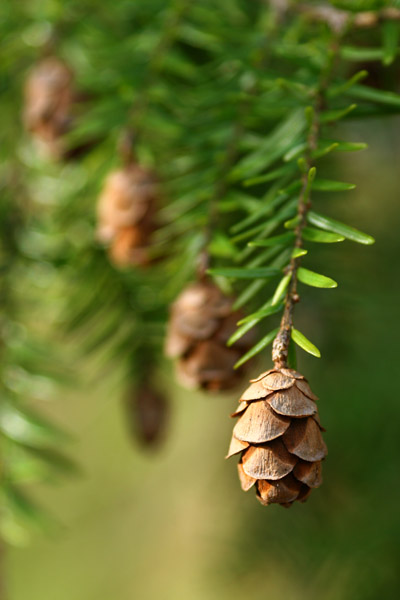
unidentified conifer conesAs Hurricane Ian passed through the area, we fared pretty well overall – we’re far enough inland and, even though it passed closer than all predictions up until less than a day ahead of time, it had lost most of its energy by the time it hit central NC. We heard gusting winds from time to time, but not terribly fierce, and all that dropped in the yard were small branches (and acorns – thousands of acorns, from just one tree.) Power blipped several times, preventing me from tackling any computer projects because the sudden disappearance of my work was something that I wanted to avoid, but it never stayed out more than a minute; I spent more time resetting clocks (multiple times) than that.

The storm did halt some of our plans, but so did some unidentified illness that sapped all of my energy, so it shares the blame. No, the noticeable impact came from losing internet connection, which lasted for two days – I’d say that’s why you weren’t seeing posts, but I’ve gone longer than that with no good excuses so I’m not going to draw your attention to this. And while I’ve always felt that I could fare reasonably well without being as ‘connected’ as most people with their Instashit and Spybook and burying their noses in their dicks smutphones constantly, this kind of drove home how much I actually rely on the internet. Not social media, but it’s my main info and entertainment source, and I spent a lot of time thinking, Well, I could – no, that won’t work, and, I’ll just look up – no I won’t either, and, Why don’t I – nope, forget it. I still had a data connection on my own smutphone, but this is a remarkably frustrating experience because it’s incredibly slow and sporadic, partially from a weak connection here, but also because phones fucking suck for browsing the internet or, indeed, typing any damn thing at all into them. I can say that the outage at least held off until I got past a semi-emergency session of harassing both Travel Inn and Booking.com over their inability to provide the basic services that they advertise, and thus will heartily recommend that you never do business with either of these corporations.

This outage/delay really did have an impact herein, however, in that I finally had some decent stuff to post about and could only edit the photos and consider what I would write – that’s coming up shortly.

What does this have to do with the image here? Oh, not a damn thing – I just had it sitting in the blog folder for not quite seven years and decided to finally use it, since nothing topical had arisen in that time. Just a simple image, but you find a spot where such funky little pine cones all line up so nicely. Until then, save your sneering.
Oh, yeah, forgot about this one

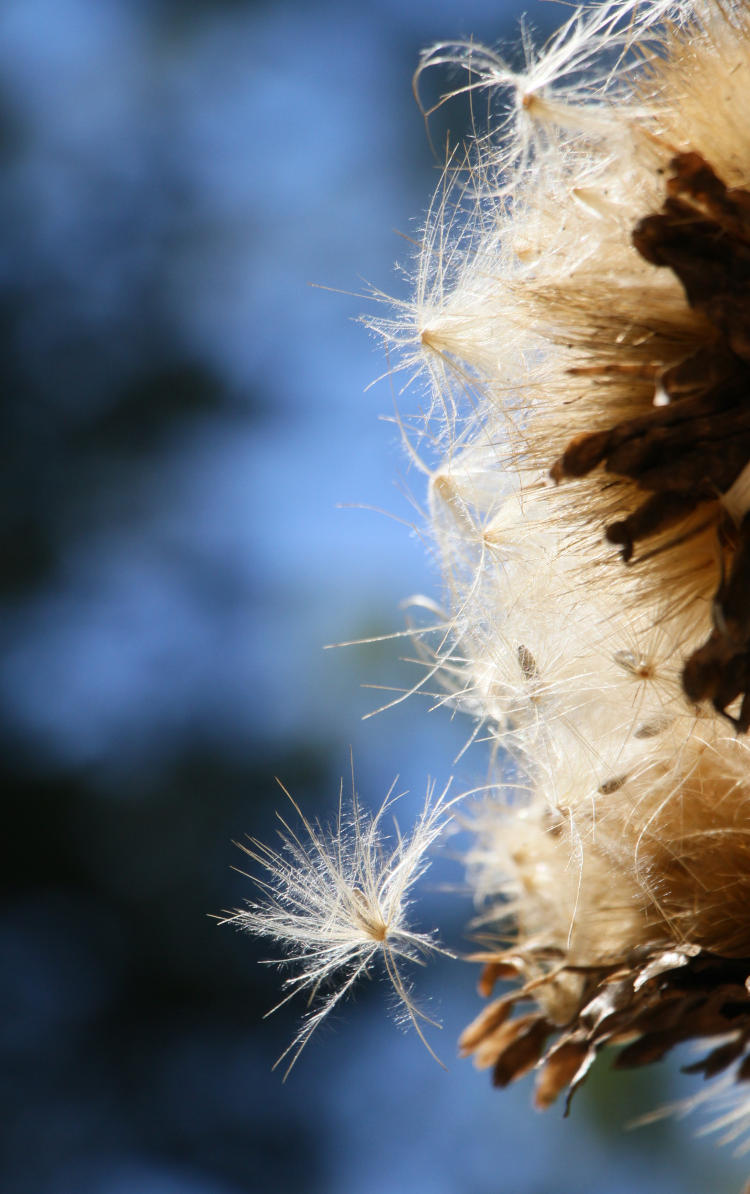
We have a late entry for the month-end abstract:

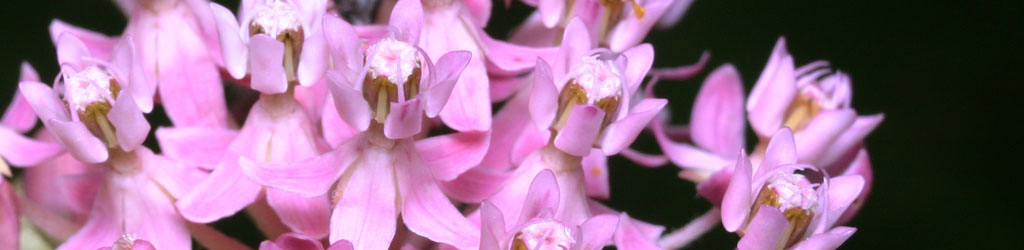
dispersing milkweed-type seeds
Technically, it’s an early entry, since it was shot on August 31st, though after the month-end image for August had already posted. I’d cropped and saved it just for this purpose, if I didn’t find one more appropriate in the interim, and then forgot about it until I was skimming the blog folder. It comes from the same outing to the NC Botanical Garden seen here, and I can’t tell you what these are seeds of – they have the appearance of milkweed (and I named the image that way) but I don’t think that’s correct. I mean, do you really want to know? I could find out, if it means a lot to you [read: you are willing to pay money for the knowledge.] Let me know.

Meanwhile, don’t you like the definition of those ‘feathers?’ Mamiya 80mm macro all the way, baby! Plus the forethought of using them as the focal point, of course. Are you sure you don’t want to know what they are?

It is an ex-September

Yes indeed, despite the scarce posts this month, we can let it go on no longer – you had more than enough time, September, so the fault is all your own (which nicely deflects the blame from me.) What kind of abstract have you produced?

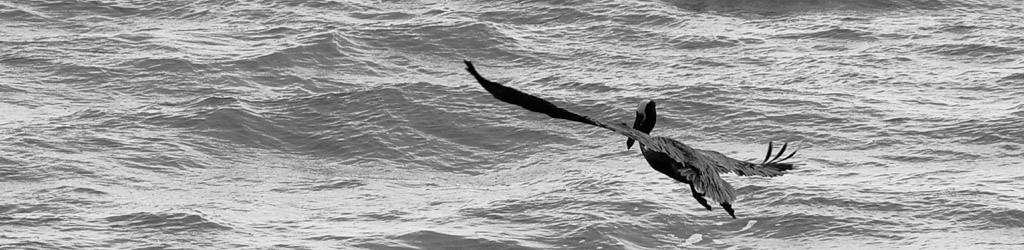
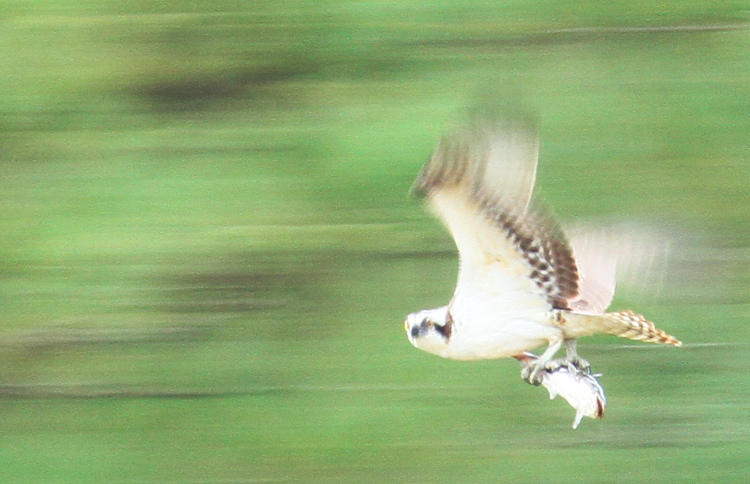
osprey Pandion haliaetus cruising past with fish in blurred pan
Hmmm, well, we expected more after all this time, but a C for effort anyway.

This was another snagged during that trip to Jordan Lake the other day. The exposure compensation was still set for shooting against the sky when the osprey (Pandion haliaetus) appeared against the trees with no time for adjustments, making it overexposed for the conditions, yet the blur from the pan and the wings was semi-interesting, so here we are. There may well have been others images that worked better for the month-end abstract, but this is being re-edited only an hour before it’s due to post, so not a lot of time to go searching if I want to keep to my meaningless and almost-certainly-unnoticed schedule for no reason that anyone can determine. Call it a reflection of my mood right now – I’ll work on it.

A little bit here

I have a handful of images from a recent outing – well, four days ago – to feature here, but other things have been taking priority and I’ve been finding myself overextended, which I am now correcting. This does mean trashing some major plans for the time being, though it’s probably for the best. Which doesn’t mean I’m happy about it.

But to make up a little bit for a slow posting month, I’ll throw down four photos here. Well, two photos, with edits, because it seemed warranted.

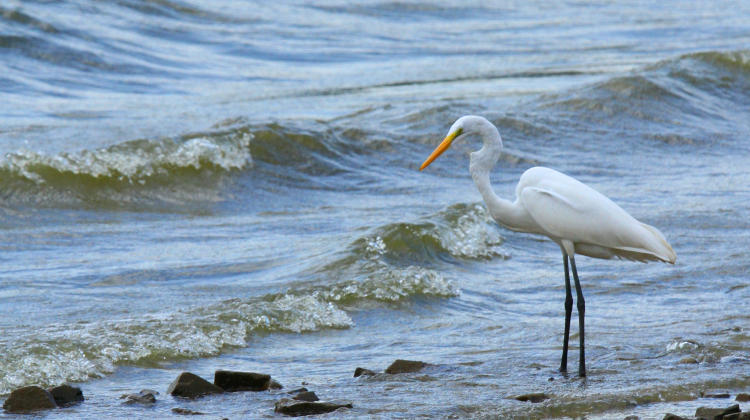
Jordan Lake was unusually gusty the other day, to the point of producing breakers, and these could be used as additional elements in some compositions – a lot of it was down to the timing. Having a great egret (Ardea alba) as a main subject helped of course.

great egret Ardea alba against breakers on Jordan lake
The day was partly cloudy and often took on the appearance of light overcast, so it muted the colors a bit, but that’s okay – with the waves, it spells out an impending or passing storm, a blustery day with a bit of chill in the air. It wasn’t chilly at all, but we won’t talk about that, just the impressions, and this was evocative enough that it may become a bigger print someday.

Curiously, the image also contains a lot of different colors – not at all strongly, true, but there are a lot of very subtle variations in there, and so I boosted the saturation significantly just to see what it produced:

great egret Ardea alba against breakers on Jordan Lake, oversaturated
If you were to flip back and forth between them in the editing or thumbnail programs as I was doing, it seemed more drastic, but here on the page it isn’t too bad at all, though it does seem to reduce the ‘blustery’ aspect of it. All I did was increase the saturation, no color tweaks at all, but the blue reflected from the patches in the sky comes through stronger now. It goes well against the sand background color of the blog at least.

Now the next:

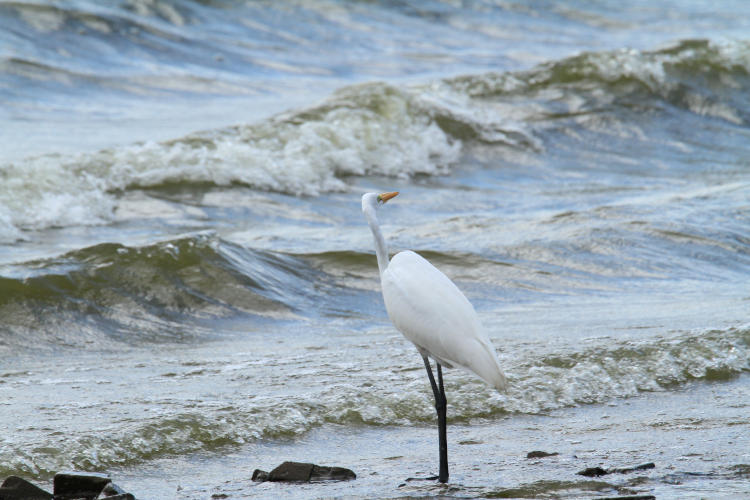
great egret Ardea alba against breakers on Jordan lake
I like the breakers better here, though the egret is looking away. Now there’s this ‘consideration’ aspect to me, as if the egret is contemplating whether to fly off or not, its attention no longer on potential meals – the angle of the head changes the impression that easily. But yeah, a little more profile would have been better, and I waited and watched, but the egret wasn’t that cooperative.

Again with the saturation:

great egret Ardea alba against breakers on Jordan Lake, oversaturated
This was twice as far as the boost for the last, ‘against the stops’ as it were – I don’t know what exactly the numbers mean in GIMP, but I’m guessing a 100% increase. Now the contrast between the reflected sky and the natural water color is much more evident. It’s a little too much, as far as I’m concerned, and I should dial it back halfway like the other frame if I’m going to consider making this a print, but I uploaded this one just to illustrate. Often enough, boosting saturation this far looks way worse; it’s only through the low contrast of the original frames that this doesn’t look garish.

That was just a few minutes of fooling around out of curiosity – more are on the way, as I get more time to write it all up. No editing tricks beyond the normal cropping and occasional contrast tweaks for those, I promise.

Visibly different, part 39

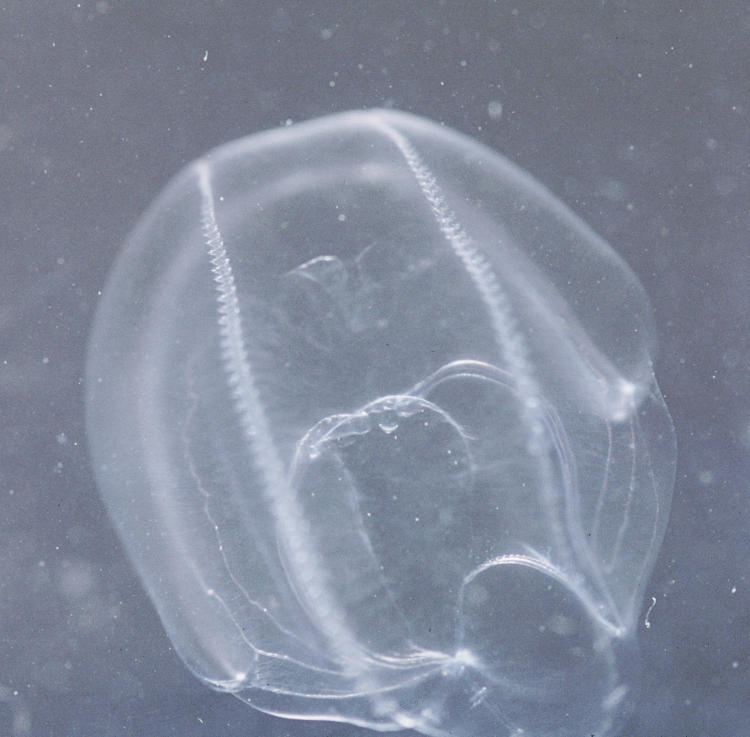
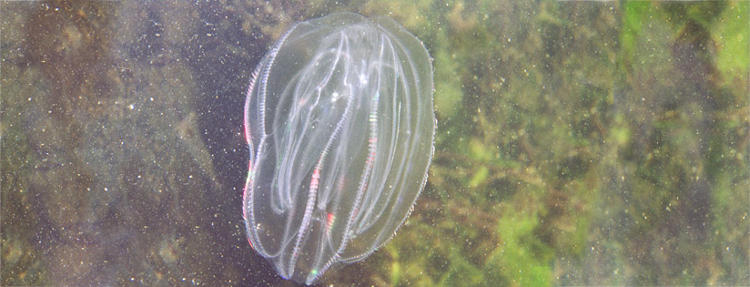
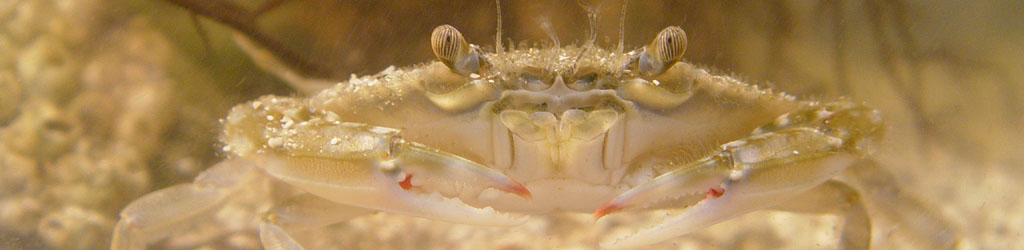
ctenophore possibly sea walnut Mnemiopsis leidyi
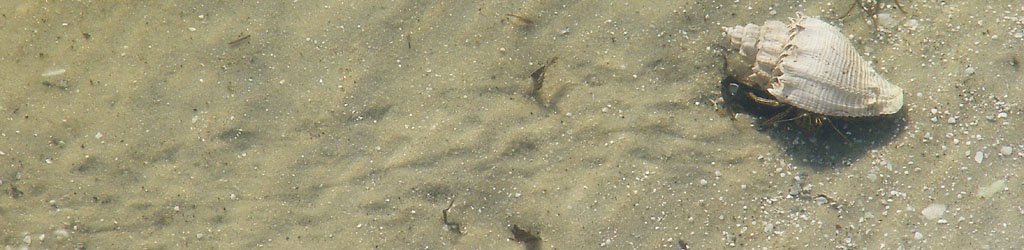
Our opening image, as confusing as it is, comes with a story. While living in Florida, I was running a small fishnet (probably a bait net) through the water off of a dock trying to capture some minnows when I realized my empty net wasn’t actually empty, but contained a transparent blob. With care, I transferred this into my holding jar, recognizing that it was probably a jellyfish, and deposited it into my little saltwater tank at home. Therein, I could see that it had a complicated shape while roughly spherical, about 30-35mm in diameter. I also found that the minimal flow of the circulator was still too strong for it and it quickly got pinned against the intake pipe, so I had to shut this down. I endeavored to get decent photos of it, but what you see here is the result, not very clear.

Ha! That’s a joke, because this was easily the clearest, most transparent species I’ve ever found, initially evidenced by the fact that I had no idea it was there while I swept the net through the water after other subjects. I eventually released this one, but had another encounter the next year I believe. At that time, I was snorkeling in the Indian River Lagoon, heading away from shore into more open water, and suddenly found my vision getting blurry and spotty. It took me a moment to realize that this was because it was obscured by things in the water, and once I changed my focus much closer, I realized that I had one of these only centimeters in front of me – in fact, on looking around, it was an entire herd of them, or ‘smack’ of them, the proper term of a collection of jellyfish. With great care because I still didn’t know what species this was, I backed away and tried to avoid contact, though I was almost certain that I brushed against a couple with no ill effect.

And there would not have been, because I eventually found these were comb jellyfish, or simply comb jellies, which are not actually jellyfish but ctenophores instead. They lack venom of any kind and simply engulf their prey through an opening at one end, digest what they can, then eject the remains back out the same opening – a glorified mobile bag, as it were. Granted, nearly every other species, us included, is a glorified tube, so let’s not get high-handed here. Just barely visible in my photo, as they fall into the short focus range, are the tiny little fins that run in medians down their bodies, serving as the means of propulsion for the ctenophore – obviously, they’re not gonna chase down any dolphins. The same info source revealed that they could be bioluminescent, and so I had great reasons to capture another.

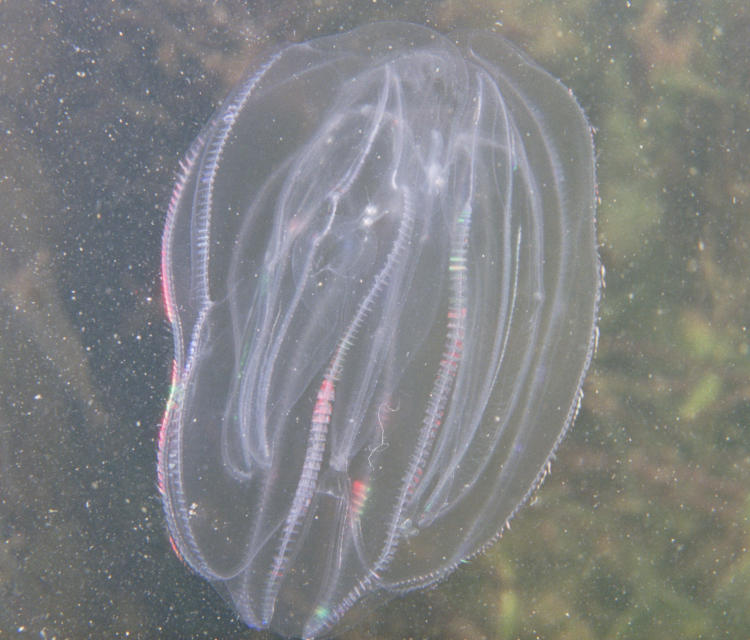
This eventually happened, but only by spotting one against a dark background where the minimal reflection of sunlight from their bodies could be discerned – seen against a sandy bottom, they vanished, and I had to shift my gaze back and forth a lot before I snagged a new specimen. Once again in my aquarium, I soon noticed that in bright light the little fins (cilia) would refract the light and send rainbow ripples down the body in a captivating manner, and of course I had to photograph this. In time, I was successful, though it took standing on a chair high above the tank and shooting directly down through the surface while the tank sat in the light coming in the window.

ctenophore possibly sea walnut Mnemiopsis leidyi showing refraction from motive cilia
I had no means of doing video at this time, which is a shame because you really should see this, but others have captured it. Despite many attempts, I saw no evidence of bioluminescence, and suspected for a while that what they actually meant was that refraction, but no, the species really can emit its own dim blue light. To the best of my knowledge, this is a sea walnut (Mnemiopsis leidyi,) which seems to be the most common species in that region.

Many years later, I had a client looking for Florida species, only in a ‘banner’ format (much wider than it was high,) and I sent along a variation of this image for consideration.

same image in banner format
Except, I never got this wide in the first place – what you saw above this was pretty close to full-frame for the one photo that showed the refraction clearly. To make it into a banner format took a lot of editing work, especially to prevent it from looking like I’d pasted everything on either side in from other portions of the same photo. I was pretty proud of the results, because even now I have to look closely to spot the repetition of certain patterns and details – I flopped, reversed, and inverted, and overdubbed more telltale details like bright points of sediment. Notice, too, that either side has its own color register, the left being more brown and the right more green, so I couldn’t swap these – I could only use right fragments on the right side. All that, and they never used that image anyway. Maybe it was more obvious than I thought…

The curious upshot of this was, I had never even tried cropping any of my images down to banner format before that client requested it, not really liking the idea, but after examining a lot of photos for the potential of such cropping, I started using it more often, and not too long afterwards chose a theme for the new blog that featured rotating banner images at top – and insisted on keeping them even as I changed themes. Though I pretty much stick to images that can be easily cropped and don’t require extensive editing work to fit.

Curious origins

Back when I was young and impressionable (as opposed to now when I’m old and cynical,) The Six Million Dollar Man debuted, and like many kids of that time, I was hooked. Not only did I make it a point not to miss an episode, my friend and I ripped around doing great feats of strength with items that gave the barest impression of being heavy and/or sturdy (and only occasionally running really fast – there aren’t as many opportunities for cool storylines regarding that.) This would continue, off and on, until Star Wars came out and we started blasting things instead. Don’t ask me why we never had any crossover adventures, nor why I was kind of annoyed when Luke received a bionic hand instead of a lab-grown organic one…

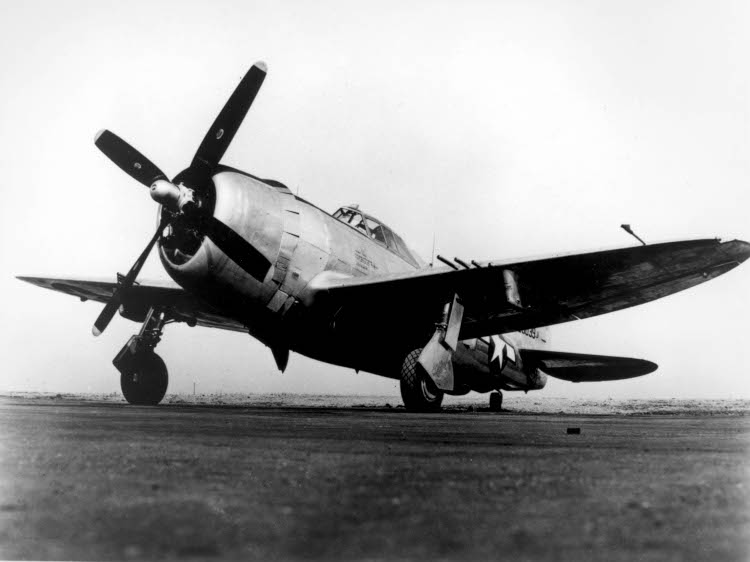
But there were two curious paths that this single influence led down for me. The first was noticing that the show was based on the book Cyborg by Martin Caidin, and some years afterward at a garage sale I found several books by the same author, including Cyborg IV, and so snatched them up. Cyborg IV was interesting and more than a little philosophical, but it was one called Thunderbolt! that captured my attention more. Caidin assisted with the autobiographical accounts of Robert S. Johnson, an American WWII pilot assigned to the European theater flying the Republic P-47 ‘Thunderbolt,‘ a single-engine fighter of massive proportions; it was predicted to perform poorly against the Luftwaffe’s Focke-Wulfs and Messerschmidts yet defied these expectations, becoming a major asset to the Army Air Force and one of the top fighters in the European theater. The firsthand accounts of the air war in Europe and the life of a fighter pilot fascinated me, starting a minor obsession that remains to this day. I even received a larger-scale model kit of the P-47 for my last birthday, soon to be reproduced faithfully as I get back into working on kits occasionally.

Affectionately nicknamed “Jug,” the P-47 was one of the most famous AAF fighter planes of WW II. Although originally conceived as a lightweight interceptor, the P-47 developed as a heavyweight fighter. [Source: USAF public domain]

Another book, again by Caidin and obtained at the same time, assisted this path: Whip, which was a fictional account of a B-25 Mitchell squadron that removed the bomber’s station in the nose of the aircraft to replace it with guns, making the medium twin-engine bomber a strike fighter instead; this was an actual modification in WWII, though the events in Whip are fictional. Both of these books fostered my knowledge of WWII aircraft and tactics, not as much directly, but more that they provoked the interest that led to further reading. My attention to military weaponry has waned significantly, given the pacifism that I’ve largely adopted in the past decade or so, but the historical aspect remains, and the dogfights of WWII were a very specific moment in time that won’t be repeated: aircraft and tactics have changed drastically, and air combat now, when it takes place, is more often accomplished at significant distances, often completely out of visual range.

And then there’s the other, trivial thing from the opening credits of The Six Million Dollar Man: the crash that led to the bionic replacement limbs. The pilot episode also showed a few tantalizing glimpses of the aircraft, an experimental lifting body, which is an aircraft without wings that derives lift from the fuselage shape instead. This was a real NASA program, though it would be years before I could find out more about it, and the footage of the crash used in the opening credits was NASA film of an actual crash, as I was to discover long after my interest in Steve Austin’s slow-motion antics had faded. The lifting body program throughout the sixties was intended to design the next generation of spacecraft, able to land on a runway on return rather than necessitating an expensive and complicated water recovery, and I’ll spare you the engineering aspects of aircraft without wings or why they were necessary, despite having read quite a bit about them. The crash seen in the opening was of an M2-F2 piloted by Bruce Peterson, and his injuries were notably similar to Steve Austin’s – Caidin took his cue from this accident for his book, though Peterson recovered much better than Austin did and without the need of any prosthetics.

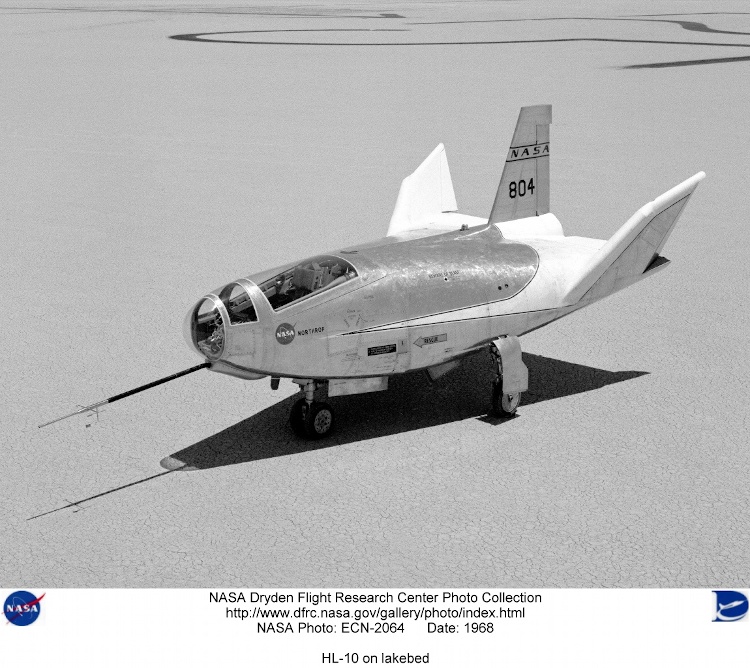
Yet the aircraft shown in the pilot episode, attached to the underwing of its mothership, was instead an HL-10, another aircraft in the program, and as far as I’m concerned, a much better-looking one. Both of these aircraft, and several others besides, did numerous flights examining the feasibility of lifting bodies, and this research led to the Space Shuttle Orbiter even though they scrapped the lifting body idea for that.

Source: NASA Dryden Flight Research Center Photo Collection.

The HL-10 became a mild obsession for me, most especially trying to obtain a physical model – only one company has created one in a decent scale, and that’s rare, expensive, and made of resin (not my preferred medium.) The only detail plans that I’ve ever found are a bit sparse, but perhaps sufficient to create my own computer-model, and from there… what? Attempt to produce one on a 3D printer (which I do now have, though the results aren’t optimal)? Or hash it out the old-fashioned way with a superstructure of balsa and finishing putty? Perhaps something else entirely – but the intention is to produce a display model in some manner, and I know it won’t be easy.

But it is amusing that both of these minor obsessions were sparked by minimal references within an iconic yet cheesy action show from the seventies. Yes, we’ve long-ago established that I’m weird, stop belaboring the point…

Not a fan

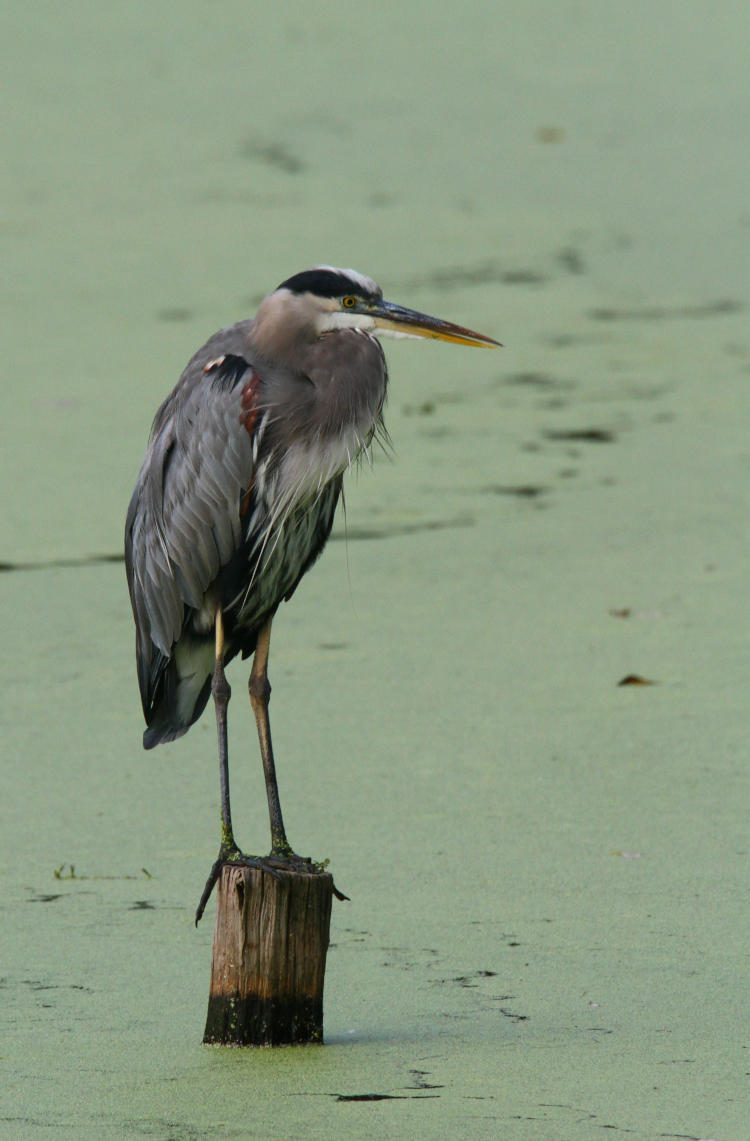
Another holiday has rolled around, and I’m letting you know about to celebrate if you see fit – I am, but reluctantly and perhaps not even for the entire day. Yes, it’s Put On Long Pants For The First Time Since, What, Early May? Day, and with due observation, I set aside the shorts and sandals to don actual slacks, sneakers, and socks to go around the neighborhood pond briefly this morning, since the temperature had dropped into the low teens – that’s Celsius, for all you American Neanderthals, figure it out. Even the great blue heron (Ardea herodias) was displaying its feelings about the chill.

chilly great blue heron Ardea herodias perched on piling
It’s supposed to get a bit warmer later on, so perhaps I won’t even betray my shorts and sandals for the entire day, and they certainly aren’t abandoned for the season yet, but damn, I felt bad about it. I can’t even hang out with people that own more than one pair of dress shoes – just makes me itch.

But because we might need it, (and because I’ve been slack in posting,) I offer another image from happier days.

butterfly bush Buddleja davidii blossoms with something else
Just a blossom cluster from our recovering butterfly bush (now Buddleja davidii, because yet another scientific name has been changed.) Yep, just a flower cluster – nothing else to see.

Visibly different, part 38

I know, it’s been a slow week. Well, it hasn’t really, it just hasn’t been a posting week – my time is being spent doing such fun things like cursing at contractors who thought that using fourteen nails from a nail gun set at 200lbs was proper procedure for attaching a measly riser on deck stairs, but that’s not important right now. Another project is waiting on a replacement part and will be a while. Meanwhile, the photos I’m getting are largely the same damn things because I’m in the same damn places. At this very moment, I’m installing a new graphics driver which is taking forever, and I have my doubts that the monitor colors presently being displayed are accurate. So this week, a quick one (that might be a little off in color register.)

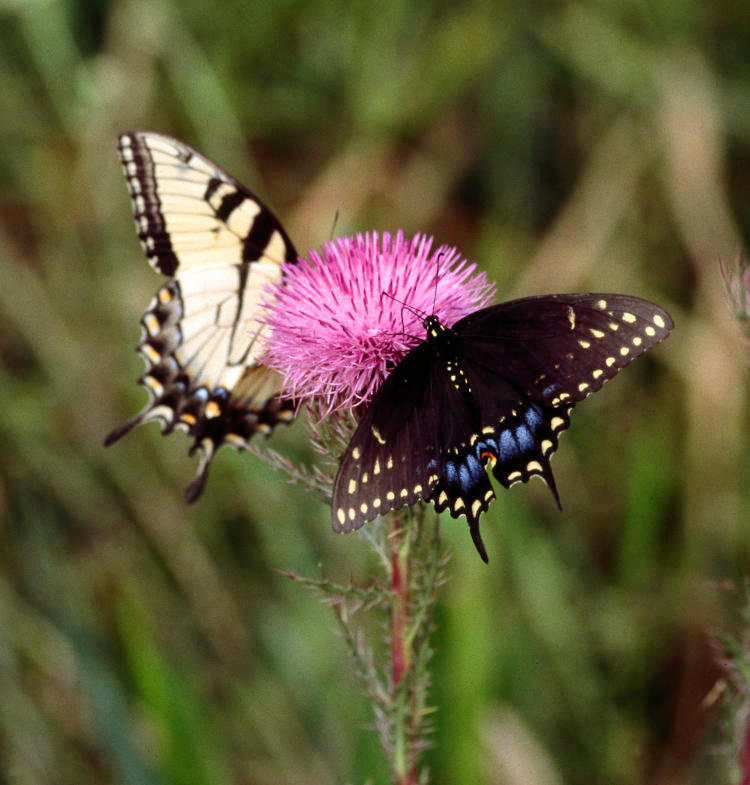
pair of eastern tiger swallowtails Papilio glaucus in two color phases, likely male and female, on thistle blossom
I think this is the only time that I’ve accomplished this, and it occurred in Florida in 1999. These are not two different species, but just one, eastern tiger swallowtails (Papilio glaucus.) The black one is a female, while the yellow one is likely a male, though the females also have a yellow phase – this can only be differentiated with a look at the top surface of the hindwings, facing away from us here. I was pleased to get both color patterns in one shot, and if memory serves, this was taken almost exactly 23 years ago, this coming Saturday – I have reasons for remembering the dates on this trip. It was a roadside field where the pollinators – mostly butterflies but a handful of moths and wasps – were ridiculously active, and I think I shot an entire roll of slide film while standing amongst the flowers.

With digital I would have undoubtedly shot more than 36 frames, but that’s because each frame doesn’t cost in terms of film and processing, so I’m far more inclined to take chances and discard what doesn’t work – that hurts a bit with slides, so I tended to fire off frames only when I was fairly confident of getting a keeper. There’s something to be said for both approaches: I probably would retain more images overall (while a lower percentage) from shooting digital in the same situation, but making the effort to lock in a good image is far better than simply hosing them around in the belief that something will be useful. Large format, for instance, is so labor-intensive and costly (in comparison at least) that photographers using it tend to be meticulous, virtually guaranteeing that everything is a solid image. And of course, such a format is a really bad choice for subjects as fleeting as this, so large format images tend to be landscapes or carefully-crafted portraits. Play to the strengths.

The duel goes on

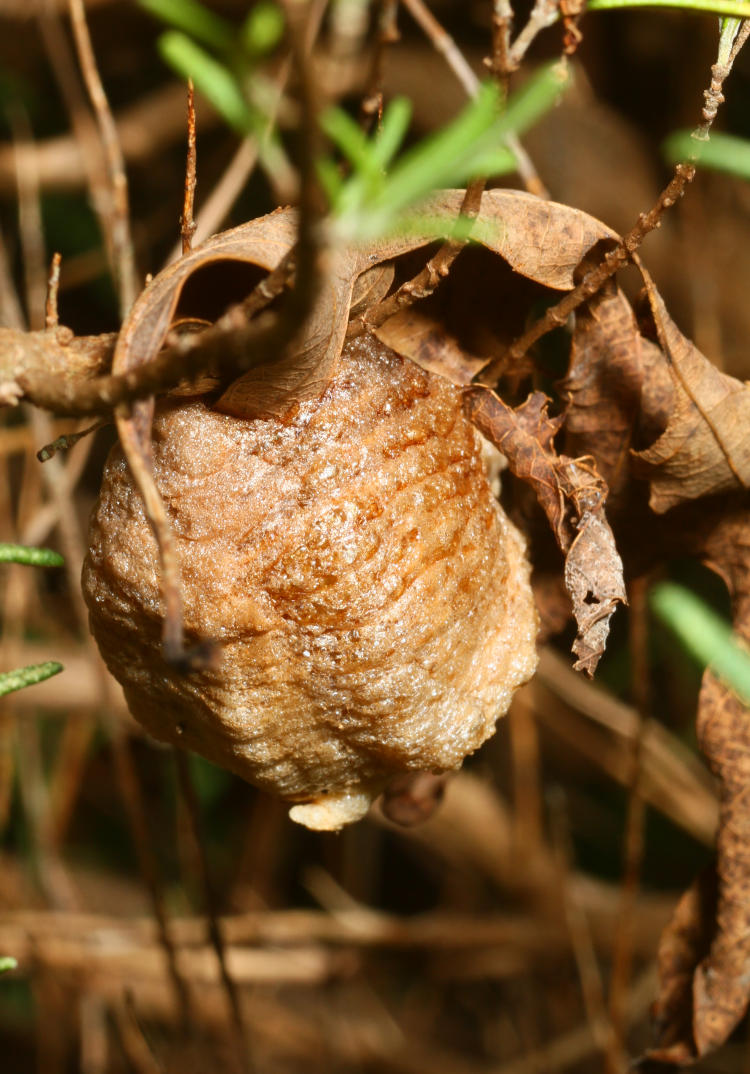
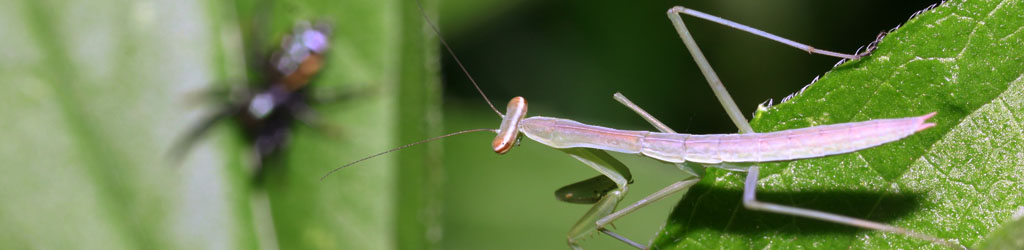
I’m still playing with the Chinese mantids (Tenodera sinensis,) and you’re tired of hearing about my attempts to obtain certain photos of them (aren’t you?,) specifically laying eggs, or producing the ootheca/egg sac – I’m honestly not sure these can be differentiated, because I only have one set of photos of it and they’re not that clear, plus I was too late to see the actual egg laying if it does indeed take place. What I think happens is that the mantis lays the eggs tight against the branch used as the support, then as a separate act covers them with the foamy stuff that hardens into the protective sac – think egg carton styrofoam or that expanding foam insulation. However, it’s possible that the eggs and foam are extruded together. I’d really like to catch this start to finish to see for sure, and I keep my eyes open for the opportunities.

One obviously rotund female was inhabiting the largest rosemary bush for weeks, and I was trying to keep an eye on her. But then she disappeared, and after a few days I mounted a search of the plant. Eventually, my suspicions were confirmed.

egg sac ootheca of Chinese mantis Tenodera sinensis on rosemary plant
There it was, hidden well down into the depths of the plant (which is really a sprawling bush now.) Moreover you can see that she, accidentally or intentionally, incorporated a dead leaf into the foam, and my typical view was from above and so the ootheca is completely hidden from casual sight. it also sits low to the ground and aimed ‘down,’ not the typical angle that I see them in, so photographing this come spring is going to be challenging, unless I prop it up or shift it to a slightly better location.

This is the same bush that hosted the first hatchings this past spring, and I’ve said before that I have a vague suspicion that they return to their hatching spot, so it remains a possibility that I photographed her as a newborn, maybe even rescued her from being trapped – granted, that’s about a 1-in-300 chance or less even if she was one of that brood. But at the least, I have an ootheca to keep an eye on next year, and will probably attempt to collect a few more early in the winter.

But they’re cute

Yeah, back in a rut – or I never left, whatever you like. But these finds from last night couldn’t be passed up.

I semi-routinely check out the property, day and night, to see what can be found, mark progress, and so on. I’d like to think that I’m getting even better at spotting extremely subtle things, but there’s no real way to determine this, no ‘master list’ of what there is to be spotted. I just know what I do find, which might only be 2% of what could be seen if I didn’t suck. Man, empiricism isn’t good for the ego…

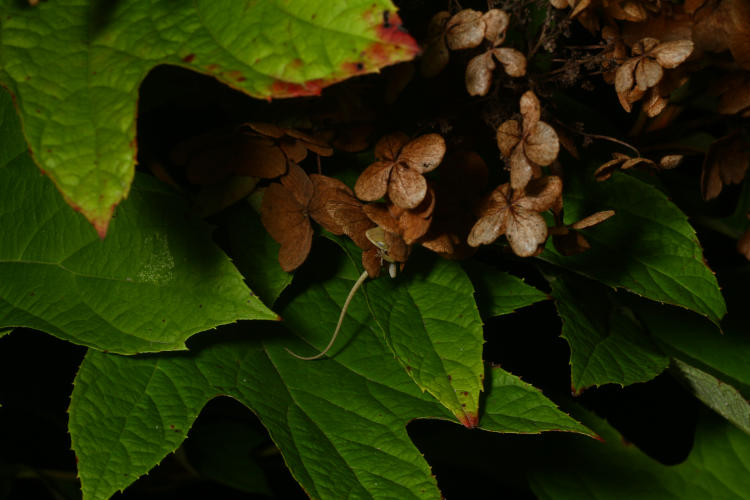
tail of Carolina anole Anolis carolinensis hanging down from dried flowers of oak-leaf hydrangea Hydrangea quercifolia
The oak-leaf hydrangea (Hydrangea quercifolia) in The Jungle has been a good place to spot things this year, though not every time I’ve checked (see above.) The flowers from this past spring are still there, dried and brown now, and may hang on through the winter, providing a nice accent to the overall appearance as well as hiding places for various small critters – that tail hanging down is the clue, though it’s only 3cm long. And there’s more to see, if you look very closely, but I’ll make it easier in a moment. Don’t keep scrolling if you want to challenge yourself first.

.

.

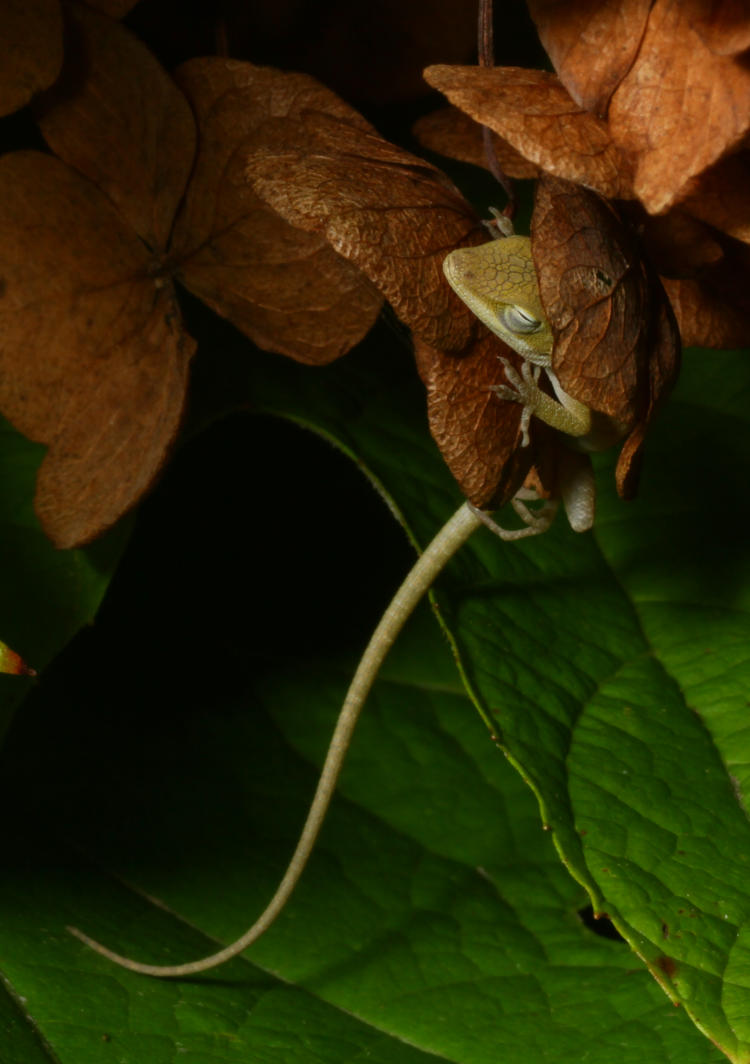
sleeping juvenile Carolina anole Anolis carolinensis within dried flowers of oak-leaf hydrangea Hydrangea quercifolia
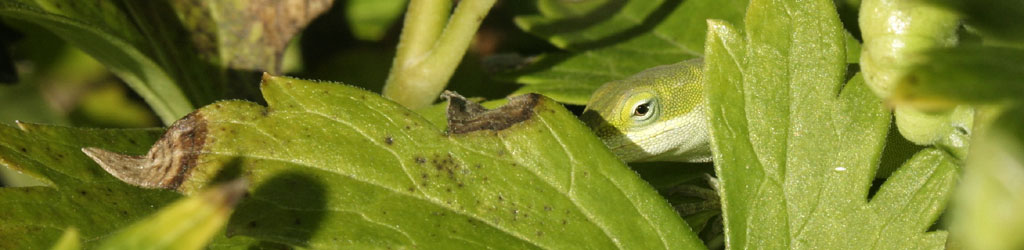
Yep, our old friend the Carolina anole (Anolis carolinensis) is once again sleeping within those flowers. So you know, the individual petals might be fractionally larger than your thumbnail – this is one of the juveniles, almost certainly this year’s brood. They appear to grow much slower than the frogs do, and a few days back I believe I spotted one of last year’s brood, only half of adult size. There’s no way to tell for sure, and all I can go on to differentiate them is their locale, which may change at any time when they decide to move on. I suppose I could sneak up some night and attempt to give them a tiny tattoo…

By the way, you can tell this is a juvenile by the awkward sleeping position – adults of every species know if they try to sleep like this they’ll be worthless the next day.

About two meters away on the rose of Sharon (Hibiscus syriacus,) was another find.

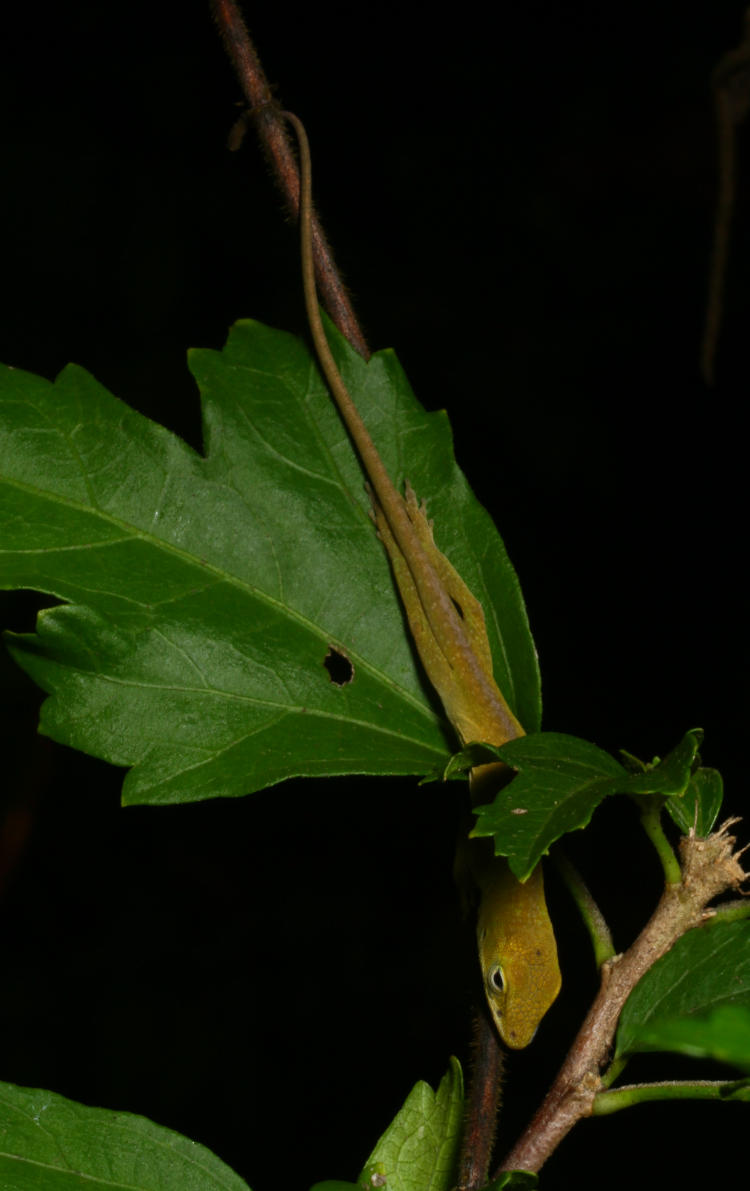
juvenile Carolina anole Anolis carolinensis hanging awkwardly from rose of Sharon Hibiscus syriacus
This one probably heard my attempt to get closer up the overgrown slope of The Jungle, through the ivy and blackberry iris and various unwanted vines, thus the open eye. It didn’t budge from position, though – and it is this position, shot perfectly upright and level, so the anole really is hanging head down like that. I’m not at all sure how it’s remaining that way, since neither the hind legs nor the tail seem to be latched onto anything, so perhaps it just licked its own belly and stuck itself to the leaf? Maybe this is a very localized example of those gravity anomalies? Maybe… nah, let’s not be indelicate.

The other day when I didn’t have the camera in hand (the horror!) I viewed some behavior that I’m dying to get on video, and it was almost certainly displayed by one of these two, given that it was on the top of the same hydrangea roughly midway between these two photos. I’ve already done a few short video clips, nothing fascinating, but I intend to catch more behavior before the season ends and these spuds go into hibernation. The problem is, there’s no way to get a decent view without them being acutely aware of my presence, which likely affects their behavior – it could be a while. Still, it’s been a good year for video efforts, so we’ll see.

1 91 92 93 94 95 335