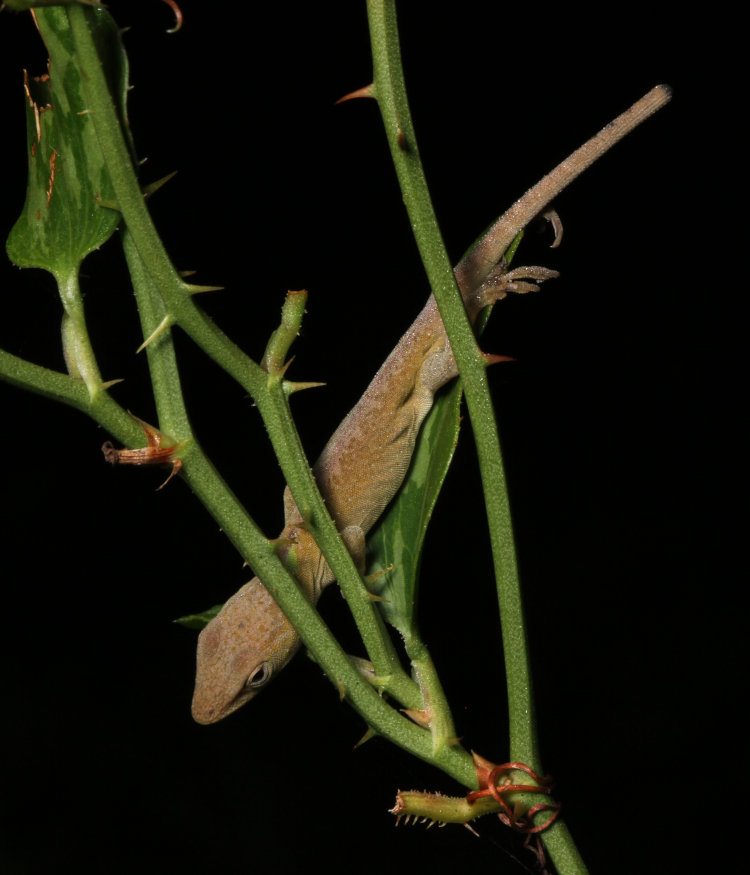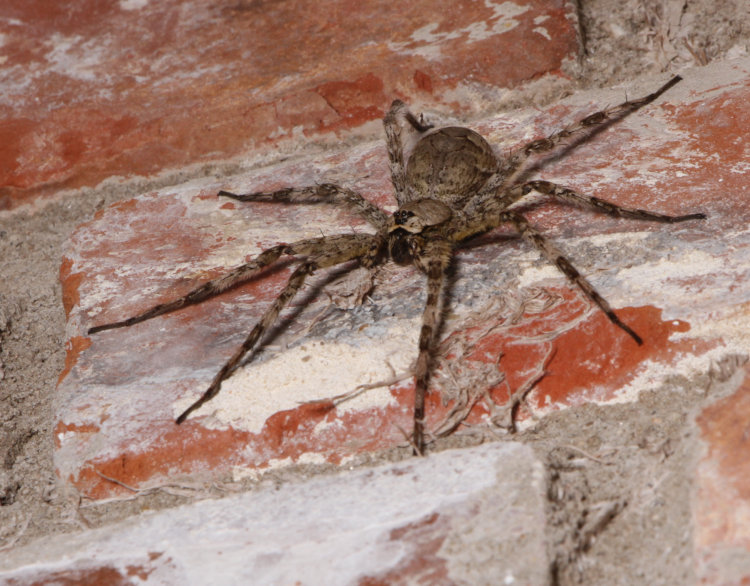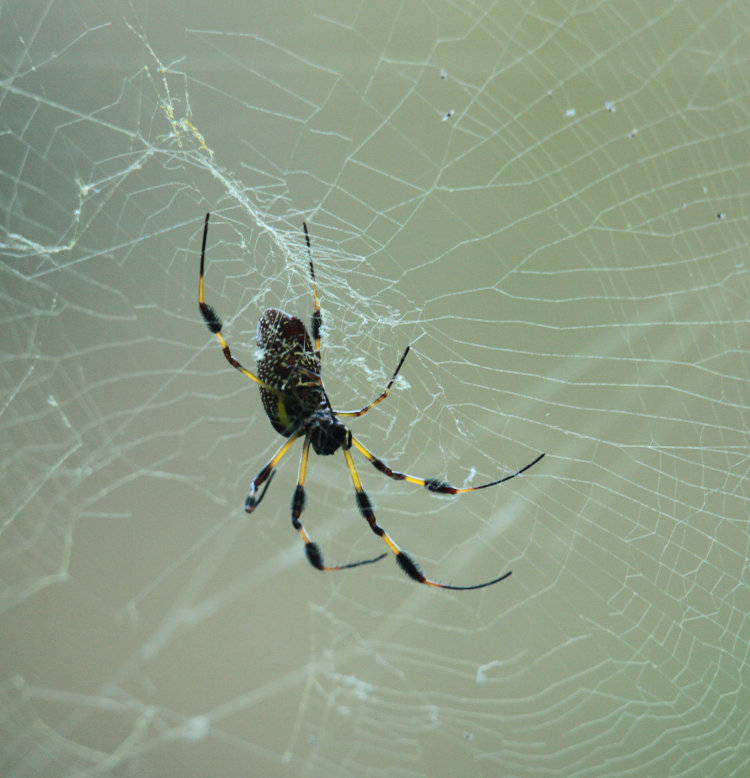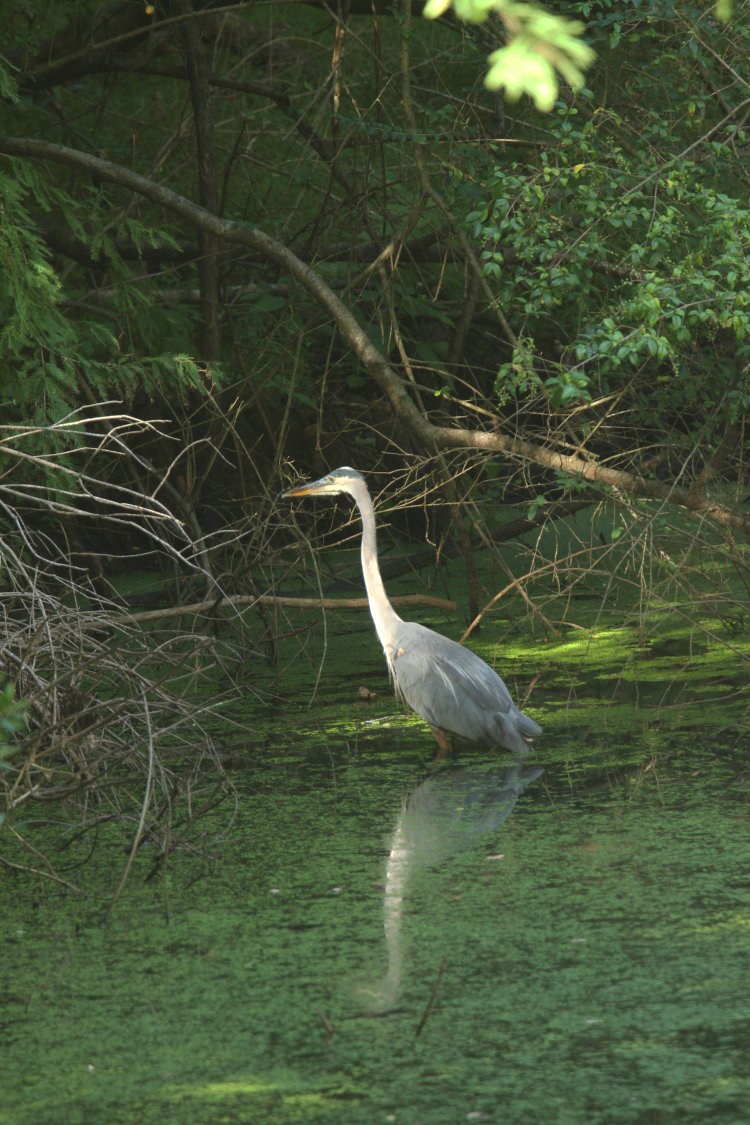









Rethinking my habits

So I was out poking around Walkabout Estates early this morning, or late at night – whatever, just after midnight – and had gotten a few pics of a subject soon to be featured. I was walking alongside the house right next to the AC condenser when I heard a sharp rustle to my right. I stopped immediately, as always, and looked carefully to see what had caused it. It wasn’t hard to make out.

eastern copperhead Agkistrodon contortrix in defensive posture against wall of Walkabout Estates
Yes, that’s a copperhead, an eastern copperhead to be precise (Agkistrodon contortrix,) the only venomous snake in the region, and the first that I’ve found within a ten-kilometer radius – not exactly thrilled to find it within five centimeters of Stately Walkabout Manor here. This is especially so given that, having found only a handful of snakes on the property in the 10 years that we’ve been living here, and none of them remotely dangerous, I am routinely out in sandals or bare feet – tonight it was kind of an outdoor slipper, only a degree better than nothing. Much as I hate the idea, I might have to change that habit.

I had the bright headlamp on, but you can see how well they camouflage and I wasn’t really looking down at my feet anyway, though I do when I’m out in any wooded area that seems likely. This was home – I didn’t think it necessary. Had the snake not coiled suddenly and rustled the leaves, I might never have seen it, and I was walking on the path that’s just over a meter from this spot.

Yes, this is defensive posture, “coiled to strike” as overdramatic accounts will put it, though more often it results in the snake simply beating a hasty retreat. Let’s have a closer look at that head, because it’s great.

close up of head of eastern copperhead Agkistrodon contortrix in defensive posture
I had the Mamiya 80mm macro affixed, so I had a little working distance, and naturally this is cropped significantly – I knew the safe distance, and also knew not to do anything further to provoke it. I’ve been around enough snakes to be pretty mellow about it, even the venomous ones, so of course I was taking photos – the camera was right there in my hands, c’mon! Meanwhile, look carefully at the pinestraw and such in this image, and realize that the snake is a lot smaller than it seems in my photos.

Each of us could have gone our merry way, but I figured that copperheads were one species that we really didn’t want hanging around (especially given my own habits.) I considered my options for a moment, then fetched a broom and an old aquarium that had a proper lid. And the duct tape.

eastern copperhead Agkistrodon contortrix contained within old aquarium
The snake was remarkably easy to get into the aquarium, though it jerked in alarm as I laid the aquarium on its side right in front of the snake, and struck at the broom half-heartedly when I started nudging it – then slipped into the aquarium without any further hesitation. This allowed a little better idea of scale – not a lot, admittedly – but the overall length was roughly 40 cm, certainly under half a meter. That’s about average for the species, and the head could have hidden under a quarter.

I woke The Girlfriend to let her know what I was doing and put her phone alongside the bed, just in case, then drove out to a nice secluded area to release the snake. Which was more difficult than capturing it, to be honest, but that’s not saying a lot, and there were certainly no dicey moments. The snake just didn’t find the area outside the aquarium to be an open invitation – not at all surprising, considering what it had already gone through.

eastern copperhead Agkistrodon contortrix peeking from aquarium during release
Eventually, I had to tip the aquarium all the way up and slide the snake out, where it sat in mild confusion, requiring me to get the broom again and nudge it on its way. This gives a good view of its namesake, the unpatterned and deep coppery color atop the head, distinguishing it from most other species; even the ones often mistaken for copperheads have markings on their heads.

eastern copperhead Agkistrodon contortrix after release, going reluctantly on its way
Even after nudging it, again, to send it on its way, the snake was reluctant to simply dash off, but this gives us a good view of all the markings; note the ‘airbrushed’ appearance of the markings, nice gradient tones within, and a shape like Hershey’s Kisses. Also note that the darker part of the pattern is thinnest along the spine, while the non-venomous snakes in the region all sport darker bands that are wider on the spine than on the sides. The color actually varies only moderately from this, but the base tan is pretty distinctive. What isn’t visible in any of these photos (and not the best way to distinguish them anyway) are the slit, vertical pupils like a cat – all of the non-venomous species in the area have round pupils (except, perhaps, the coral snake, which only occurs coastally and you usually can’t make out the pupils anyway, but it’s not like they’re hard to pick out.)

A word about the taxonomy, because like many other species I’ve featured here, it’s changed since I first started writing about them. There used to be a northern copperhead and southern copperhead in the area, and the way to tell them apart was by examining the patterns near their tail, since the southern variant would have ‘detached’ patterns, not meeting on the spine – you can just make out here that they’re offset but still in contact, which would have made it a northern. However, these have been changed and, according to Wikipedia, both northern and southern variants are now considered eastern. Because, you know, biologists are bound and determined to put “eastern” into every goddamn species name on the east coast; it’s almost like a Tourette’s thing.

Anyway, that was my evening, slightly hearkening back to my animal rescue days, though I’ve had much more thrilling moments during those. I was, and am, more concerned that I really need to be watching my footing around home as distinctly as I do out in the woods. Sheesh.

Meanwhile, the last few posts have been a bit snakey, haven’t they? I’ll try to get to some nice cuddly bugs soon…

Just once, part 18

eastern hognose snake Heterodon platirhinos just chillin
Today we have another mildly surprising one to have only one example of, since they appear throughout the eastern seaboard at least and I’ve handled them four or five times other than this. This is an eastern hognose snake (sometimes ‘eastern hog-nosed,’ but Heterodon platirhinos applies throughout the world.) Medium-sized as far as snakes go, they typically run from 60-100 cm in length and 2-3.5 cm in girth, more ‘stocky’ than ‘slender,’ but the coloration isn’t the best way to identify them, since it’s wildly variable across their range. That said, the upturned nose is only possessed (on the North American continent, at least,) by two species of hognose snakes, so that works best.

They are a remarkably docile species, but often don’t appear to be docile when you first find them, because they have two distinctive and melodramatic defensive displays, and my goal is to get these on video some day. The first is to flatten out their head and upper body to twice their normal girth, coil up, and hiss loudly, often vibrating the tail when they do this (which is a common trait of many snake species, not just the rattlesnakes.) Unlike cobras, however, this flattening is not as confined to the head and ‘shoulders’ but stretches further down the body (see here, which is the other species but also constitutes a ‘Just Once’ appearance.) This display may well protect them better even from the “kill all snakes regardless” idiots, because it looks far too dangerous to even approach.

If this fails, however, the snake turns to Defensive Display Two, which is to literally roll over and play dead, notable in that if you roll them upright, they’ll immediately turn belly-up again, similar to that garden hose that never wants to coil properly. Occasionally, as linked above, they play this to the hilt for dinner theatre, another thing to capture in video.

eastern hognose snake Heterodon platirhinos being far too agreeable
My subject here, however, couldn’t be convinced to do any of this even when picked up, and resolutely appeared as tame as a pet, which made my attempts to show these displays to a student fail entirely – oh, the snake knew what it was doing all right. They are entirely harmless – to people, at least, though they actually possess a venom that works on frogs and toads. Some people might still find this a reason to be wary, which is perhaps a reflection on their own self-image, but since not one of the hognose snakes that I’ve found has made the faintest attempt to bite, even the injured one, I’d say that poison ivy is something to be dreaded more than these guys. This image was taken while the student held it, mind you, and this one didn’t even shit on either of us, which is the more common defensive action of most snake species. And as aggressive as they appear, it’s only their anatomy: like many snakes, they have a protective ridge over the eyes that gives them the appearance of glaring, but snakes don’t have any expressions at all and don’t communicate in that manner, so they always look like this. Even when asleep, since they don’t have eyelids either.

Anyway, here’s hoping that I remove this species form the ‘Just Once’ category before the end of the year. Wish me luck (or skill, or observatory acuteness, or whatever works for you)!

Love is in the weeds

Went over to the neighborhood pond tonight because the frogs were sounding off exuberantly while I was chasing another subject back home (which you’ll see soon.) By the time I wrapped up what I was already doing and gave the headlamp a quick charge, the frogs had quieted down a bit. A spider was the first thing I photographed, but the second thing that I captured was a pair of eyes watching me from the woods, down low and too close together for a deer. With the help of the headlamp and by taking the softbox off the flash, I snagged a decent frame.

North American raccoon Procyon lotor peeking out from concealment
That’s a raccoon of course, or North American raccoon if you want to be specific (Procyon lotor,) but wasn’t a goal for the evening. Mind you, I’ll take plenty of pictures of raccoons if they’ll let me, but that’s usually far from the case, and this one was down a steep embankment and already spooked by my presence – I’d get nothing better than this.

The frogs remained mostly hidden – a couple of bullfrogs on the shore, and calls from both green treefrogs and Copes grey treefrogs wherever I wasn’t, but nothing presenting itself beyond what I’ve gotten a million times before. And then I spotted the snake.

female northern water snake Nerodia sipedon sipedon in shallows of pond
This is typical for the area, especially in the water, because this is a northern water snake (Nerodia sipedon sipedon) – the first of any snake that I’ve seen this year, which seems odd even to me. I did a few frames, almost sliding down the steep bank into the water in the attempt, then passed further on in search of the frogs again.

On the way back past, the snake was no longer in evidence, but then caught up with my position as I was paused while observing an eastern American toad (Anaxyrus americanus americanus.)

female northern water snake Nerodia sipedon sipedon suspicious of photographer
In fact, there was a toad right by the water’s edge near me, while this snake began nosing closer, and I suspected she’d picked up the toad’s scent. All of this is taking place perhaps just over a meter from me; the snake itself was about half-a-meter in length – respectable, but far from the larger specimens which are twice that.

female northern water snake Nerodia sipedon sipedon tracking down the scent of American toad Anaxyrus americanus americanus
Sure enough, the snake started heading distinctly in the direction of the toad, and I was only armed with the Mamiya 80mm macro – no zoom, limited framing options, so I had to back off a bit and start adjusting the flash unit and exposure. It did not help that I’d shot dozens of flash images over the past couple of days and the batteries were starting to wear down, taking a bit longer to recharge between flashes. As a result, when the snake took a very abrupt shot at the toad, the frame that I captured was inadequate and not worth showing here. Not to mention that the toad leapt off and the snake missed anyway.

female northern water snake Nerodia sipedon sipedon on water's edge immediately in front of photographer
The snake did not give up, and nosed around the area for a while, just beyond my sitting position on the bank, before suddenly deciding to move further along. This image shows the way to distinguish the northern water snake from the nearly-identical banded water snake, because the markings of the northern break apart in the hind portion of the snake’s body; the bands remain intact for the banded water snake.

male northern water snake Nerodia sipedon sipedon in search of female
No sooner had the snake moved further along shore than another appeared, following behind. You can see the markings on this one are brighter and redder, which generally means little – there are a lot of variations within the species, to say nothing of time between molts when the colors get duller. But this one was enormously interested in coming ashore right exactly where I was – which leads to the video. Shot, unfortunately, on my piece of shit smutphone – I had not come armed for video, which takes a steadycage, a video light, and an external microphone to make it all worthwhile, even though it is many times better through the Canon 7D than through my Samsung. But this is what I got for the evening, anyway.

female northern water snake Nerodia sipedon sipedon on shore awaiting arrival of male approaching in water
I worked further along just ahead of the second snake, and sure enough, found the first up on shore and just hanging out rather obviously, I was now sure that the first was a female and in season, and the second was a potential suitor. I also saw a third in the water nearby, but that one vanished after only a glimpse – not sure why it disappeared.

smaller male northern water snake Nerodia sipedon sipedon initiating coitus with larger, darker female
The brighter male wasted no time in coming ashore, and the female actually turned to face him, so quickly that I thought she might be about to chase him off, but she froze as the male began tracing his way down her body towards her tail (her head is buried in the weeds towards the top of the frame.) I’d seen this behavior last year, and am not quite sure of what it means, but I suspect it may be the way that the male ensures that he’s working with the correct snake before engaging in coitus; last year’s example eventually involved three snakes, and I imagine things might become confusing, but this is only a guess.

pair of northern water snakes Nerodia sipedon sipedon engaged in coitus
In short order the male reversed his path along the female’s body and they soon engaged. I shot no video of this part because a) that portion of their bodies was mostly obscured by weeds, and b) the smutphone is a very basic one (I have no need for anything fancy and won’t bother spending the money,) meaning that it has a wide angle lens that requires getting very close to a subject for decent details – three times closer, at least, than the Mamiya macro requires. I figured I’d try not to disturb them too much and just fired off a couple of frames on the Canon, then let them be. It was a worthwhile session for such a casual trip to the pond.

Straightening up

Just a handful of photos, some a few weeks old (from before the eclipse, even,) right on up to today, because I felt the need to update some.

We’ll start with another semi-abstract, taken on the day of the previous month-end abstract (though that post had already gone up.)

Japanese maple in greenhouse showing new growth
This is the favorite Japanese maple, a small one that’s remained potted but has the thickest canopy of any tree I’ve ever seen, even though it’s just over a meter across. This was while it was still in the greenhouse – it got moved out once I had returned from Ohio – and just after watering, so you can see some of the drops. The reddish edges denote new growth that quickly fades into uniform coloration.

And some updates on other plants, because I know you’re anxious to hear how those are going.

developing almond on almond tree at Walkabout Estates
The almond tree, that started spontaneously in our compost pile some 12 years ago, is doing very well this year, in part because I started treating it with deer repellent even before it started to bud out. It now has quite a selection of developing almonds – which it had last year, but something stripped them off before they were ripe. This year, however, they’re remained untouched are are getting big; that’s my hand in the background. Though I have no idea what a ripe almond actually looks like – I need to research that soon.

The fruit trees in the back, moved from the greenhouse the same day as the Japanese maple, are kicking it as well.

developing lemon on potted lemon tree
This is one of the lemons, probably the largest so far, which means that it’s likely my bebby, one of the ones I pollinated by hand (well, by brush) while it was blooming within the greenhouse. This tree produced a whopping yield last year, so we’ll see how it goes this year.

In contrast, this is one of the lime trees:

cluster of blossoms on Key lime Citrus × aurantiifolia tree perhaps showing germination
We determined last year that these really were Key limes (Citrus × aurantiifolia,) and they pie they produced was fantastic. The blossoms are not very big, less than a third the size of the lemon blossoms, and don’t last very long, but you can see that a couple appear to be germinating. It becomes more evident elsewhere on the same tree:

cluster of germinating Key limes Citrus × aurantiifolia
I’m no botanist, but those certainly look like they’re developing, and they’re going to seriously weigh down that thin little branch. But they did the same last year with no damage, so we’ll presume the tree knows what it’s doing. Last year’s yield was about 15 limes, I think (for trees that we’d purchased as half-meter saplings that spring,) and this year already looks far better, so we’ll see how it goes.

And The Girlfriend’s cherry tree is kicking, too.

fruit on Yoshino cherry Prunus × yedoensis tree
This was taken a couple of weeks ago, as the cherries on the Yoshino cherry (Prunus × yedoensis) tree were just fully ripening, and I expected them to be wiped out in three days as usual. However, they’re still quite present today.

empty cicada exoskeleton on Yoshino cherry Prunus × yedoensis tree
This also shows that one of the emerging cicadas used the cherry tree as a molting spot – you’ll see more of those guys shortly. But I can’t say why the cherries went untouched this year; I’d credit it to the deer repellent, but we were applying that early last year too and the cherries still got wiped out. I have found two discarded pits (not a whole lot smaller than the cherries themselves – the tree is ornamental, not for produce,) but that’s been it.

A few days back, I happened to spot something new in one of the rose blossoms.

juvenile green treefrog Dryophytes cinereus nestled into rose blossom
I mean, the property hosts plenty of green treefrogs (Dryophytes cinereus,) but this is the first I’ve seen using the roses in this manner. Granted, this is the first year we’ve had four exuberant rose bushes in pots on the back deck. This is a juvenile, about half size, and not terribly good at blending in, especially considering that it would match any of the hundreds of leaves better, to say nothing of the dense Japanese maple seen earlier, not two meters away. We’ll go in closer.

juvenile green treefrog Dryophytes cinereus peeking from rose blossom
This might even have been the one I found on the screened porch two nights earlier, and removed to the base of one of the pots where the water reservoir was, in case he needed it. The treefrogs are notorious for finding their way onto the porch but not back off, and more than a couple have died tucked into screened corners, so I try to remember to do routine patrols at night. But this guy may have had the right idea now, since its food would come right to it.

[Side anecdote: A few days earlier, I’d been watering the roses when a honeybee appeared and attempted to partake of the ripe blossoms, but this was easily the stupidest bee I’ve ever seen. Unable to fathom looking for the center or even following the scent, it delved repeatedly into the spaces between the outer petals, came up empty, and tried again only a petal or two further in. Then it abandoned that blossom out of frustration and chose another, doing even worse in this case and starting from the bottom. I watched for about two minutes of this, on multiple blossoms, and the bee never achieved any kind of success. And we wonder about colony collapse…]

One last, the big finish:

juvenile green treefrog Dryophytes cinereus posing dynamically on support post for wind sculpture
Spotted one night while out patrolling with the headlamp, this one maintained this action post while I got situated for a good shot, something that rarely happens; usually, they realize something is going on and align themselves vertically on the post (or plant stem, or branch,) to blend in better and hide their outline. Don’t ask me what’s covering the frog – it was like this when I found it. The perch, by the way, is actually a support pole for a wind sculpture, the same one seen here – it’s been notably popular with the wildlife.

April’s been bugging me…

… and it needs to go now. But we have a consolation prize, in the form of a ladies’ Speidel watchband and a lovely month-end abstract to go along with it:

pre-sunrise twilight over Jordan Lake from a moving camera
I’d like to say this was intentional and it wouldn’t have been hard to accomplish, but this is simply evidence that I accidentally hit the shutter release as I was finished taking a few frames of pre-sunrise twilight, and the camera was moving slightly as I did so. Probably works much better with the faint pastel colors than it would’ve with a truly vivid sunrise. As to exactly how it produced such a mix of typical motion blur and fine, sharp details (look at the weeds near the bottom of the frame,) I really don’t know. But I assure you this is in-camera and not Photoshopped, or even GIMPed.

The next one was wholly intentional, though:

mist on rose petals
Even worse, this is only evidence of the misting bottle, but what else are you gonna do with roses? Stop and smell them? Sheesh.

Though I did think to try the same frame out with channel clipping – this is what it looks like in strictly the blue channel.

same frame reduced to strictly the blue channel
You could say, “There wasn’t even any blue in the image!”, but there is of course: white is a combination of all three color channels at full brightness, and you can also see that the edges of some of the petals go distinctly pinkish, which is produced by adding blue. And you could say, “Why isn’t this all blue then?”, but this is how such things display; when you’re looking at single channels, the only information there is brightness levels, though I suppose I could GIMP it into Blue, but the purpose was high-contrast monochrome, and this fits. The Blue channel is very often the blotchiest, and you can see evidence of this, but most of the detail came out pretty sharply this time around, and so it won the chance to appear here. W00t, as they no longer say.

Prepare for the onslaught!

There – now that I’ve mimicked damn near every news source out there, I can now say, don’t bother, and there will be no onslaught.

But, the emergence of the 13 year perdiodical cicadas has begun around here.

newly-emerged final instar of Brood XIX Magicicada
This is (most likely, anyway) one of the Brood XIX, 13-year cicada species, from the genus Magicicada, but right now I don’t think I can narrow the species down further than that – one of four, anyway.

Here’s the deal: There are annual cicadas, which is what most people see every summer, generally emerging in July and August, dark green with slightly paler eyes. They have a single-year lifecycle, hatching in late summer or early fall from eggs laid in crevices in tree bark, then making their way down to the base of the tree and underground, to remain there and feed on the sap from roots until emerging from the ground the next year in mid-summer, molting into a winged adult immediately after – those are those brown husks found on trunks and walls and such.

But there are also long-term periodical cicadas; same basic cycle, but the underground part lasts for years – in this case, thirteen. They emerge earlier – about this time, really – and have distinctly different coloration and body shapes. Because of this long cycle, they only appear every thirteen years, which helps them avoid over-competition with other species. This year, and the thing that the news has been harping on, there is another species of 17-year cicada (identified as Brood XIII,) also genus Magicicada, emerging at roughly the same time. However, there is likely only a very small portion of the country, like middle Illinois, where the two species will overlap, and the numbers seen there may be notably higher. But that’s not happening here.

newly-emerged final instar of Magicicada Brood XIX 13-year periodical cicada, seen head-on
Because they emerge much earlier than the decim, annual cicadas, they likely won’t even overlap in notable numbers with those, having either mated successfully or been eaten by the time the decims emerge, so even the songs aren’t likely to be heard in unison.

The Girlfriend spotted the first one, at top, late this morning, and then I started checking out the property and found five more, all clearly having emerged within the past twelve hours – many of them were in the immediate vicinity of their discarded exoskeletons, but all of them were dry and had fully extended wings, just warming up enough to get active. I will endeavor to try and find some either emerging from the ground, or getting ready to molt into adulthood – even though I’ve done that whole sequence before. But digging their way out would be cool to photograph. I’d have to be extremely lucky, but now’s the time to be watching for it.

newly-emerged final instar of Magicicada Brood XIX 13-year periodical cicada clinging to rosemary plant
Three were found clinging to just one of the rosemary plants, so I have a suggestion of where to look, anyway. And I’ve already seen them flying, appearing to be much slower and less agile than the decim cicadas, but with a distinctive rusty color-cast to the blur of their wings. They are also slightly shorter but notably narrower than the typical species, at least around here.

Maybe later on I can pin down a precise species, because I know you’re clamoring for it. For now, we’ll just see what I can find.

Down another notch

While I don’t allow the numerous enthusiastic and complimentary comments on these posts to influence me too much, I admit that they’re a boost to my ego, and then something like this happens to bring me back into perspective. I present to you an image from early yesterday afternoon, once again on Walkabout Estates.

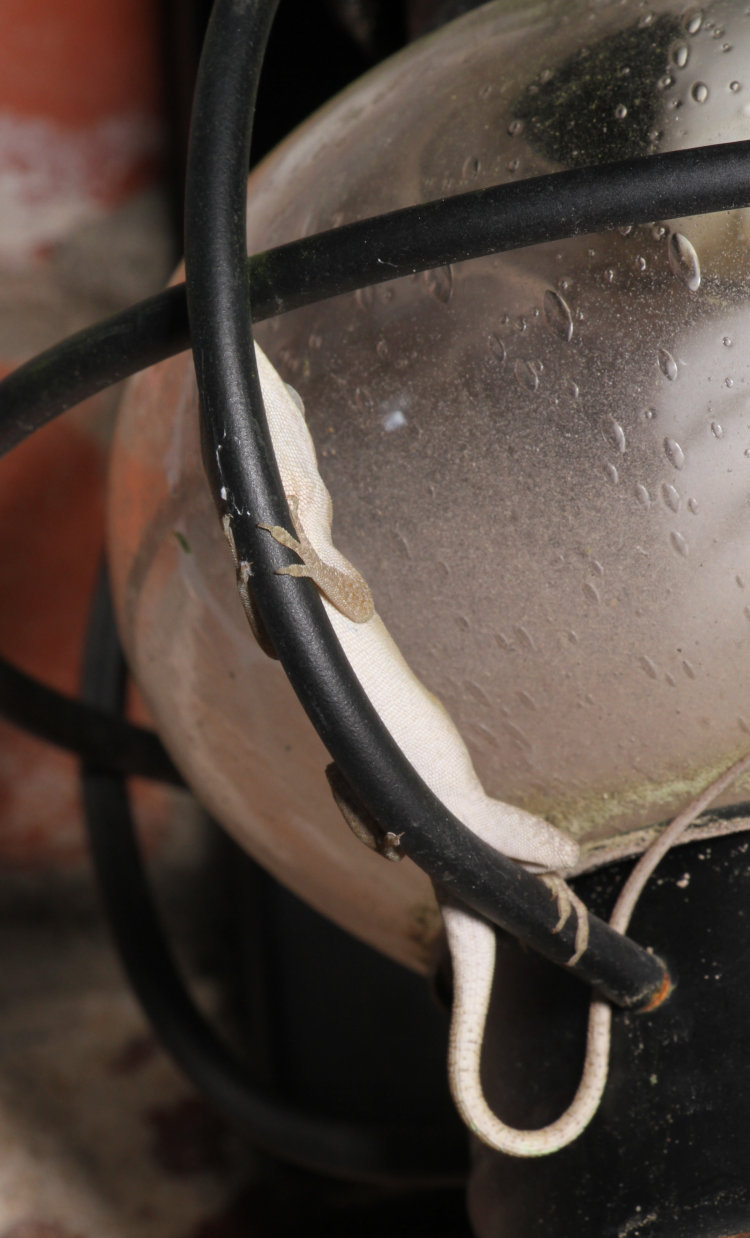
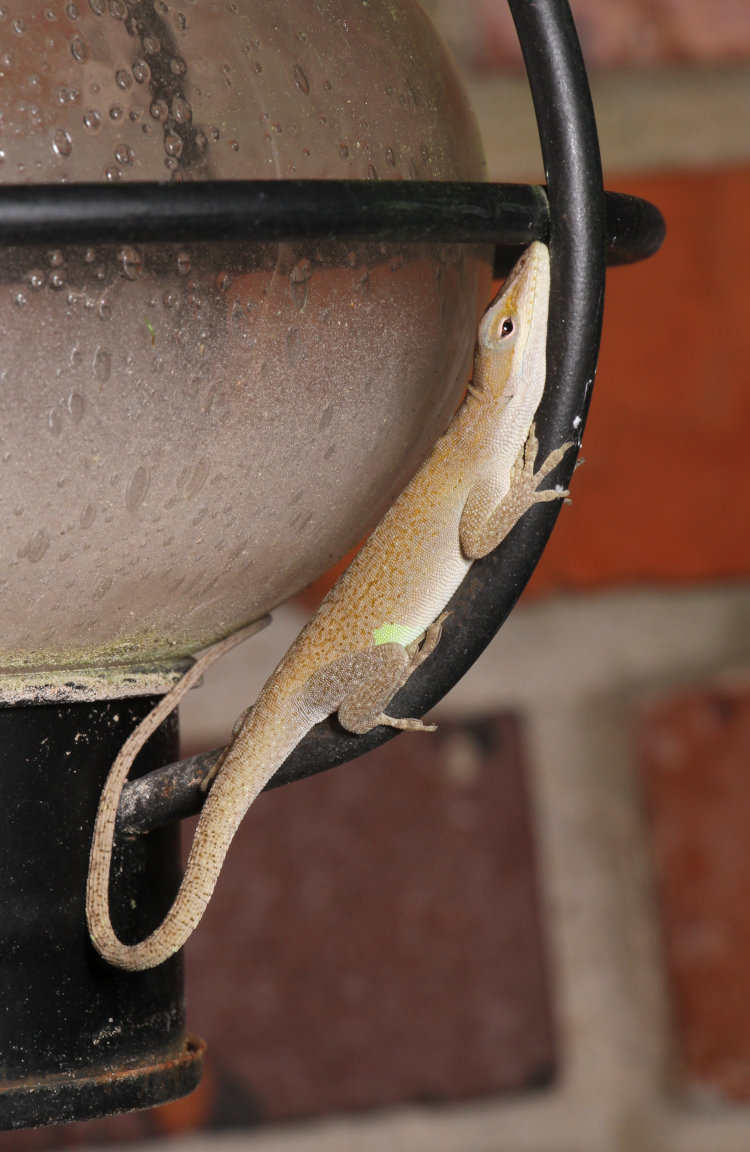
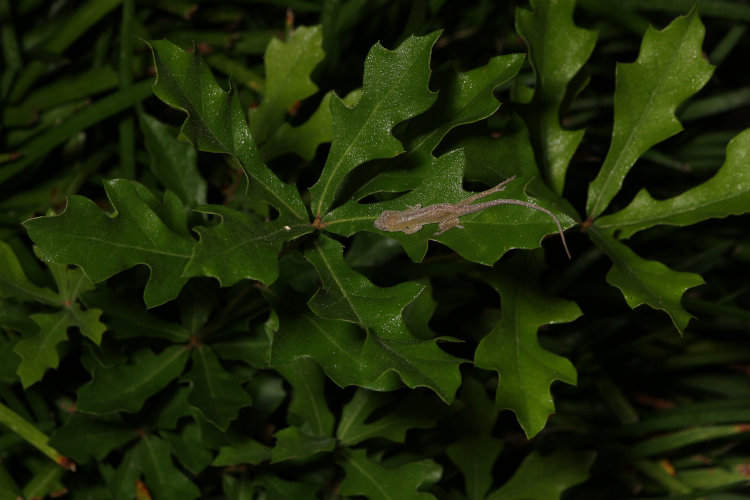
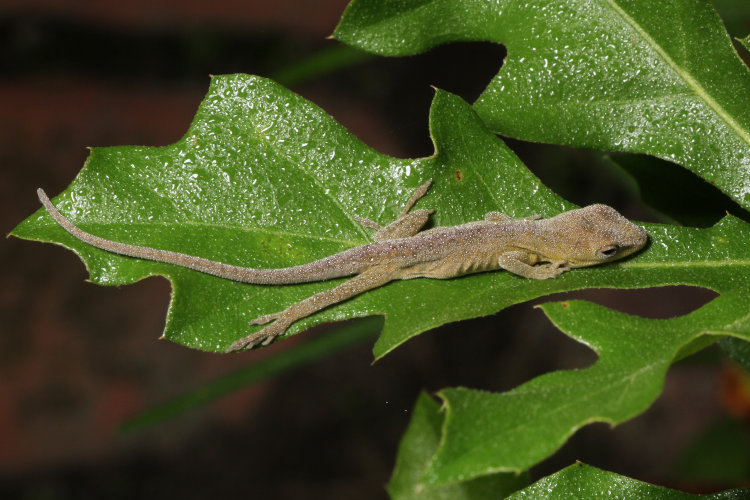
juvenile Carolina anole Anolis carolinensis perched on post with mantis ootheca
I was delighted to see this guy, because this is the first appearance of one of the small, juvenile Carolina anoles (Anolis carolinensis) from last year; true to pattern, they seem to come out a bit later than the full-grown adults do. I know there’s nothing useful for scale here, and this guy was already spooky enough that trying to introduce anything would have prevented any photos at all. But we have still something that we can use, and that’s the mantis egg case/ootheca attached to that branch, right underneath its left hind leg; this is one of the oothecas that I placed this year, and you can see the original smaller stick that it came with as well as the thread that I used to affix this to the branch (which was also placed.) I measured that after the fact, and the ootheca is 35mm in length. That places our subject here at roughly 90mm including that long tail, but the body itself is scarcely longer than the egg case. This isn’t as small as some of the ones I was seeing last year, but it’s less than half adult size, so definitely a juvenile. I did three frames and then left it alone.

Returning home later in the afternoon, I checked back on the odd chance that it was still hanging around in the area, and found something else:

green treefrog Dryophytes cinereus perched on same branch that had hosted Carolina anole earlier
Yep, there’s a green treefrog (Dryophytes cinereus) perched on a fork of the same branch, and they tend to stay put all through the daylight hours. That would mean that I missed it entirely while standing there photographing the anole, and sure enough, it’s visible in the first pic above. This does not make me feel proud of my powers of observation.

In between those two frames, however, I did a quick stop at the NC Botanical Garden, doing some fartsy pics of a few flowers, but mostly seeing how many reptiles I could spot – there were a handful, though of course, how many I missed is now definitely in question.

It’s not like this one was hard to see:

very large American five-lined skink Plestiodon fasciatus, likely pregnant female, basking on boardwalk in NC Botanical Garden, Chapel Hill
This is a pregnant female American five-lined skink (Plestiodon fasciatus) – probably. There is also a southeastern five-lined skink which is pretty much identical, except the adults often have more orangey heads in breeding season. And this one is quite heavy, so the chances are (at this time of year anyway) that it’s a pregnant female, though the girth is not the same as the likely pregnant anole seen earlier. So much of this information is suspect, but how badly do you need to know? All right then.

However, it was out basking on a boardwalk/bridge where both skinks and fence lizards are routinely seen, so not hard to spot if you were looking for it. I waited for someone to pass, already having snagged a few shots and fairly sure that the skink would bolt as they drew close, but it never moved, so I went in much closer myself – I’m probably just over a meter away here without any reaction. Come to think of it, maybe this is just a lawn ornament…

The next one, however, was at least marginally mobile.

juvenile five-lined skink, either American or southeastern Plestiodon fasciatus or Plestiodon inexpectatus, basking on rock wall
Some distance away from the other and much, much smaller, this is a juvenile, but could be either species; the way to tell is by examining the scales under the tail, so this ain’t happening with any subject photographed in situ, since they don’t tend to tan their bellies. This one stayed put briefly, then darted forward about two body lengths and paused again in uncertainty, so I know this was either a living specimen or a damn clever lawn ornament.

Now we get to the true powers of observation (he said in petulant self-defense.)

Carolina anole Anolis carolinensis perched on edge of rain barrel planter
This was at 135mm, so it appears about three times closer than it was when I spotted it. Okay, fine, it’s bright green against dull grey wood with no plants nearby, so not exactly blending in, but it was still a decent distance off in a garden loaded with similarly-colored plants. Listen, just let me have my fantasies, okay?

Going in close revealed that it had likely been disputing territory with another recently.

Carolina anole Anolis carolinensis sporting numerous scars on head from disputes with other anoles
All that scarring on the head is typical of what they receive in territorial battles, and it looked reasonably fresh, and since it’s that time of the year I feel pretty comfortable in saying this – but we’ve pretty well established the level of my bona fides now, so do with it as you will. Just, you know, keep it to yourself…

Just once, part 17

adult male yellow-rumped warbler Setophaga coronata "Myrtle" phase in American sweetgum tree
This one jumped into the lineup when I snagged photos of it only two days ago, and as such, it represents one of the few that you’ll see here that I uploaded photos for, rather than pulling them out of the media library from their previous usage. This also represents one that was a bitch to identify. You see, this is a yellow-rumped warbler (Setophaga coronata,) but there are two variations of this, while apparently not subspecies: ‘Audubon’s’ and ‘Myrtle.’ Nearly every photo you’ll find shows the Audubon’s, which has a distinctly yellow throat, or the juveniles have buff throats. Only The Sibley Guide to Birds shows the Myrtle variation, and the white throat only appears in the adult males. I blew right past it on my first perusal of the Guide because this is only one of seven illustrations of the species. Even the online All About Birds guide from Cornell University has just one image of the adult male Myrtle, and you have to had already found the species to find that image.

adult male yellow-rumped warbler Setophaga coronata "Myrtle" phase in American sweetgum tree
If you have the faintest interest in birds, I have to heartily recommend using the Sibley books, since they’re the only ones that show all variations of plumage – male, female, juvenile, breeding/nonbreeding, different phases – as well as flight profiles and habits, ranges, and specifics of behavior. But alongside that, the online All About Birds guide is pretty slick and remains, naturally, more up-to-date that any book, which is important if you want to know the proper species; my Sibley Guide has numerous red asterisks alongside scientific names (including, now, this one) because they’ve changed since that particular printing. The online guide also lets you hear the specific calls, which is much more accurate than reading, “a short, high-pitched ‘chukka chukka‘ interspersed with, ‘pa-woggy, pa-woggy,'” (okay, I made that one up, but you get the idea.) Though they really do say things like, “Song like Audubon’s but higher-pitched with shorter phrases; tend to sound faster, more hurried, less musical,” [actual description for this particular species] which is of no help unless you’re already intimately familiar with that variation.

All that said, I knew that I’d found a new (to me) species the moment I saw the yellow markings, and was glad to get some clear-enough images of it – it was the follow-through that took so much time.

And then a day later (which makes it yesterday,) I came across this on theChive:

Tweet from Jeff Adams regarding birding and yellow-rumped warblers
‘Course, I’ve been bird-watching since adolescence, but the cool birds, not the songbirds so much. Does this indicate that this is changing? Do I need to start a ‘life list’ now?

One more for Hubble

Bubble nebula from Hubble Space Telescope, courtesy of NASA/esa
The Bubble Nebula, also known as NGC 7635, is an emission nebula located 8,000 light-years away. This stunning new image was observed by the NASA/ESA Hubble Space Telescope to celebrate its 26th year in space.

And so the Hubble Space Telescope was launched 34 years ago today as a joint venture between NASA (National Aeronautics and Space Administration, USA) and ESA (European Space Agency,) and is still cranking out the classics, as seen here. Having a large telescope up above the atmosphere and able to make extremely long exposures has been a huge advancement in our knowledge of the universe (and physics,) and despite newer models like the James Webb Space Telescope, there’s still a lot that Hubble can tell us. But for now (mostly because I don’t want to write a long post at the moment,) we just have a couple of the better images that it’s produced – clicking on them will take you to the higher resolution versions. Above is the Bubble Nebula, NGC 7635, the visible interaction of an active young star within molecular gas excited by the stellar wind of the star itself.

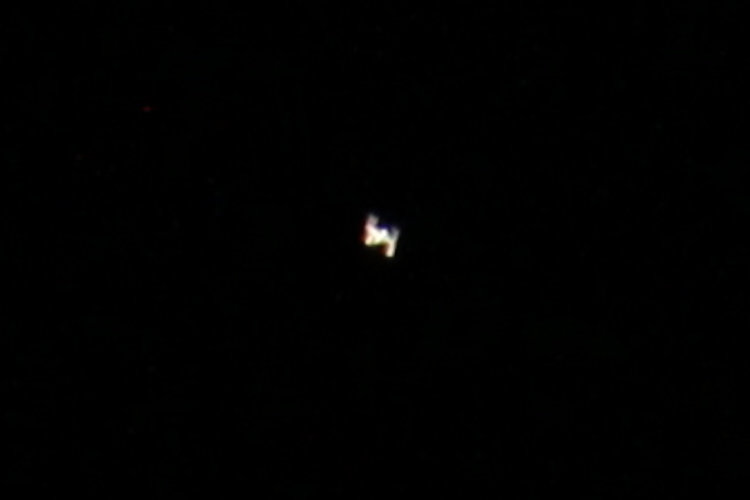
By the way, I mentioned trying to spot the HST with the help of Stellarium, to no avail – apparently it is no longer listed among the many satellites that the program can plot, and I have no idea why not, since I’ve found it that way before. Heavens Above, however, gave me the current location, but it turns out that the HST is only rising above the horizon for my area during the day, so no go on that end. I did catch it one night a few years ago, however.

Carina Nebula NGC 3372 photographed by Hubble Space Telescope, courtesy of NSAS/esa
Hubble’s view of the Carina Nebula shows star birth in a new level of detail. The fantasy-like landscape of the nebula is sculpted by the action of outflowing winds and scorching ultraviolet radiation from the monster stars that inhabit this inferno. In the process, these stars are shredding the surrounding material that is the last vestige of the giant cloud from which the stars were born. The immense nebula is an estimated 7,500 light-years away in the southern constellation Carina the Keel (of the old southern constellation Argo Navis, the ship of Jason and the Argonauts, from Greek mythology). This image is a mosaic of the Carina Nebula assembled from 48 frames taken with Hubble Space Telescope’s Advanced Camera for Surveys. The Hubble images were taken in the light of ionized hydrogen. Colour information was added with data taken at the Cerro Tololo Inter-American Observatory in Chile. Red corresponds to sulfur, green to hydrogen, and blue to oxygen emission.

And this is the Carina Nebula, NGC 3372, a ridiculously complex region visible from the southern hemisphere. The caption gives a hint of this, but the digital cameras within the HST are all monochrome, only capturing levels of brightness. In front of them, however, can be inserted the filters of choice, occasionally for visual colors, but far more often for specific wavelengths of light that may be difficult or impossible for us to see directly. Multiple images are taken under different filters and composited later, usually with false, enhanced colors; the purpose isn’t to show the subject “as it is,” but to divulge information that isn’t readily apparent. This is far more useful to astronomy than dealing with just visible light wavelengths, but it does mean that no matter what telescope you buy, you won’t be reproducing these images or anything remotely like them (some of the wavelengths captured won’t even penetrate our atmosphere.) So while they’re pretty stunning, they’re not “true’ in most senses of the word – they’re actually far more informative. So there.

Pop on over to ESA’s Hubble site and poke around a bit – it’s pretty damn fascinating.

Sorting finds n+8

Just two today – or is it three? How does one count these accurately? I don’t want to get in trouble with the IRS…

adult bald eagle Haliaeetus leucocephalus apparently making noise overhead
This one comes from the same session as these, but I didn’t notice this detail until I had brought the image up at full resolution to see if it retained critical sharpness. I don’t recall the pair of circling bald eagles (Haliaeetus leucocephalus) to be making any noise, but a sequence of images seems to show otherwise; maybe I’d tuned it out, maybe I’d lost it in the wind noise off of the lake. They definitely look more dynamic when the beak is open – and probably more representative of our nation as well. Is he saying something about getting to the moon without using the metric system, you think?

Meanwhile, an image back from the total solar eclipse.

last glimmer of sun's limb as it entered totality during total solar eclipse of 2024
As the sun was disappearing with totality beginning, I just held the shutter release down and fired off a long sequence of images as it vanished; this is the last one in the series. I had only guesstimated the exposure needed (intending to capture the diamond ring) and was well under-exposed, but it does show Baily’s Beads disappearing, and the barest hint of a solar prominence. It’s framed this way for a reason, however, because I then played with the exposure after the fact:

last vestige of sunlight image, tweaked to bring up the outline of the corona around the moon during the total solar eclipse of 2024
I was curious to see if I could make out the outline of the moon in the weak coronal effect, and I could – it’s grainy, but the outline is there. Two more prominences became visible as well.

Now, a small note: I originally edited and uploaded the eclipse post while working remotely on a laptop (of sorts,) but when I got back home and looked at the posted images on my routine desktop computer, I found that I could make out twice as much detail. I’d actually gone into the monitor settings for the laptop, before I left on the trip, and set them for a much better display, though I didn’t have a decent calibration image handy when I did so. My desktop monitor is clearly much better, though, and I’m not sure if this is solely due to being calibrated better, or if it’s a higher quality display – or both. But for your sake, if you can’t make out a faint outline all around the moon in the last image, your contrast or gamma settings could probably stand tweaking. And if you’re a photographer, it’s definitely a useful thing to have these set as well as you can manage.

1 50 51 52 53 54 334