

Monday color. And monochrome. Again

I did the ‘Monday Color’ topic years ago, and a version of this post title too, but it’s time for a revisit – it says so right here in my personal blog topics calendar. Which is a good thing to have if you want to, you know, post regular topics (not looking at anyone named Bugg, here.)

Anyway, the color:

'Little Star' lungwort Pulmonaria blooming at the NC Botanical Gardens
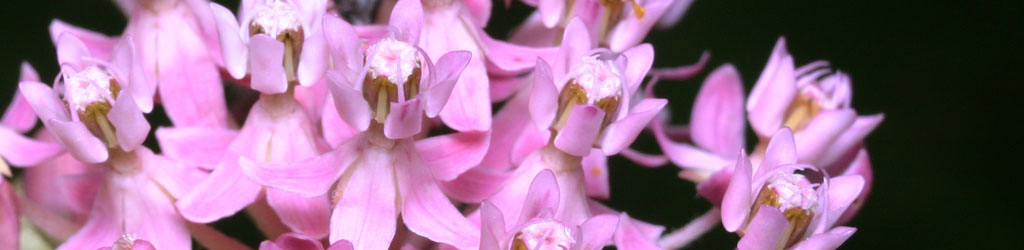
These are blossoms of a ‘Little Star’ lungwort, (Pulmonaria genus I believe) that we found at the NC Botanical Gardens. There still wasn’t a whole lot of things in leaf, flower, or bloom yet, and due to their closing down for reasons unmentioned, won’t be anything more visible for a while yet. As you might be able to tell, the flowers aren’t very big, but they certainly were vivid, which prompted me to try playing around with monochrome again. First off, we’ll go with simply converting to greyscale.

Lungwort flowers in greyscaleBlerk, no. Wholly unimpressive. There was contrast in the colors, but not in the brightness thereof, so neutralizing the color registers made it too bland, which is why it’s often not the best idea to simply convert the image to greyscale, or desaturate, or however you manage it, in-camera or after the fact in an editing program. However, we have better tools in our arsenal, or at least, we do if we’ve been reading the previous posts on the topic or checking out the webpage (I have – have you?)

Let’s try the trick of converting each color to its own layer and looking at those.

Lungwort flowers in red channelRed channel. Nope. Slightly different from just greyscale, but not enough to merit any attention. Moving on.

Lungwort flowers in green channelGreen channel. Almost completely indistinguishable from greyscale, even though the majority of the image is what we’d call ‘green.’ It’s a dark and muted green, not vivid, which means both the intensity of the green pixels is lower and there are a lot of other color pixels contributing to that register. But of course, we should expect a better response in the last channel.

Lungwort flowers in blue channelBlue channel. Yeah, that’s the kind of contrast we’re talking about, and what we should expect if the dominant color in the frame is such a rich blue.

But… it might be considered a bit too intense, going a little bright and losing some of the petal detail, which was actually provided by shadows in the other color registers. There are still tricks to be played, however: with layer opacity, and layer masking.

Imagine if the image is painted on a clear surface, and you can have several of them stacked precisely atop one another (the ‘layers’ bit.) By changing the opacity of the top one, we’re in effect making the layer more and more transparent, like a tinted version, so the details of the layer beneath may show, and the amount of opacity dictates how much of each, so we can blend the two together by controlled amounts. Yet we might not want to blend all of the details between the two, and choose to keep some details from any layer at full-strength. So that’s the layer mask bit.

If you wipe away only part of the image in an upper layer, the layer beneath it will show through there only, so we can selectively have a bit from the top, and another bit from below. When you apply a layer mask, you then paint onto the mask itself with either white or black – white to keep the active layer, and black to ‘erase’ it and let the lower layer show through, but the best bit is that you can put it back by painting in white again, and fog the edges by using an airbrush, and so on.

So what we’re going to do is put the green on top, and drop the opacity down enough to keep some of the petal detail but mostly let the brightness of the blue layer’s petals show through. This also muted the darkness of the surrounding portions of the frame, taking away the contrast that makes monochrome work better, so then we’ll add a mask, in this case wholly white, and then paint the mask in selective areas with a broad airbrush in black, totally eliminating the green layer in those places to let the darker portions of the blue layer show through. It’s easy to make a mistake here, and easy to correct: just switch the color of the airbrush back to white and paint over your mistake, redoing it at will. Now let’s see what we get.

Lungwort flowers in blended blue and green channelsNow we have not as much contrast from the blossoms, but more detail and shaping, while retaining the dark shadows all around because they’re solely from the blue layer – no part of the green layer is visible around the outsides of the blossoms. You can also make it slightly easier by putting the blue layer on top if you like – I did it this way simply because green was already on top (after completely deleting the red channel, of course) but it also made it easier to change the opacity of the green layer to maintain just a bit of detail in the flowers.

So let’s review it. What we have here is mostly the blue channel, but the green is laid over top, just for the flower bits (everything else masked into invisibility,) and then the intact green bits are made more transparent by changing the layer opacity, until they’re adding just a little more shaping to the flowers. All of this can be adjusted to taste, and of course, you can do lots of other effects in images with the same technique: tweaking colors selectively, smoothing out textures or age wrinkles (the way I was first shown how to use layer masks,) and so on. Layers masks are a great blending and editing tool, even if you’re doing that no-no of combining multiple images together to add details that were never captured in the first place. If you haven’t tried this yet, well, now seems like a good time, right?

And yes, I still prefer the color version too, but this was a good exercise, so I chose to illustrate it.

Less topical

Within a few days, I got a ton of photos to post, and then of course not a lot of time to post them, which is the way it goes. There will be another, image-heavy one to follow this, all tightly within a particular genre, so right now I’m doing the easier, briefer post. Not because I’m lazy, but because the other will take more time to prep and I don’t have as much right at the moment. Plus that whole build up thing.

sharp-shinned hawk Accipiter striatus surveying area from perch
Last year I started observing some sharp-shinned hawks (Accipiter striatus) that appeared to be in courting behavior very close by, along with what looked like a developing nest in the neighbor’s yard. That never came to be, but again this year, there is at least one hanging out, and I’m pretty sure I’ve seen a pair very close together, so we’ll just have to see what happens. I tend to shorten the name to “sharpshin” (because I am lazy,) but I’m making the effort to be more accurate here, at least initially. This one was roughly 80 meters off through a thicket of trees that will be much harder to see through within a few weeks, but has appeared in that region multiple times. Sharpshins are accipiters, fast and maneuverable medium-sized hawks that catch other birds in flight and have the talons to do it; you can get a glimpse of the long and thin toes in this image.

American sweetgum Liquidambar styraciflua tree showing old seed pod and new budsThe weather became remarkably warm for a few days, then abruptly turned much cooler as a front pushed through, demonstrated last night as I grilled dinner on the back deck, first time this year, then forgot about leaving the grill open to cool until I heard the pouring rain. Dashing out there shirtless, I was treated to the coldest rain I’ve ever experienced, the water vastly colder than the ambient air but rapidly bringing it down, and the temperatures remain lower today, yet the spring burst has already begun. Here, an American sweetgum (Liquidambar styraciflua,) still retaining some seed pods from last year like the tree with the sharpshin, is also budding out with new growth, so I had to go slightly fartsy. It happens at times, don’t let it bother you – I’ll be back to critter portraiture soon enough.

The sunsets remain as unpredictable as always, at least for this area, and I keep seeing what looks like promising conditions that get my hopes up and impel me to go out to the nearby pond for photos. And then, in mere minutes as the colors would be developing, the clouds scatter impudently and the display is rather lackluster, a pattern that seems to hold true more often than not. The moment that I get disillusioned with this and just shrug off the impending sunset is when, naturally, the colors will burst forth and I’ll be there without my camera.

[I also have to note how many decent sunsets have occurred when I’m at work – the other work – unable to take advantage of them. I’m sure this is simply the bias of noticing the frustrations, not to mention how many I might have missed because I was paying no attention indoors, but it still irks.]

With that lead in, we have the sunset pics from the other evening, when the clouds scattered impudently and the display became rather lackluster.

diseased American sweetgum Liquidambar styraciflua tree against weaker sunset sky
The inclusion of yet another sweetgum tree helps disguise the fact that the colors didn’t do much, but can’t hide the jet contrail of course. And yes, you’re seen much this perspective before, at least if you’re a regular on this blog which means you actually haven’t, but there are only so many angles to catch sunset from there – something about the Earth only spinning the same way all the time. And the same can be said for the next shot. I mean, not about spinning the same way even though spinning is involved, but for too many shots like this. I still like them, okay?

tiny spider silhouetted against sunset skies from bald cypress Taxodium distichum tree
I like the bald cypress (Taxodium distichum) trees, several of which line the pond’s edge, but did you immediately notice the tiny spider? I shoot these so I know they’re there, and thus never know how easily someone else spots them.

unidentified tree blooming
There is a small tree at the corner of the gate by the house that is slightly annoying throughout the summer months, because it has long thin branches that droop and thus get in the way as we go through the gate, but in this season it blooms, for a few days only, with extremely subtle tiny white flowers (8mm maximum) that nevertheless have a wonderful fragrance. I have once again tried to identify it and failed, probably because I’m using a database of NC native wildflowers and it’s not a native, instead being landscaped. If you know, feel free to submit the name of the plant along with five dollars for a processing fee and I’ll be sure to include your name in a future post.

I did some nighttime exploring of the backyard a few nights back, and among other things that will appear later, I was finding the evidence of the vernal re-activity (before the temperature dropped, anyway.) Most notable was the very pattering discreet sound like the rain was just starting, even though it wasn’t, and I stalked it around the yard before realizing what it was.

American giant millipedes Narceus americanus foraging in leaves
These are common as muck around here, most especially in our yard, and are known as American giant millipedes (Narceus americanus.) True to form, they can get in the range of 100mm in length, thicker than a pencil, and it was their foraging and exploring in a yard full of dried leaves that I was hearing. There are literally thousands within a small plot, impossible to avoid, and for the most part harmless; handling them might get them to discharge a substance that stains the skin and that some people apparently react to, but it’s never affected me in the slightest, and most times they don’t even bother. But realizing that the soft sounds in the leaves were caused by their activity became slightly creepy (The Girlfriend emphatically denies the ‘slightly’ bit.)

unidentified beetle still semi-encased in winter mud
On a fencepost, a wobbling wart revealed itself to be an unidentified beetle, probably a type of weevil, that still sported some of the mud from its winter hibernation. Hey, you try to clear off dried NC clay with legs situated underneath your broad abdomen. Even attracting the attention of nature photographers may not be any help…

At the time of this particular night’s exploration, the pollen clouds from the hated longneedle pines was just starting; within two days it had exploded, so last night’s rain was a welcome factor in helping clear it away, though the season is far from over. The headlamp revealed my next subject because of the distinct reflection of the eyes, and it seems I have to do at least one of these every year, so here it is.

wolf spider Lycosidae showing early pollen evidence
I have yet to determine how to identify the various wolf spider species in the area, and it may well take careful examination of undersides and hind leg segments and rot like that, which I wasn’t doing when sprawled in the (crackling) leaves going for the portrait, so we simply have the Lycosidae family right now. This is a female, a fairly good-sized one, so likely to produce an egg sac before too long – that is, if she isn’t discovered by the frogs inhabiting the backyard pond nearby. She was a little sluggish that evening, hiding under a leaf as I approached but then crouching cautiously as I removed it instead of seeking further shelter, so I was able to capture the pollen beginning to decorate her exoskeleton. Body length was probably about 30mm.

And I’m not going to close with the creepiest photos, so here’s some Carolina yellow jasmine (Gelsemium sempervirens) blooms found at the NC Botanical Garden this past Friday, their last day open to the public for the foreseeable future. The same visit produced a lot of other photos plus some video clips, so be patient – I’m working on it.

Carolina yellow jasmine Gelsemium sempervirens blooms at NC Botanical Garden

A mere curiosity

I had found the odd detail in the image that I’m about to show you some time back, and put it in the blog folder for the slow period, but so far hadn’t gotten to it. Now that it’s getting more springlike out there, I should be able to find current photo subjects, but it’s kinda grey at the moment, so we’ll go ahead and feature it – you know, to prove that my previous post was no joke.

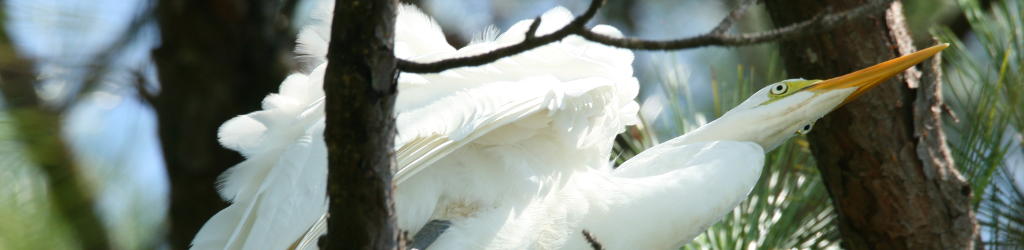
Anyway, back in October of last year when I took these, I posted a frame very similar to this one, of a great egret (Ardea alba) perched in a tree.

great egret Ardea alba perched in tree
This is full-frame with the long lens, but the egret was being fairly cooperative, making our cautious approach seem almost silly – better safe than sorry, however, and the slow stalking that we did shouldn’t ever be considered wasted effort. It was when I was examining the resulting photos at full resolution for critical sharpness that I saw the little detail, and realized how odd it looked:

same image showing eye detail
I’ve got more than enough bird photos (not true – there’s never enough,) and don’t think I’ve ever seen an eye quite this displaced. Most birds have eyes on the sides of their head but a very narrow and tapered beak/face, so they have two kinds of vision: the split, both-sides-at-once kind that allows them to see a huge amount of their surroundings, and the two-eyes-focused-on-same-subject kind that permits depth perception directly in front so they can hunt accurately. To that end, the eyes do have some ability to swivel in their sockets, but typically, we see only the barest hint of it and mostly just find the pupil pretty much centered in the eye. Well, okay, it always is, but you know what I mean.

I see this and find it just looks wrong, a bit unhinged. I’ma have to ‘shop it back into place…

Because I’m your bud

Just to let you know, this blog is a haven, a safe place as it were (as stupid as that concept is, and as much as I despise the whole culture of delicate flowers that we seem to be breeding,) where you will never hear any mention of the C-word. Either of them, actually. I’m beginning to suspect it is the last fucking site on the webbernets to be that way. The content here will remain as lame as it’s always been, devoid of current references to… you know… without any attempt to offer any reflections or memes or personal anecdotes that have already been done to death. Feel free to tell your friends.

Glad to be of help.

On this date 12

unidentified spring frog, likely a cricket frog, in algae-laden pond edge
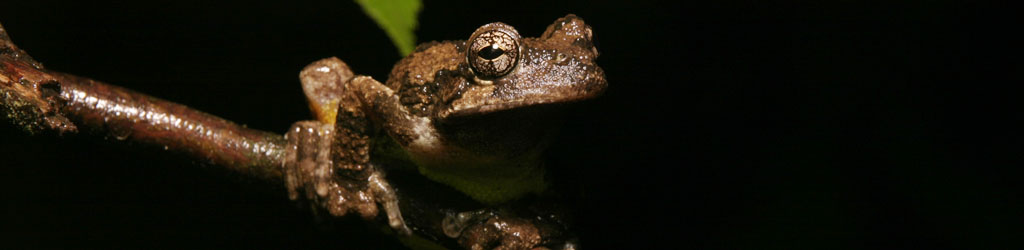
This week we have more contrasting images, beginning with this unidentified frog, almost certainly one of the varieties of cricket frog found around here, chilling (or more likely warming) at the edge of the water in a local park – I liked the myriad bubbles trapped in the algae and weeds that formed the water’s margin. This is the time of year we begin hearing the high-pitched creaks and beeps of the chorus frogs, sometimes called peepers, though they can be exceptionally hard to spot even when you know you’re right on top of them. Part of this is their tiny size, often less than 3cm in body length, part of this is their camouflage, and part of it is their habit of finding good hidey-holes among the vegetation and mud. I don’t recall the exact circumstances of this image, given that it was nine years ago and one of dozens that I shot on that foray, but it’s probable that I’d spooked it from the edge and this is where it paused after its jump into the ‘water.’

Not quite so nice three years later in 2014.

budding almond tree encased in ice after freezing rain storm

almond tree leafing out in 2020I had initially chosen a different frame, but then spotted the one above and liked the story more. This abstract tableau is one of the buds on my unexpected almond tree, one that had sprouted randomly within our compost pile and I transplanted into the yard. They don’t normally look like this of course, because usually the freezing rain storms occur well before the tree would ever bud out, and I was a little concerned that this would be responsible for stunting or outright killing off the tree. It proved much hardier than that, however, and has even survived multiple transplants, including the move to the new place. This year (meaning 2020,) it budded out early and is presently leafed out nicely – not fully, but certainly making a good show of it, as you can see from the frame to the left, taken yesterday.

And one more from that same ice storm in 2014, below, because it’s much fartsier – it was my original choice, from the bulbs that The Girlfriend’s Sprog had planted.

orchid encased in ice after late freezing rain storm

Still more

I have a small collection of photos from two recent outings to throw down here, slightly scattered – nothing exciting, but a fairly good impression of what I get up to at times. First off, I have to provide some as an illustration. Not quite a month ago, I posted about the enormous rise in water levels down at Jordan Lake, without a distinctive way of measuring just what they’d been. Last Thursday’s trip to the same lake provided a little more of an idea with a curious couple of details.

fallen trunk trapped between standing trees showing damage from rising water
What you see here, spanning the frame from side to side, is a tree that had fallen among a few others, getting sandwiched between several standing trunks but still able to move freely when the water level rose. Its motion up and down, especially with wave action, left fresh signatures on the trunks of the standing trees flanking it.

Al Bugg standing alongside damaged trees for scaleThat wasn’t enough for a good illustration, so I sent the Immeasurable Al Bugg over to pose alongside the damage as a standing ruler. He’s about my height, so 182cm or so, which places the upper reaches of the water at least three meters from the ground here, which was still above the waterline. Bear in mind that the trunk would have sat very low in the water, and the rubbing damage likely sits a little below the water’s peak level; in other places, there were indications that the water made it as high as four meters above normal. That’s a hell of a lot of water, especially since the lake is 26 km long.

These photos, by the way, were part of my lens tests, even though I had the 150-600 affixed on that trip far more often. You see, my carry-around lens – well, okay, that’s a misnomer, because I carry around at least four lenses at any given time, so let’s just say my generic ‘average’ lens, intended for a broad range of uses – was until recently the Canon 17-85 IS that I’d repaired, which is a fine lens and generally pretty good for my needs, except for being a little on the short side. Basically, I wanted a bit more focal length for versatility, and as I’ve said, I don’t buy new too often. With the tax return this year, I shopped around until I located a Canon 18-135 IS STM at a decent price, and that arrived in the middle of last week, so I got a couple of brief opportunities to test it out around the local pond when the weather was nice, previous to the lake outing.

pair of Canada geese Branta canadensis in pond
There was another purpose in obtaining this lens, and that was my increasing forays into video, which is where the ‘STM’ part comes in. It refers to the autofocus motor, which is a new ‘stepper’ motor, very smooth and almost completely silent, so it is far less likely to intrude into the audio portions of any video recording I’m doing; this is helped by also using an external mic rather than the crappy internal one provided by the camera body. The Canon 18-135 comes highly recommended for both still and video, and is almost the exact same size as the 17-85 (before full extension, anyway.) Above, one of the lens tests at 135mm on a pair of Canada geese (Branta canadensis) in the nearby pond, full frame, while below is a full-resolution inset.

full resolution crop of same frame
I honestly can’t complain about those kind of results.

I have yet to do any video tests of it, but those will come soon enough. While out, I had the opportunity to try out the ‘macro’ function, which will not get much use from me, mostly because I have the bestest macro lens in the whole wide world already (the Mamiya 80mm macro intended for the M645 series, adapted for use on Canon bodies,) but you know, in the interests of thoroughness…

unidentified damselfly on water reed, full frame
A word about the ‘macro’ designation on the vast majority of lenses anymore: horseshit.

Okay, a few more words. ‘Macro’ doesn’t have any specific meaning to lens manufacturers, so they’re kind of free to interpret it as they like, and of course saying a lens can do macro work increases its value. In most cases, it only means the lens can focus within two meters, and may make as little magnification as 1:5, which isn’t terribly close. Dedicated macro lenses can usually do 1:1 magnification and are optimized for flat field work, meaning they can photograph a flat page or surface with consistent sharpness and little distortion right to the edges – this is mainly for copy work, which I have done only once or twice myself and am not really worried about, but that’s what makes dedicated macro lenses so expensive. And this lens will never get as close or as sharp as what I normally use, but for a casual attempt, it wasn’t too shabby to be honest. That’s the full-frame above, and a detail inset below.

detail inset of same image
Again, I’m not complaining, even though I have lenses that do better. If it’s not evident from the other details within the frame, the damselfly measured about 30-35mm in overall length.

Now, while I’ve done exercises such as only using one lens during a session, or even one focal length, I wasn’t that strict with myself while the conditions were so nice, and used the 100-300 L as needed, such as on the yellow-bellied slider below, one of countless turtles taking advantage of the pleasant temperatures.

yellow-bellied slider Trachemys scripta scripta basking on stump in pond
I also got a collection of frames of a brown-headed nuthatch working on a nest hollow, this time with no female in evidence, but between the dim lighting where it was and its frenzied activity, those shots didn’t pass blog muster, especially when I got much better photos just a day later.

And finally, a slightly surprising find in a region of an overflow channel; the pond itself doesn’t have an adequate drain when we have heavy rains and it overflows its banks fairly frequently, so frequently that it has a serious channel cut across a meadow for the water flow, and portions of this retain water most of the time. Far too small to be considered ponds in themselves, they’re more like glorified puddles, but the amphibians like them.

American toads Anaxyrus americanus during egg laying and fertilization
I spotted the random loops of the egg strings first before realizing that the leaves in their midst weren’t, and sprawled on the banks for a better vantage. These are American toads (Anaxyrus americanus) and they’re busy producing those coils of polka-dots. Well, okay, the female produces them, the male fertilizes them as they appear – credit where it’s due. I had been thinking it was still a little early for this, but on checking last year’s posts I found that the major breeding session that I’d caught then had occurred just about a week later in the month. Curiously, The Girlfriend and I just did a weekend trip out to that same area with not a toad to be found, nor any eggs – all a matter of timing, I guess.

Right now I’m considering collecting a small handful of these to keep in an aquarium, in the hopes of photographing their emergence as tadpoles before I introduce them into the backyard pond; considering that the puddle here isn’t going through too much water turnover at the moment, there likely isn’t a lot I’d need to do to maintain favorable conditions until hatching at least. Hmmmm.

Odd memories, part 24

A lot of people have stories of this nature, and there’s a good chance you’re tired of hearing them, so I’ll try not to make it too long (yeah, this is me, so good luck with that,) but this is also distinctly me, and may give you an insight into the depths of my mind. Which you may regret. Seriously, best to just skip to the next post, or another website entirely.

About 24 years ago or so, I was scheduled to have my wisdom teeth removed, since three of them were doing that serious impacted bullshit, and this was going to be dental surgery for which they would have to knock me clean out. Mind you, this is the only time in my life I’ve ever been anesthetized other than a local, and my experience with local anesthetics previously was that they seemed to have less effect on me. So on the day of the surgery, lying back in the chair with the IV drip in, I realized that I was remaining perfectly lucid (or as lucid as I ever am, which is perhaps arguably less than perfect, but nominal, anyway.) This state remained as various people prepped, and I was about to bring it up to someone when the surgeon entered the room and introduced himself. As he went around behind my chair, he adjusted something back there with a faint rattle, and suddenly I felt a chill in the arm with the IV line. Ah! They’d only had a saline drip going until the surgeon opened the anesthesia valve. Okay then.

It was only a minute before my vision began to blur a bit, but more noticeably, the ceiling tiles (no I wasn’t counting them,) started to shimmy, sliding upwards a little before jerking back suddenly, over and over. I recall asking the surgeon if he knew why there was only a vertical component to the hallucination and not a horizontal one. He admitted that he did not know, but I was alert enough to recognize the amusement in his voice. That’s the last memory I have of consciousness.

Except for one bit. I knew wisdom teeth can be a pain in the ass, and often have to be fragmented to be removed, and I recall my head jerking sharply as they hammered on the chisel to break one of them up. There was no pain or discomfort involved, no distress at all, just the awareness of the action, and I thoughtfully put one hand up under my jaw on that side to help brace it. It was the same kind of thing where you wake enough to realize that your arm is asleep and shift to correct this before dozing off again. How much this move assisted them, I cannot say, but there was no reflection of this on the bill.

After the surgery, they encouraged me to just take it easy as the anesthetic wore off, and I was determined to speed this along, so I got out of the chair while no one was in the room and began walking around to burn it out of my system – such a thing likely doesn’t work, but it seemed like it should. There was music playing, and as a favored song came on, I’m reasonably certain I was dancing to it. Now, I don’t dance. Not ever, even when fully coherent. It probably wasn’t pretty.

I considered myself quite alert at the time, but looking back on it the following day, there are large portions of the post-surgery period that are simply blank, including whether I actually paid for the meds at the pharmacist on my way home (no I wasn’t driving – they insisted on that, for some reason.) I certainly must have paid, since I’m sure they never hand over the drugs until the payment is made and I did have them, but damn, someone on the ball could have probably bilked me into emptying my account.

Makes me wonder how hard it is to target e-mail towards people recovering from oral surgery…

Avian anecdotes

eastern bluebird Sialia sialis on pine stub
The temperature is beginning to resemble spring, even if only a few things are budding out right now, and the Immutable Al Bugg and I did an outing to see what was in the area. I was suspicious that the osprey and such had not yet migrated back into the region, but there were a handful of birds to be seen, including some surprises. The pic above is not one of those surprises; eastern bluebirds (Sialia sialis) appear early and are visibly active in search of nest sites right now, so we managed to snap a few poses as this male observed us to see if we would move on soon.

The morning remained resolutely overcast for several hours, far from ideal conditions, and this meant that many of the birds we spotted would be mere silhouettes against the sky without exposure compensation, and sometimes even then. The capture below was initially too dark, even with 2/3 stop overexposure, but then again, I suspect this camera body runs about 1/3 too dark at ‘normal’ exposure, so call it only +1/3 compensation which wasn’t enough. Thus it’s been lightened a bit in post.

likely second year juvenile bald eagle Haliaeetus leucocephalus in flight
This is what a juvenile bald eagle (Haliaeetus leucocephalus) looks like, seems to be 2nd year to me – they don’t get the coloration we’re all familiar with until their fourth year or so. It was a quick pass, but reasonably close, so I’m good with it. And a hint of things to come.

The initial spot that we checked out on Jordan Lake was slow, but this was not a surprise due to the overcast and chilly conditions, so we moved further south to examine another spot. And we’ll stick to bird photos for this post; there will be another with various other pics following shortly.

As we headed out along the lake edge, I could see a perched bird in the distance that I took to be an osprey, even though it seemed slightly odd, but it wasn’t until I got back and examined the photos in detail that this vague suspicion turned out to be confirmed.

juvenile bald eagle Haliaeetus leucocephalus likely third year perched on sweetgum tree Liquidambar styraciflua
This is another juvenile bald eagle, probably 3rd year, seen from the back; the dark stripe along the eye is now becoming visible. They really do change a lot until full adulthood. This was shot, by the way, hundreds of meters distant at 600mm and cropped further, and soon after this frame, the eagle flew off behind some trees and wasn’t seen again. By us at least.

broken trunk with old woodpecker nestsThere were a handful of ospreys to be found, but only flying level at a moderate distance at best, against overcast skies, and no hunting behavior to be seen, so I’m not posting any of those shots since there’s much better to be found here. We hiked out to a nest location from two years ago, hoping to perhaps see some nest-building or courtship behavior (since raptor nest sites are often reused), but the nest itself was gone entirely; my suspicion is that woodpeckers had also nested in the same dead tree, and their hollowing activity had weakened the trunk to the point that the top broke free in some storm since then. There was at least one trunk that matched such conditions, shown here later in the day after the sky had cleared because we needed more color in this post; I just can’t be sure that it was the same one that we’d seen the osprey nest within two years ago.

However, while skirting the lake we heard some telltale faint drumming sounds. The previous day I’d been photographing a brown-headed nuthatch excavating a nest hollow, much as a woodpecker does, and the faintness of the sound and the apparent proximity were pretty strong indicators of this. It took only a moment to find the culprit, who wasn’t too concerned about our presence. I’d turned away after a few frames, so it was Mr Bugg that spotted the female coming over to make the family portrait, and these are faintly out of order because I know how to write posts.

pair of brown-headed nuthatches Sitta pusilla at nest site
Brown-headed nuthatches (Sitta pusilla) really have no discernible differences between male and female (on sight anyway,) but I’m going to assume the male is the nest builder since that’s typically the way among birds, one of the ways they convince the females that they’re good dad material. Curiously though, the female seemed to be already committed, long before the nest was complete, because she was nearby and giving alarm calls if we moved incautiously, but it only took a step or so back and about 20 seconds of motionlessness to convince them we were harmless. Again, longer focal lengths here and tighter crops for detail, but really, we’re talking only a handful of meters distant. Close enough to get some real detail.

brown-headed nuthatch Sitta pusilla posing proudly along nest hollow
This is the full frame at 600mm, but I said some real detail.

brown-headed nuthatch Sitta pusilla removing excavated material from nest hollow
Same image, tighter inset. No, he’s not feeding young, but removing wood pulp from the hollow. Check out that feather detail. Ya gotta love the cooperative subjects.

By the way, if you spotted the weird ripply effects above and to the left of the bird, those aren’t editing artifacts (I’m better than that,) but a twig or vine much closer to the lens than the nuthatch is; this is the way they get rendered by aspherical lenses. We were shooting through small gaps in all the surrounding branches.

A little later on we heard faint drumming again, and paused to try and locate it – we’d spotted several woodpeckers in the area on previous trips. It sounded very low to me, and I crept forward to see if a suspicion was correct – at times like this we use hand-motions to avoid speaking, both to prevent alerting other species to our presence and to help us hear their own sounds. After a minute, I determined that the sound was coming from the short remains of a dead stump right smack in front of us, like less than four meters away. I cautiously circled it until I found three little excavated holes lined up vertically, with the sounds definitely coming from one of them, and we stood and waited. This kind of thing tests your muscles, because long lenses are heavy things and you want them raised to shooting position, both to snap off a shot quickly and to not have to move them around obtrusively when something does show. Meanwhile, the sadistic snot within was staying busy, digging away, without showing his little beak.

Eventually, he burst from the hollow and had a quick conversation with the female in the branches overhead, and we backed off slightly and held still. Outside of their crucial danger line now, the male quickly returned to work while the female watched without apparent concern. The male did, however, check outside the hollow a lot more often; even though we were silent, the shutters were still making noise very frequently.

brown-headed nuthatch Sitta pusilla looking suspicious
I posted this one for the expression, since he looks so suspicious, but since he immediately dove back into the nest hollow it isn’t an accurate impression.

brown-headed nuthatch Sitta pusilla in nest mouth
How about this one? Nice detail shot? Or maybe one framed in their doorway?

brown-headed nuthatch Sitta pusilla head in nest opening
Just so you know, each image on the blog gets a description in the meta info, which helps search engines find them, and I include the scientific name as well, but I’m getting damn tired of typing “brown-headed nuthatch Sitta pusilla.” However, once more, as we back off to full frame of this same image just to show you something.

brown-headed nuthatch Sitta pusilla head in nest opening full frame
It isn’t perhaps as distinctive here as it is in thumbnails as I’m sorting, but the shadows of the background trees and the overall color makes it seem as if the trunk was standing very close to a beige wall instead of, you know, a fully wild shot in a stand of trees just in from the lake’s edge. I can take you to the exact location if you don’t believe me.

Eventually, our time ran out even as the sky cleared, with too few species making an appearance and nothing very scenic out there yet – the new growth is coming soon. We were driving back, along another spur of the lake, and I spotted two big birds wheeling around directly over the road in front of us. Often this spells vultures, which we see plenty of, but as I caught patches of white on them I started to think ‘osprey.’ A moment or so later, as the white areas became more evident, I realized we were seeing a pair of bald eagles playing tag, and we passed almost directly under them. We were on a bridge, with no good shoulders on the road afterward (welcome to North Carolina,) so I quickly turned into a fishing access lot which doubled back almost to the point where the eagles had been seen. In the time this took (adding in the time to get the equipment out,) they were no longer in evidence, but soon made a brief appearance as they ceased their circling and flew off further down the lake, allowing just a couple of frames at distance as they departed.

pair of adult bald eagles Haliaeetus leucocephalus departing in distance
Considering how rarely I’ve seen eagles around the lake, despite knowing they’re around and being told the “good areas” (heh!) to spot them, finding four in one day (granted, in three separate regions) is an auspicious start to the spring, at least. Now we’ll just have to see if that’s misleading or not.

On this date 11

First off, we’ll start with the calibration image. Below is an 18% grey ‘card,’ a fully-neutral image that camera exposure meters are specifically set for, representing the average in light levels for images. Adjust your monitor so that this appears to be the most medium-toned, colorless image that you can, and we’ll go to step two.

18 percent grey image, almost
All set? Any imperfections now visible in the image are the fault of your own monitor or video driver, and should be dealt with accordingly.

Okay, fine, I’m lying, sue me. If your monitor is adjusted pretty well (and you’re not using a smutphone,) there should be something visible within the image. This is actually a mildly-modified version of an image that I’ve had sitting in my blog folder for quite a while now, originally brought in for long-forgotten purposes, that I played with a little to have something to post for the lean winter months. And then after I tweaked it, I checked the original date and realized that it would fit into an ‘On this date’ post in just over a week hence. So here we are.

Really, all I did was drop contrast a little from the original, which was shot in dense fog over a wetlands dam – the original looks like this:

Canada geese Branta canadensis in very dense fog
But the bit about the 18% grey calibration is actually pretty accurate, because the camera adjusted exposure to meet this programmed standard – in reality, it was probably a bit lighter than this, but that’s really hard to say because it’s all relative, isn’t it? It all depends on how your eyes have adjusted and where you’re looking and how bad your hangover is and all that jazz. But if you’re looking hard, you should be able to see a pair of Canada geese (Branta canadensis) on a rocky shore. If you look very closely right alongside one of them, there’s evidence of a male mallard (Anas platyrhynchos) too, but it doesn’t show well at this resolution – it’s barely discernible at the full resolution version.

A quick word about 18% grey calibration. Cameras do not, of course, know what they’re seeing or what it’s supposed to look like, so they’re programmed to set exposure for the most common situations, the ‘average’ scene, which has a nice mix of highlights and shadows. There are plenty of situations – not this one – that do not fall into this average, and trusting the exposure meter for them means the image ends up looking too dark, or too bright. So recognizing these conditions is important for any decent photographer, and it’s one of the primary facets that I cover with my students (and more than a few times here on the blog.)

Oh, yeah – this is from 2006. I left this shooting locale with 2/5 of a tank of gas in the car, got a Belgian waffle for breakfast and left a $1.45 tip, and read pages 205-232 in Terry Pratchett’s Thud! when I got home. I remember it like it was yesterday.

Just a little nudge

kayaker on Jordan Lake against sullen skyThe image here was originally shot on slide film, many many years ago, and I think I’d scanned it for the Sunday Slide posts that took place back in 2017, but never used it then, and it’s been sitting in the blog folder ever since (far from being the oldest in there, too.) The thing is, I’ve always liked it, but felt there was something just a little amiss. It’s the kind of abstract that largely stands by itself, yet didn’t quite feel strong enough to throw up as a random pic, nor was it considered for any of the end-of-month abstracts because I try to use something current for those.

Now, a word about my habits. When scanning slides, I was always striving for the most accurate rendition of the slide itself, for multiple reasons. The first is, representing it without any editing or tweaks shows the real image captured, the skill of the photographer and all that – no corrections after the fact, no ‘retouching,’ blah blah blah. But there was also the matter that any of my slides could be sent off to a publisher or editor, and if I misrepresented them in any digital media, this implied that I needed to correct my work, and might even lose the sale if they found the original was not what they were after. So I’m comfortable saying that this is as close to the color register of the original slide as I could manage, with all the little variables that come in there like current monitor calibration and the color of the light source used to view the slide itself – really, ‘accuracy’ is a fudged concept throughout photography, no matter what.

And with all that, there’s a definite magenta color cast to it, though whether this is perfectly accurate, the water reflecting the colors of a sullen sky, or if the film itself had undergone a color shift through excessive heat or something, I cannot say. But this is what was preventing me from feeling very comfortable with the image; some people might like the color register, but to me it looked more like the white-balance was off, or that I’d done a bad job scanning the slide (perish the thought!) So there it sat in the folder, just… not quite right.

Things change. With digital images, little alterations (and some not-so-little) are easy to do and thus no longer frowned upon, and an unwanted and perhaps unrealistic color cast is a liability of film, not a trait. After all, anyone can pick their own base color and contrast and saturation settings in-camera, to say nothing of post-capture editing, and while there are those that can easily recognize an unrealistic color register in an image and know it was altered, there also remains no reason to retain an unrealistic hue when it’s so easy to correct. Even if it isn’t actually unrealistic.

What I’m saying is, a mindset that I’d developed with good reason many years ago was suddenly found to be almost pointless, and I shrugged and tweaked the color register the other day – shameless retouching, from an earlier standpoint, but trivial corrective editing from a current one. And what a difference it made.

same image with more realistic-seeming color register
Maybe it’s because I really don’t like magenta, or maybe it’s because I couldn’t help but feel the color register was off and this grated on my editing skills, but this version feels a damn sight better – the clouds themselves certainly look more like what we expect. The idea, to me at least, has become more a deeply-hazy day rather than an impending stormy one, which fits more with that glitter trail. The isolated position out in the middle of the lake seems a little less dire.

And as I type this, I realize that there’s a subtle aspect that affects how I, and I alone, view it. Because I know where the nearest dock was, the precise distance, and in which direction – but you don’t. So your impression might be entirely different from mine.

Which is one of the things that I find cool about photography. Different people get different impressions, and the photographer’s is always tainted by their knowledge of the conditions and locale, things not evident from the image itself. Dismissing them can be difficult – actually, it’s probably impossible – but recognizing what the viewer doesn’t see or know or feel can help with determining what images will be stronger.

1 149 150 151 152 153 326